From stepping masts to removing engines and flybridges, specialized lifting operations help keep maintenance projects safe, efficient, and on schedule.
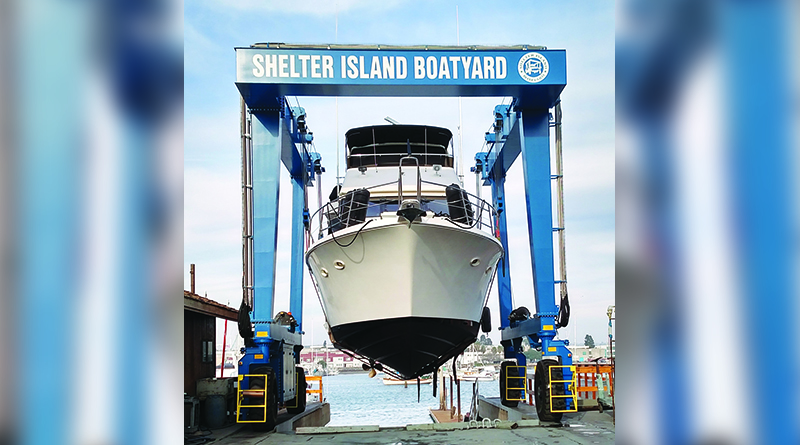
Most boaters are familiar with the sight of travel lifts moving vessels in and out of the water, but some of the most important work taking place in boatyards happens high above the deck.
Across Southern California’s marinas and repair facilities, cranes serve a critical role in helping boat owners complete maintenance, upgrades, refits, and repairs that would otherwise be impossible to perform safely. From stepping and unstepping sailboat masts to removing engines, generators, flybridges, and heavy marine equipment, crane operators routinely handle some of the most challenging tasks in the boating industry.
While many projects begin with a simple service appointment, they often evolve into jobs requiring the precise movement of thousands of pounds of equipment. In those situations, professional crane services provide the lifting power, expertise, and safety procedures necessary to complete the work efficiently while protecting both vessels and personnel.
For sailboat owners, mast work is among the most common reasons to schedule a crane. Whether replacing standing rigging, upgrading electronics, repainting spars, or performing major repairs, removing a mast allows technicians access to areas that are difficult or impossible to reach while the rig remains standing.
The process may appear straightforward, but experienced sailors understand that mast removal requires careful planning and coordination. Rigging must be disconnected properly, lifting points must be identified, and the mast must remain balanced throughout the operation. Even a small miscalculation can result in costly damage to the mast, deck hardware, or surrounding vessels.
Motor yacht owners frequently rely on cranes for a different set of challenges. Engines, generators, fuel tanks, air conditioning systems, and other major mechanical components often exceed the capacity of standard yard equipment. When a major repower or engine replacement is required, cranes allow technicians to safely remove and install heavy machinery through deck openings that may provide only inches of clearance.
As vessels become larger and more sophisticated, these lifting projects have become increasingly common. Modern yachts often contain systems weighing several tons, requiring specialized equipment and experienced operators capable of placing components with remarkable precision.
Flybridge removal is another project that frequently requires crane assistance. For some vessels, removing the flybridge may be necessary to complete structural repairs, repainting projects, transportation requirements, or major upgrades. Because these structures often contain electronics, helm stations, seating systems, and wiring, careful lifting procedures are essential to prevent damage.
Crane services are also commonly used during boat construction and commissioning. New vessels frequently require engines, masts, hardtops, radar arches, and other large components to be installed after arriving at their final destination. In these situations, crane operators often work alongside shipyard personnel, marine contractors, electricians, and riggers to coordinate complex installations.
Safety remains the primary reason professional crane services are utilized throughout the marine industry. Unlike construction sites, marinas present unique challenges, including floating docks, narrow work areas, vessel movement, changing tides, and nearby boats. Every lift must account for weight distribution, balance, weather conditions, and available workspace.
Professional operators spend significant time evaluating lifting plans before a project begins. Factors such as boom reach, equipment weight, lifting angles, overhead obstructions, and environmental conditions all influence how a lift is performed. These preparations help reduce risk and ensure equipment reaches its destination without incident.
For boat owners, crane services may represent only a small portion of a larger project, but they often make the difference between a routine maintenance job and a costly complication. Attempting to move heavy marine equipment without the proper machinery can place vessels, equipment, and personnel at unnecessary risk.
As Southern California’s boating fleet continues to age and owners invest in repowers, refits, and modernization projects, crane operators remain an essential part of the marine service industry. While their work often lasts only a few hours, the precision and expertise they provide help support everything from routine maintenance to major vessel transformations.
For many boaters, a successful project begins long before the first wrench is turned. It begins with a carefully planned lift and the professionals responsible for safely moving some of the heaviest components found aboard today’s boats.