

Most of us rely on two systems to secure our boats: four dock lines and a padlock. Amazingly, in today’s modern marinas with locked gates and security systems, that’s still probably enough to keep our vessels safe from intruders. Marina security personnel can be expected to walk the docks from time to time, and shore patrol boats keep an eye on local anchorages, particularly at Catalina Island. However, for those of us who want added security — particularly if we occasionally sail off to less-visited islands and coves — we want a system that provides a significantly higher level of security.
Modern vessel security systems do more than simply report intruders. As cautious boat owners, many of us also require comprehensive monitoring of everything from automatic bilge pumps to graphic depth sounders and surveillance cameras. A number of security systems actually cover all of these wide-ranging facets of security — and more.
Imagine an integrated security system encompassing radar, bilge level, motion sensors, and detectors for engine performance and cabin environment — all brought together into an integrated set of graphic displays on a single chartplotter screen.
Several marine electronics manufacturers have engineered ways to make our lives safer and eminently more comfortable while aboard our vessels, whether we’re lounging around in the marina, enjoying a weekend at our favorite local anchorage, or plowing the seas on a transoceanic crossing.
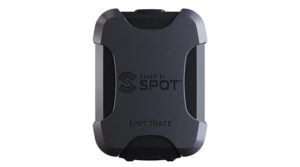
One of the most advanced yet wallet-friendly security systems available for both boats and automobiles is the SPOT Trace 2 tracking device, which instantly provides information about significant vessel movement via text or email. Unlike some other security devices, the SPOT communicates via satellite from virtually any point on the world’s oceans.
You can set the SPOT device to track your vessel’s GPS coordinates at intervals of 2½, 5, 10, 30, or 60 minutes. Available at West Marine and Bass Pro Shops, the SPOT unit sells for a mere $130 with plans available for as little as $11.95 per month with an activation fee of $29.95.
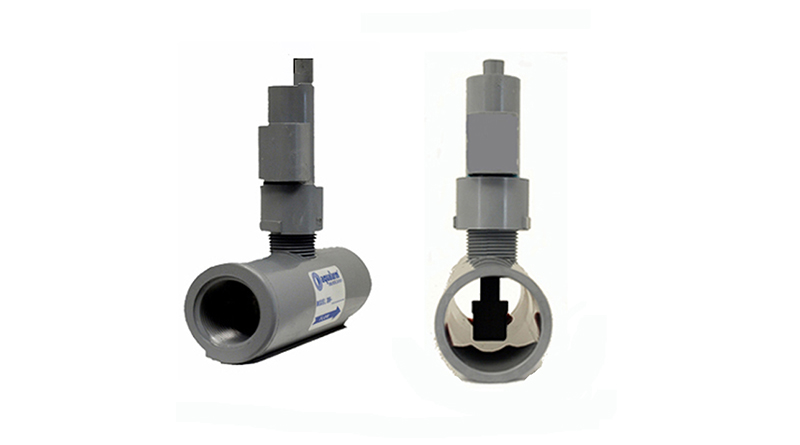
Another well-known security system is the Aqualarm, offering far more than a central monitoring unit connectable to an array of devices. A wide complement of sensors for bilge water flow, engine coolant temperature, excessive exhaust temperature, fire, smoke, unauthorized boarding, battery charge, and other inputs provides you a level of security that’s hard to match.
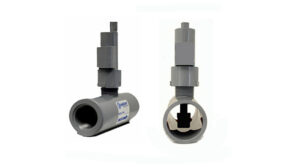
A truly novel device is Aqualarm’s pressure-sensing control mat, which can detect intruders silently while they’re entering the companionway. The basic version communicates strictly with the control center. The stand-alone version, at a cost of $450, notifies you by cell phone connection, alerting you the very moment someone sets foot on the device.
The core of Aqualarm’s security network is a wireless control system comprised of a central unit, wireless motion sensor, two wireless hatch/porthole sensors and capability of communicating with a total of up to 24 sensors. At $299 for the control system, plus whichever extra sensors you may wish to select — along with an affordable annual membership fee — the Aqualarm is within the price range of most boat owners but a drop in the bucket when compared to the overall cost of maintaining a high-end yacht.
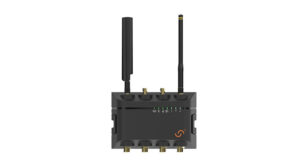
One system certain to make our boats safer is the Siren Marine Pro 3, which offers a comprehensive set of security sensors regarded as one of the most versatile and reliable systems on the market. The Siren Connected Boat App brings together battery monitoring, GPS position, bilge pump activity, water levels, shore power status, engine performance, temperature and more.
The Siren Marine Pro 3 also may be configured to control lights, air conditioning, refrigeration, and many other onboard electrical systems, all of which are integrated through a NMEA 2000 backbone. At a cost of $600 plus fees varying by the customer’s preferred time period, the purchase and operating cost of the Siren Marine MTC main device is certainly within the range of most cruisers.
Global Ocean Security Systems, known better as “GOST,” offers an array of highly sophisticated onboard security networks for the most demanding yacht owners. The core of the GOST Apparition, designed for the high-end yacht, is a CPU controlled by a remote touch screen monitor.
The GOST system allows you to set up a “geo-fence,” which is a GPS area you define through GPS coordinates in order to monitor your vessel’s location and movement. This system records event histories and critical events so you and other crew members can analyze the vessel’s condition and behavior from anywhere on the globe.
You can link the GOST Apparition to a total of 192 sensors — including 32 external and internal doors and hatches — and you can check each individually with any one of the 16 touch screens distributed through your vessel. Wow. The motion detector on my 30-foot sloop Saltaire is a brass inclinometer mounted on a bulkhead.
(Credit: Aqualarm)
A more affordable vessel security device is the T-H Marine Boat Alarm System, which offers a simpler approach to vessel security. A shock sensor detects intruders and alerts you of activity from up to 3,000 yards, or roughly 1.7 miles. The remote control features alerts with sound, light and movement detectors, which could indicate an intruder or simply a shift in position resulting from a change in wind direction, both of which are critically important pieces of information.
If your vessel is stored safely in a marina, you can depend on the security team to watch over your vessel. But if you’re anchored near a seedy seaport town with all manner of sketchy characters lurking about at night, chances are your elbows are resting on a bar a few hundred yards from your home on the water. If this scenario applies, your vessel is still close enough for you to monitor the T-H alarm system.
The T-H system sells for $270 and offers plans covering mechanical and electrical failure ranging from $25 for one year, to $44 for two years and $65 for three years.
There are other security systems available, some of them with monthly costs, others without such fees and offering only rudimentary sensors and alarms, but even a simple device is better than no protection at all, particularly in foreign ports. Find the security device or array best fitting your budget, vessel, and lifestyle, or leave the job to the companionway padlock — with fingers crossed.