Southern California anglers who step aboard a three-quarter-day boat this summer expecting to drop anchor and spend the next several hours pulling calico bass out of the kelp may want to adjust their expectations.
This year, the opportunity is farther offshore, and the target is considerably bigger.
Warmer, more tropical water conditions have brought opportunities for pelagic species including yellowfin tuna, bluefin tuna, yellowtail and dorado into the Southern California fishing picture. As those fish become accessible to the fleet, captains are going to chase them.
That means the fishing experience can look very different from an inshore calico bass trip. It also means anglers need to understand what they booked before deciding that several hours of driving around constitutes a bad fishing trip.
Last year, a three-quarter-day trip was more likely to spend substantial time fishing inshore structure and kelp for species such as calico and sand bass, sheepshead and the occasional halibut. The boat could get into an area, anchor or work productive structure and give anglers plenty of time with lines in the water.
Offshore fishing does not work that way.
On a nine- or 10-hour trip targeting tuna, yellowtail or dorado, a significant portion of the day may be spent underway. The captain isn’t aimlessly burning diesel while everyone wonders when the fishing part starts. Looking for the fish is the fishing part.
Offshore gamefish are pelagic. They move through open water, following favorable temperatures, currents, bait, and other conditions. There’s no firetruck-red buoy with a neon sign that reads, “Yellowfin, next exit.”
Instead, the crew searches for clues.
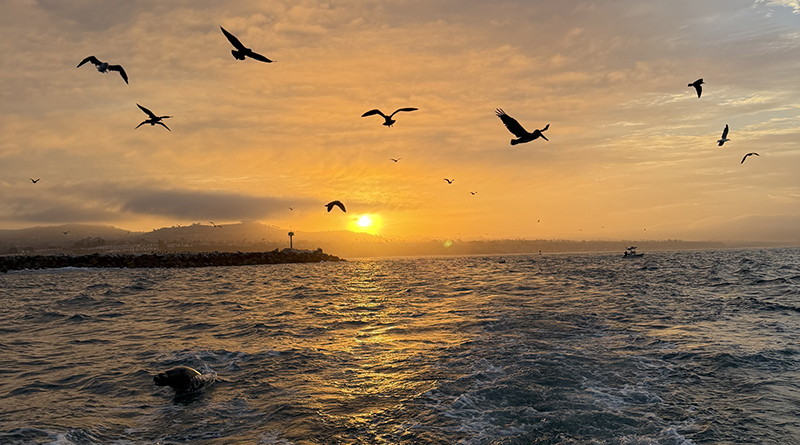
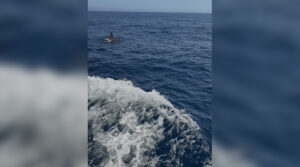
Kelp paddies can hold yellowtail and dorado. Birds may reveal feeding activity below. Dolphins can sometimes be associated with tuna, particularly yellowfin. Breaking fish, bait activity and other disturbances on the surface can signal an opportunity. Floating objects and buoys may also attract bait and gamefish.
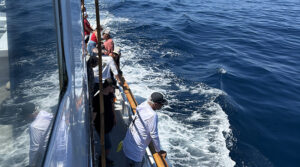
For much of the day, the captain may be glued to a pair of binoculars while a deckhand searches from a higher vantage point. Captains also communicate with other boats, gather fish reports, watch their electronics, and continually evaluate water conditions while deciding whether to stay in an area or keep moving.
It’s a tremendous amount of work for something that, from the passenger deck, can sometime feel like nothing more than a scenic boat ride.
And yes, staring through binoculars for hours probably does hurt, so let’s thank our captains and crew for that eye strain.
The challenge becomes greater when the ocean changes suddenly. Recent conditions associated with Hurricane Marie brought swell conditions and characteristic changes to Southern California waters, including areas of cooler and dirtier water. A productive zone one day does not guarantee the same fishing the following morning.
There is one very technical principle anglers should remember when this happens: Fish have tails. They move. (See Salty Satire on page 00 for more on this phenomenon!)
A captain may have found tuna in a particular area the previous day, but those fish are under no contractual obligation to remain there until the next boat arrives. Water temperature changes. Currents shift. Bait moves. Swell passes through. Pelagic fish follow the conditions they want.
That uncertainty is part of offshore fishing.
It’s also why comparing an offshore tuna trip with an inshore calico bass trip based solely on the amount of time spent actively casting or soaking a bait is not particularly useful. They’re fundamentally different styles of fishing.
As mentioned, (and as I’m sure you already know), Calico bass are structure-oriented fish. Anglers target kelp beds, rocky areas and other habitat where bass are likely to hold. While finding productive bass fishing still requires knowledge and work, the search area is considerably different from pursuing schools of highly mobile pelagic fish across miles of open ocean.
Offshore, a captain might spend hours searching before finding the right kelp paddy, bird school, sonar mark, or surface activity. When it happens, however, the reward could be a yellowtail, dorado, or tuna — rather than a calico bass. When they hear that scratch on their sonar, they spring into action.
Sometimes the boat finds them and everyone gets busy. Sometimes it finds them and the fish refuse to bite. Sometimes the ocean seems determined to hide every tuna between Southern California and Hawaii.
That’s fishing. But even while the boat is searching, there may be opportunities to get in on the action. Crews often troll while covering water offshore, so keep an eye on the trolling rods. A sudden strike can turn a long stretch of searching into instant excitement, and anglers who are nearby and paying attention may get the call to grab a rod and reel in a dorado, tuna or something even bigger. “Hook up! Hook up!”
Understanding how the boat plans to fish that day starts before leaving the dock. Before booking a trip, or at least before showing up the morning of departure, call the landing. Ask what the boat has been targeting and whether the trip is expected to fish offshore or inshore. Find out what tackle is recommended, what line classes anglers should bring and whether particular hooks, sinkers, jigs, or other gear are currently producing fish. Hot tip, bring a striker out. Cast for a yellowfin and worst case, land a smaller tuna species.
Check the most recent fish counts and reports but understand what those numbers actually represent. Yesterday’s catch is useful information, not a guarantee for tomorrow.
This is particularly important for anglers accustomed to inshore fishing. The rod, reel, and line appropriate for tossing a bait toward the kelp for calico bass may not be the setup a crew wants an angler holding when a school of tuna finally erupts after three hours of searching. If you get onboard with 15-pound test, you’re going to break off. I’ve seen success with 20-pound test — but then you’re on the rail for 45 minutes. Just snag a spool of 30–40-pound test to be safe.
Anglers should also prepare themselves for the pace of an offshore trip. Bring appropriate sun protection, food, water, and whatever personal items are permitted and necessary for a long day at sea. Listen to the crew when they explain how to rig and what to have ready.
Most importantly, be ready when the opportunity finally arrives.
After hours of searching, the captain may spot birds, find the right sonar mark, or pull alongside a kelp paddy holding fish. That’s not the ideal moment to discover the recommended rod is still buried in the rack, the hook isn’t tied on, and the fluorocarbon is somewhere at the bottom of a tackle bag.
Offshore opportunities can develop quickly and disappear just as fast. When your captain hears that tick on his sonar, its game time.
There’s also a little perspective required when the wheels keep turning and the binoculars keep coming out.
Yes, driving can be boring. Nobody bought a fishing ticket because they dreamed of spending four hours watching the wake.
But if the boat is running offshore during a season when yellowfin, bluefin, yellowtail and dorado are within reach, the crew isn’t wasting fishing time.
They’re trying to find you a tuna.
And sometimes finding one is the hardest part of catching one.