

From celebrity guests and lively shoreside competitions in the 1930s to the return of a historic sailboat race in 2026, the Commodore’s Cruise continues to celebrate Southern California’s yachting heritage.
Editor’s note: This article was contributed to The Log by Brian Randall, commodore of West Coast Yacht Club. The Log has made minor formatting, grammar, and style edits to fit the newspaper while preserving the original information and intent of the submission.
During the weekend of Oct. 23, 2026, the Southern California Yachting Association (SCYA) and Catalina Island Yacht Club hosted the annual Commodore’s Cruise, continuing a cherished tradition that began in 1929. Now in its 97th year, the event remains a celebration of Southern California’s rich maritime heritage, bringing yacht clubs together for friendly competition, fellowship and a shared love of the sea.
What began with just four participating yacht clubs has endured through nearly a century of changing times. During the golden age of Catalina Island in the 1930s, the Commodore’s Cruise grew into a major gathering, attracting more than 500 people. The event became much more than a gathering of boats and sailors. It was a full-fledged celebration featuring an extraordinary variety of competitions, entertainment and distinguished guests.
Today, the Commodore’s Cruise continues to honor that legacy while welcoming a new generation of sailors and yacht club members.
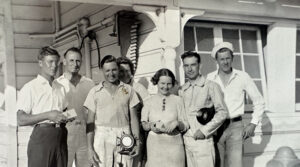
The Golden Age of the Commodore’s Cruise
The 1930s were a remarkable era for Catalina Island and the Commodore’s Cruise. In those days, the event featured an imaginative lineup of activities designed to bring sailors, powerboaters and their families together for fun and friendly rivalry.
Small-boat racing tested the skills of competitors, while a baseball game pitted sailors against powerboaters in a battle for bragging rights. The friendly rivalry continued with a tug-of-war between the two groups, along with water fencing, horse-racing derbies, and mast-climbing competitions.
Yacht efficiency inspections added a more practical element to the festivities, while vaudeville acts provided entertainment for the crowds. The variety of activities reflected the playful spirit of the era and the strong social connections that defined the yachting community.
The Commodore’s Cruise also attracted notable personalities. Among its distinguished attendees were Johnny Weissmuller, the Olympic swimming champion and actor famous for portraying Tarzan, in addition to actors Richard Arlen and Jobyna Ralston. European dignitaries also attended, adding to the event’s prominence during Catalina Island’s golden age.
With hundreds of participants, spirited competitions, entertainment, and celebrity appearances, the Commodore’s Cruise became a highlight of the island’s social and maritime calendar. These early gatherings helped establish a legacy that continues to inspire the event nearly a century later.
Thirteen Yacht Clubs, One Tradition
This year’s cruise brought together representatives from 14 yacht clubs and boating organizations, demonstrating the enduring appeal of the historic gathering. Participating organizations included West Coast Yacht Club, Long Beach Yacht Club, Catalina Island Yacht Club, Newport Harbor Elks Yacht Club, Port Royal Yacht Club, American Legion Yacht Club, Horizon Yacht Club, Woman’s Sailing Association of Orange County, Navy Yacht Club of Long Beach, Buccaneer Yacht Club of San Pedro, Marina Yacht Club Del Rey, Long Beach Singles Club, and Pierpont Yacht Club.
The gathering provided an opportunity for members to reconnect with longtime friends, build new relationships, and celebrate the traditions that have united Southern California’s yachting community since the event’s earliest days.
Although the activities have evolved over the decades, the spirit of friendly competition and fellowship remains at the heart of the Commodore’s Cruise.
A Historic Race Returns to the Water
One of the most significant highlights of this year’s Commodore’s Cruise was the return of its traditional sailboat race after a hiatus since 1985.
Since the cruise began in 1929, racing has been an important part of the event’s history. In earlier years, the race ran from San Pedro and finished between Bird Rock and Ship Rock at Two Harbors on Catalina Island.
This year, the historic competition returned in a new form, with sailors racing from Long Beach to the shores of Avalon. The revival brought back an important piece of the Commodore’s Cruise heritage and gave participating crews an opportunity to compete in the spirit of the sailors who came before them.
The racing proved to be exceptionally close. After corrected times were calculated, the top three finishers were separated by just six minutes, making for an exciting conclusion to the competition.
The final results were:
First Place: Rosebud — Capt. Dave Monk, Long Beach Yacht Club
Second Place: Trouble — Capt. Tom Camp, Long Beach Yacht Club
Third Place: Bellissima — Glen Ashworth, West Coast Yacht Club
With such narrow margins separating the top finishers, the results underscored the competitive spirit and skill of the participating sailors.
More Than a Race
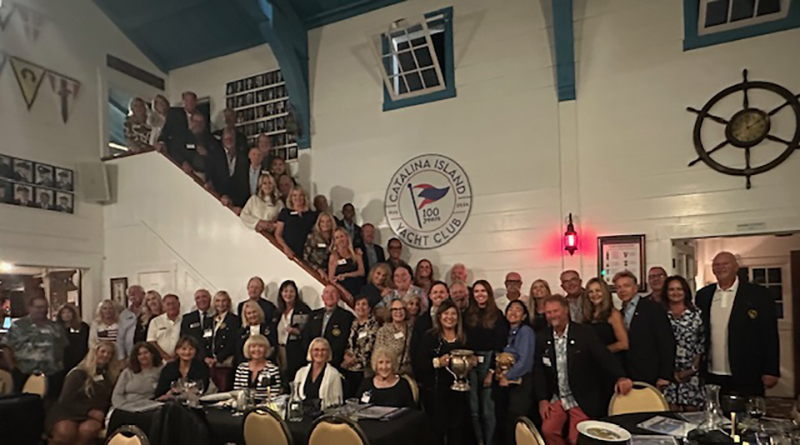
While sailing remained at the heart of the Commodore’s Cruise, the weekend offered much more than competition on the water. Participants enjoyed a miniature golf tournament, a private tour of the historic Avalon Tuna Club, and an awards dinner that brought the gathering to a memorable close.
A special highlight of the evening was a historical presentation tracing the Commodore’s Cruise from its founding in 1929 through its 97 years of existence.
The presentation was delivered by Commodore Brian Randall of West Coast Yacht Club, whose club has a particularly meaningful connection to the event’s history. Past members of West Coast Yacht Club participated in the cruise as far back as the 1930s, providing a living link between the early days of the tradition and the present.
The historical presentation offered attendees an opportunity to reflect on the people, boats, clubs and traditions that have helped sustain the Commodore’s Cruise across generations, from the lively festivities of the 1930s to the modern-day gathering.
The occasion was especially meaningful for West Coast Yacht Club, which is celebrating its own 95th anniversary in 2026. With a history that overlaps so closely with that of the Commodore’s Cruise, the club represents another enduring chapter in Southern California yachting.
Preserving a Legacy for the Future
Nearly a century ago, Catalina Island Yacht Club established the Commodore’s Cruise as a way to bring neighboring yacht clubs together for friendly competition and fellowship. Since then, the event has weathered changing generations, evolving boating technology, and the many changes that have shaped Catalina Island and Southern California’s waterfront communities.
From baseball games and mast-climbing contests to celebrity appearances and sailboat racing, the Commodore’s Cruise has always been about more than boats. It’s been about bringing people together and creating memories that last long after the sails are lowered.
The return of the historic race, the participation of more than a dozen clubs and the evening’s celebration of the event’s history all reflected the importance of preserving this unique maritime tradition.
As the 2026 Commodore’s Cruise came to a close, participants carried home more than race results and memories of a weekend on Catalina Island. They were part of a tradition that connects today’s sailors with those who gathered nearly a century ago, when hundreds came to the island for competition, entertainment and the camaraderie of life on the water.
At 97 years old, the SCYA Commodore’s Cruise is far more than an annual event. It’s a living piece of Southern California maritime history, sustained by the dedication of yacht clubs, the enthusiasm of their members, and the friendships formed on the water.
And with the return of its historic race, this year’s gathering demonstrated that some traditions are simply too special to leave behind.
The Commodore’s Cruise continues to sail forward, honoring its colorful past while keeping its 97-year-old tradition alive for generations to come.