Few moments on the water are more frustrating than turning the key and hearing nothing but silence. Whether preparing to leave the dock for a morning cruise, restarting the engine after hours of fishing, or heading home from a relaxing afternoon at anchor, a dead battery can quickly interrupt what was supposed to be a smooth and enjoyable day on the water. Unlike a car stranded in a parking lot, where roadside assistance or another driver can quickly provide a jump, boaters often operate miles from shore where help may not arrive for hours.
For that reason, experienced captains often treat battery backups as an essential part of their onboard safety equipment. Portable jump starters and spare marine batteries are increasingly viewed as practical tools that can restore power when a primary battery fails, helping boaters avoid delays, unnecessary towing costs, or potentially hazardous situations offshore.
To understand why backup power sources are so important, it helps to first look at how much modern boats rely on their electrical systems. Marine batteries today do far more than simply start an engine. They power chartplotters, fish finders, radios, bilge pumps, lighting systems, refrigerators, bait pumps, and a growing list of onboard electronics. As boat technology continues to evolve, electrical demand has steadily increased, meaning batteries are often asked to perform multiple tasks over extended periods of time.
Because of that demand, it’s not uncommon for batteries to drain faster than expected. Spending hours running electronics while fishing, leaving lights on overnight, operating sound systems at anchor, or even forgetting to turn off certain accessories can all slowly reduce available power. In other situations, batteries may weaken due to age, internal wear, or environmental conditions.
Temperature also plays a role in battery performance. Cooler mornings can temporarily reduce a battery’s ability to deliver cranking power, while the heat of summer can accelerate battery degradation over time. In some cases, the problem may not be the battery itself but the charging system. If an alternator is not functioning properly or wiring connections are loose, a battery may fail to recharge while the engine is running.
Because these situations can arise without warning, boaters often look for ways to ensure they’re not left without power when they need it most. This is where portable jump starters have become increasingly popular among recreational boaters and anglers alike.
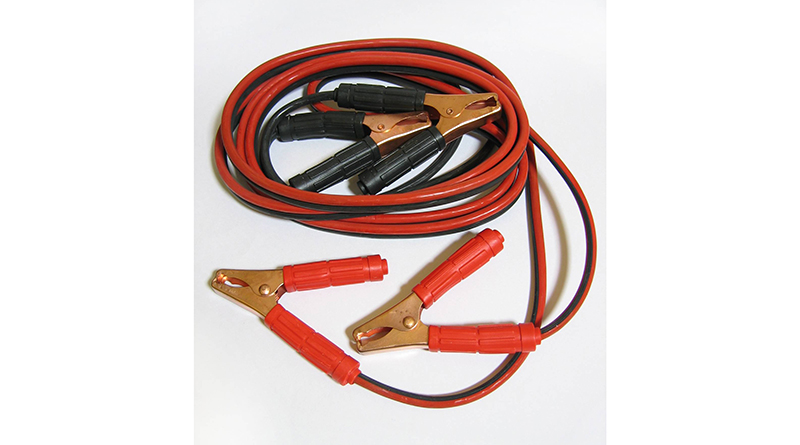
Portable jump starters are compact, rechargeable devices designed to deliver enough power to restart an engine when a battery has been drained. Most units contain lithium battery packs that store energy until it’s needed. When connected to a vessel’s battery using jumper cables, they provide a surge of power capable of turning over the engine.
One of the biggest advantages of portable jump starters is convenience. Many models are small enough to fit inside a console compartment, tackle bag, or storage locker while still delivering enough power to start outboard motors and smaller inboard engines. In addition to their compact size, modern jump starters often include features such as USB charging ports, built-in flashlights, air compressors, and digital displays that indicate battery charge levels.
This versatility has made them increasingly common not only on boats but also in vehicles and emergency kits. For boaters in particular, the ability to store a compact power source onboard provides reassurance that a drained battery does not necessarily mean the end of the day on the water.
At the same time, some boat owners prefer a different approach by carrying a spare marine battery onboard. While larger and heavier than a portable jump starter, a fully charged backup battery can provide a reliable source of power if the primary battery fails. This option is especially common on larger vessels where space allows for additional equipment storage.
In these cases, the spare battery can be temporarily connected using jumper cables or integrated into the vessel’s electrical system through a battery switch. When connected properly, it can provide enough power to start the engine and restore basic electrical functions until the boat reaches shore.
Of course, carrying an additional battery requires proper planning. Marine batteries are heavy and must be secured safely to prevent movement while underway. They also need to be maintained and periodically charged to ensure they’re ready when needed. Despite these considerations, many offshore anglers and cruisers appreciate the added reliability that comes with having a fully charged spare battery onboard.
Another option frequently seen on modern boats is the installation of dual battery systems. These systems are designed to separate engine starting power from onboard accessory loads. Typically, two batteries are connected through a battery selector switch labeled with settings such as “Battery 1,” “Battery 2,” or “Both.”
This arrangement allows boaters to dedicate one battery exclusively for starting the engine while using the other to power electronics, lights, and other accessories. If the house battery becomes drained during the day, the reserved starting battery remains available to restart the engine.
Battery switches also allow operators to combine batteries if additional cranking power is required. However, this system still requires careful management. Leaving the switch in the wrong position or running both batteries simultaneously can defeat the purpose of the setup. As a result, many boaters still carry portable jump starters as an additional layer of backup even when dual battery systems are installed.
Situations where portable jump starters prove most useful can occur more often than some boaters expect. A common example happens during long fishing trips when electronics remain active for hours while the engine is off. By the time the operator attempts to restart the motor, the battery may not have enough power remaining to turn it over.
Similarly, overnight trips at anchor can place significant demand on onboard batteries if cabin lights, refrigeration units, or entertainment systems are running throughout the evening. By morning, the battery may have been drained enough to prevent the engine from starting.
Even simple mistakes can lead to dead batteries. Accidentally leaving deck lights on, running a livewell pump continuously, or forgetting to shut down electronics before leaving the boat can slowly drain power.
Portable jump starters can also be valuable at launch ramps, where a drained battery may otherwise require assistance from another vehicle or boat. In these situations, having a jump starter available allows boaters to resolve the issue quickly without delaying other ramp users.
Beyond personal use, these devices also make it easier to assist fellow boaters who may encounter electrical trouble on the water. In boating communities where helping others is part of the culture, a portable jump starter can serve as a useful tool for lending a hand.
Despite their simplicity, jump starters should still be used with attention to safety. It’s important to ensure that any unit carried onboard is rated for marine use and capable of delivering sufficient cranking amps for the vessel’s engine size. Connecting cables properly — positive to positive and negative to ground —is essential to prevent electrical damage.
Boaters should also remain aware of fuel vapors when working around batteries, particularly in enclosed engine compartments where ventilation may be limited. Maintaining clean battery terminals and secure wiring connections also helps prevent electrical problems that can lead to starting failures.
While backup devices provide valuable insurance, they should not replace regular battery maintenance. Inspecting battery terminals for corrosion, ensuring connections remain tight, and monitoring battery voltage levels can help identify problems before they escalate.
Many boaters also rely on onboard battery chargers or solar panels to maintain charge levels while vessels are docked or anchored. Replacing aging batteries before they fail is another important preventative step. In general, most marine batteries last between three and five years depending on usage patterns and environmental conditions.
Ultimately, reliable electrical power is a cornerstone of safe and enjoyable boating. Engines, navigation systems, communication equipment, and safety devices all depend on properly functioning batteries.
Because unexpected failures can occur even with well-maintained equipment, many seasoned boaters follow a simple rule: always have a backup plan.
Portable jump starters and spare batteries may not be the most glamorous pieces of boating equipment, but they often prove to be among the most useful. A compact device stored in a dry compartment or a fully charged spare battery secured onboard can quickly transform a potentially stressful situation into a minor inconvenience.
For boaters who value preparedness, these simple tools represent a practical investment in reliability and peace of mind. When the key turns and the engine roars back to life, their importance becomes immediately clear