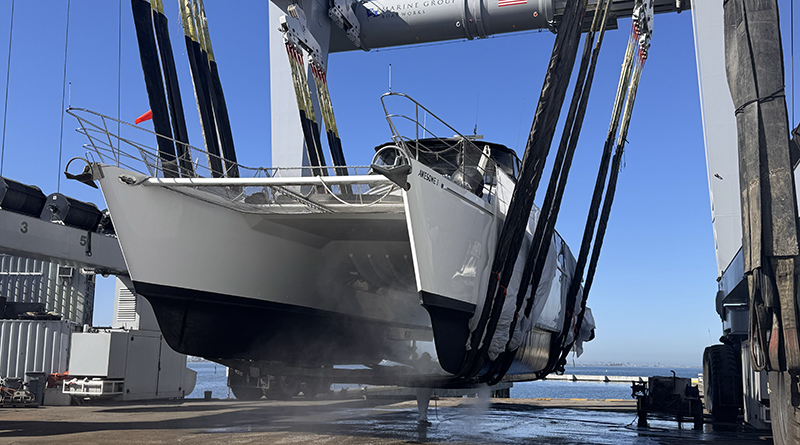
Marine Group Boat Works provides professional insight into when a refit or repower can give an aging vessel new life, and what boat owners should consider when weighing upgrades to reliability, efficiency, performance and onboard systems.
For boat owners, getting something new does not necessarily mean getting a new boat.
A well-built hull can remain serviceable for decades, even as the engines, electronics and onboard systems surrounding it begin to show their age. That has made refits and repowers an important option for owners who like their current boats but want the reliability, efficiency and technology found aboard newer models.
According to Todd Roberts, CEO of Marine Group Boat Works, holding on to a vessel has its benefits.
“There can be a lot of value in keeping an existing vessel, especially when the boat’s layout, construction, or sentimental value is important to the owner,” Roberts said. “In some cases, older vessels were built with materials and construction methods that are difficult to replicate in a new build today.”
Building a new vessel also represents a significant investment in both time and money. Before committing to a major refit, however, Roberts said owners need to realistically evaluate what they already have.
Visible corrosion, high engine hours, outdated systems and engines that are being phased out are among the factors that can signal it’s time to consider substantial work. More importantly, the vessel should be evaluated as a whole to determine whether its existing structure and systems provide a sound foundation for continued investment.
A repower generally refers to replacing a boat’s existing engine or engines with newer equipment. A refit is broader and can include upgrades or replacement of electrical systems, electronics, plumbing, fuel systems, steering, controls, batteries, pumps, generators, interior components and other equipment.
In either case, the goal is often the same: improve the boat without replacing the boat.
For Southern California owners, that can be particularly appealing. A vessel that has spent years fishing offshore, making Catalina crossings or cruising the coast may still have a solid hull and a layout its owner knows well. Updating its mechanical and operating systems can potentially extend its useful life while addressing some of the limitations that come with aging equipment.
But a repower is rarely as simple as pulling one engine out and dropping another in.
“A professional repower starts with the engine foundation,” Roberts said. “If the foundation needs to be modified, that can affect many other systems throughout the vessel.”
From there, technicians need to determine how the new engine interacts with the rest of the boat. Intake and exhaust systems may require modification or rerouting. The transmission must be compatible with the engine, while shafting and couplings also need to be evaluated. Electrical systems may require upgrades, and environmental requirements can influence the project.
Airflow is another consideration owners may not immediately associate with an engine replacement.
“Many older vessels were not originally equipped with the airflow systems that newer engines require,” Roberts said.
A professional repower therefore involves understanding how the replacement engine differs from the original and determining which supporting components must be rebuilt, modified or replaced to properly integrate the new propulsion package.
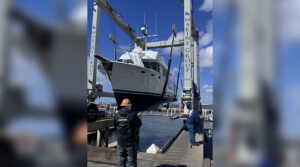 That larger systems approach is one reason Roberts recommends having substantial repowers performed by full-service boatyards capable of coordinating the different marine trades involved.
Marine Group Boat Works operates full-service shipyard facilities and handles projects involving mechanical, electrical and other specialties. Roberts described the company as a “one-stop shop” for refits and repowers, with the equipment, facilities and personnel to manage multiple aspects of a project under one roof.
“What really sets us apart is our ability to adapt to each client and vessel,” Roberts said. “We pride ourselves on finding solutions and rising to the occasion rather than simply saying, ‘We don’t do that.’”
When properly matched and installed, newer propulsion technology can provide benefits that extend beyond reliability.
Roberts said owners may experience better efficiency and overall performance, reduced visible smoke and odor and, depending on the engine package, improved fuel economy and horsepower-to-weight ratios.
Modern propulsion systems can also provide substantially more operating information than older engines.
“There is also a significant improvement in the information available to the operator,” Roberts said. “Newer systems provide better monitoring and more accurate information on things like oil pressure, engine performance, and other operating parameters.”
For the person at the helm, those improvements can change both how the boat feels underway and how its machinery is monitored.
“You can really feel the difference, not only in the way the boat operates, but also in the amount of information available to help manage and maintain the vessel,” Roberts said.
Why Training Matters
Choosing the equipment is only part of a successful repower. Installing it correctly can be equally important.
Roberts said a repower should be undertaken by a shipyard capable of coordinating the numerous trades involved, with factory-trained technicians often brought in for certification and commissioning.
“Factory-trained technicians are extremely important because these systems require a very high level of precision,” Roberts said. “We are working within extremely tight tolerances, so proper installation is critical to preventing premature wear and ensuring the system performs as designed.”
Factory training provides technicians with knowledge of specific drivetrain components, along with access to specialized tools and procedures for installation, alignment, diagnosis and troubleshooting.
It can also have warranty implications.
Manufacturer warranties may require installation or service by appropriately trained technicians, Roberts said. Owners considering a repower should therefore discuss warranty requirements before work begins rather than assuming any installation will qualify.
Planning for What You Cannot See
A refit can require an equally comprehensive approach.
Replacing one component frequently exposes the condition or limitations of another. New electronics can reveal outdated wiring. An engine replacement may require changes to controls, fuel delivery or electrical capacity. Once equipment is removed, corrosion or damage that was previously hidden may become visible.
That uncertainty is one of the most important considerations when establishing a project budget.
“One of the biggest mistakes is underestimating the importance of schedule, budget, and scope,” Roberts said.
Specialized equipment and materials may have substantial lead times, and older vessels can introduce unknown conditions once technicians begin opening spaces and removing equipment.
“You may discover corrosion, damaged components, or other issues that weren’t visible during the initial assessment,” Roberts said. “Removing existing equipment can also reveal interferences or conditions that need to be addressed before the new system can be installed.”
For that reason, developing a thorough scope before beginning work can help owners anticipate complications and build more realistic schedules and budgets.
Owners also should determine what they want the boat to do better before deciding where to invest. An offshore angler may prioritize propulsion reliability, bait systems, electronics and electrical capacity. A cruiser may put batteries, charging systems, plumbing and onboard comfort higher on the list. A boat used primarily for local day trips may require something different altogether.
Safety and reliability should generally take priority over cosmetic improvements. Fuel systems, electrical wiring, steering, bilge pumps, batteries, through-hulls and other critical equipment deserve particular attention when evaluating an aging vessel.
The budget also should account for more than the advertised price of an engine or piece of equipment. Labor, removal of existing machinery, fabrication, controls, wiring, rigging, haul-out expenses and supporting upgrades can contribute significantly to the final cost.
Ultimately, Roberts said the decision comes back to evaluating the entire vessel rather than focusing on one aging component.
“The key is evaluating the vessel as a whole and determining whether the existing structure and systems provide a solid foundation for continued investment,” he said.
For owners who already have a boat they trust, that assessment may reveal that starting over is not necessary.
There is something appealing about keeping a proven boat on the water. Its owner already knows how it handles, where everything belongs and what could be improved.
A thoughtfully planned refit or repower provides an opportunity to make those improvements while preserving the vessel that made them worth considering in the first place.