




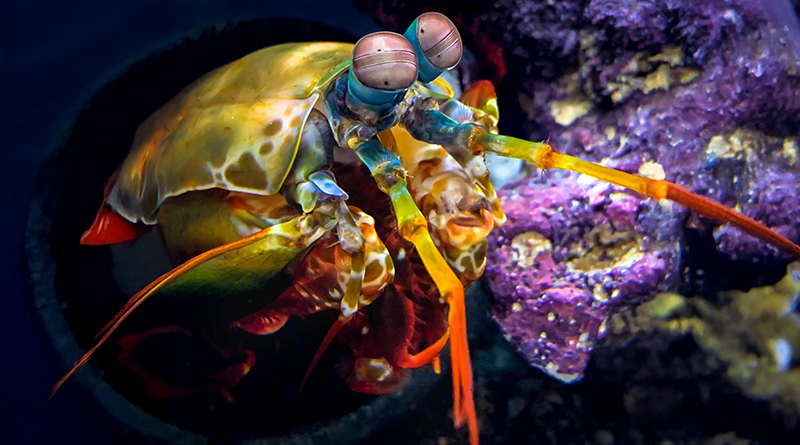
The mantis shrimp is a highly specialized marine crustacean, recognized for its vivid coloration, exceptional strength, and one of the fastest strikes in the animal kingdom. Despite its name, this creature isn’t a shrimp at all, but a stomatopod.
There are two types of mantis shrimp, each armed with a unique hunting strategy. “Smashers” wield club-like appendages capable of delivering punches at speeds up to 50 miles per hour — fast enough to break the shells of crabs and mollusks, and even crack aquarium glass.
“Spearers,” on the other hand, are equipped with spiny, barbed arms that they shoot out to impale soft-bodied prey like fish. Both types pack so much force that their strikes generate cavitation bubbles — tiny shockwaves that explode with heat and light, delivering a second punch milliseconds after the first.
Then there are their eyes, which are arguably their most astonishing feature. A mantis shrimp’s vision is so advanced it puts human sight to shame. While we see with three types of color receptors, mantis shrimp can have up to sixteen. They also detect polarized light and UV wavelengths, giving them an almost alien perception of their world. Think of them as tiny, technicolor predators with the eyesight of a satellite and the punch of a jackhammer.
Most mantis shrimp grow to just 4 to 6 inches long (some stretch to 12), and they live tucked into burrows on coral reefs and rocky seafloors. But their small size doesn’t mean they’re harmless. Far from it. Divers and fishermen have nicknamed them “thumb-splitters” for good reason. A single careless grab can lead to a nasty injury.
In recent years, these creatures have made surprise appearances aboard Southern California sportfishing boats, turning up in lobster traps, hoop nets, and bait scoops. Crews at Dana Wharf Sportfishing in Dana Point and Newport Landing in Newport Beach have both reported the occasional mantis shrimp making its way aboard — much to the wide-eyed fascination (and slight alarm) of passengers. Though not commonly targeted by anglers, mantis shrimp are a part of the local marine ecosystem, especially around rocky areas and artificial reefs.
If you ever find one on your boat — hauled up in a trap, snagged on a baited hook, or caught as bycatch, proceed with caution. First and foremost: wear thick, puncture-resistant gloves. But don’t rely on gloves alone. These animals can strike through soft materials with shocking speed. Your best bet is to use long-handled tongs or a fish gripper to secure the mantis shrimp by its hard back shell, keeping your fingers far from its deadly front limbs.
If you can’t release it right away, place it in a strong bucket or cooler with a tight lid and good ventilation. Be aware that mantis shrimp can jump, crack thin plastic, and damage Livewell mates. Never toss one in with other fish unless you want to lose the whole tank. When it’s time to let it go, lower the container to the water’s surface and allow the shrimp to swim out on its own. If you need to tip the container, keep your hands well clear. This is not the creature to scoop out by hand.
And if it’s hooked? Don’t even think about trying to remove it manually. Just cut the line close to the mouth and let it go. Even seasoned divers avoid handling them directly.
The mantis shrimp is a perfect reminder that the ocean is still full of surprises — vibrant, powerful, and dangerous in ways you might never expect. For anglers who find one on deck, the best strategy is simple: admire it, respect it, and handle with care.