

From bottom paint and running gear to inspections below the waterline, a little planning before a haul-out can save boat owners time, money and surprises in the yard.
Editor’s Note: To give readers a well-rounded look at boatyard maintenance and haul-out preparation, The Log gathered expert advice from five boatyards serving Southern California boaters and beyond. Their combined experience offers different perspectives on what to inspect, how to prepare, when to schedule yard work and how preventative maintenance can help boat owners avoid costly repairs.
For most boat owners, haul-out day comes with an unusual opportunity: For a short time, everything normally hidden beneath the water is right there in front of you.
The bottom of the hull, propellers, shafts, struts, rudders, through-hulls, transducers and other underwater components can finally be inspected up close. That makes a haul-out more than a chance to apply another coat of bottom paint. Done properly, it’s an opportunity to evaluate the parts of the boat that are difficult, or impossible, to thoroughly inspect while it’s sitting in a Southern California marina.
For Diego Fernandez of Baja Naval in Ensenada, that inspection should extend beyond whatever originally brought the boat into the yard. Fernandez said owners should look for signs of water intrusion, including “blisters, cracks and previous repairs,” while also checking for delamination and corrosion. Propellers, shafts and other running gear should be inspected, along with all through-hulls and seacocks, cooling systems and stabilizer fins when applicable.
Dave New of Basin Marine in Newport Beach takes a similarly comprehensive approach. At a minimum, New recommends inspecting all through-hulls, valves and associated hoses and clamps, along with bearings, shafts, propellers, zincs and their fasteners, and shaft and rudder logs and seals.
Michele and Andy Volaski, owners of Anacapa Boatyard in Channel Islands Harbor in Oxnard, also encourage owners to use a haul-out as an opportunity to look beyond the work that originally put the boat on the schedule. The couple has owned and operated Anacapa Boatyard since 2014, serving recreational and commercial vessels with haul-outs, bottom painting, maintenance, repairs and other marine services.
“Whenever a boat is hauled out, we encourage owners to take advantage of the opportunity to inspect everything below the waterline, not just the item that brought them into the yard,” the Volaskis said.
That includes bottom paint, zincs, through-hull fittings, seacocks, propellers, shafts, rudders and bearings. They place particular emphasis on zincs and through-hull fittings because corrosion or deterioration in those areas can lead to expensive repairs and, in some cases, safety concerns.
“Our philosophy is simple: while the boat is already out of the water, it’s a great opportunity to catch small problems before they become big ones,” they said.
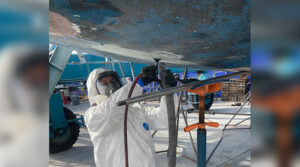
Eric Lundeen, vice president of operations for Marine Group Boat Works, similarly recommends using the time ashore for a broader inspection. Marine Group Boat Works operates as a full-service shipyard with capabilities that include vessel refits and repowers and a range of specialized marine trades.
Lundeen recommends inspecting the running gear, valves, through-hull fittings, zincs, bottom paint and underwater hardware. Propellers should be checked for damage or imbalance, while shafts, seals, rudders and struts should be examined for corrosion and wear.
The inspection should not necessarily stop at the waterline. Lundeen said a haul-out can also be an appropriate time to look for hull blisters, cracks or other damage and, depending on the vessel’s maintenance schedule, consider engine and cooling-system service, hose inspections and checks for fluid leaks.
Greg Schem of The BoatYard in Marina del Rey also considers the haul-out an important opportunity to examine components that owners cannot readily see from above the waterline. The full-service marine repair facility works with recreational powerboats and sailboats and includes an underwater systems safety inspection as part of its haul-out service.
Schem said the inspection covers through-hull fittings, seacocks, propellers, shafts, rudders, struts and other running gear, along with sacrificial anodes, hull condition and signs of corrosion or blistering.
Many potentially serious problems, he said, simply are not visible while the vessel is in the water. Addressing them while the boat is already ashore may also avoid the expense of another haul-out.
A successful haul-out, however, often begins well before the boat reaches the travel lift.
Choosing the Right Boatyard
The first step is finding a yard equipped for the boat and the work that needs to be completed.
Boat owners should ask about the yard’s maximum vessel length, beam, weight and draft, as well as whether it uses a travel lift, crane or other hauling system. It’s equally important to determine what work can be performed on site.
Some yards provide full-service mechanical, electrical, fiberglass, paint and running-gear work, while others allow outside contractors or permit owners to complete certain projects themselves. Policies vary considerably, so owners planning to do their own work or bring in a preferred mechanic should ask before booking.
Anacapa Boatyard is one example of a yard that welcomes both approaches. The Volaskis said customers can work on their own vessels or arrange for marine professionals to perform the work. They described the business as maintaining the traditional atmosphere of a neighborhood boatyard where experienced boat owners, commercial operators and people learning to maintain their own vessels can work on their boats.
Other yards are structured to handle a broad scope of work in-house. Lundeen described Marine Group Boat Works as a “one-stop shop” for vessel refits and repowers, with trades and technicians covering multiple specialties.
“What really sets us apart is our ability to adapt to each client and vessel,” Lundeen said. “We pride ourselves on finding solutions and rising to the occasion rather than simply saying, ‘We don’t do that.’”

The BoatYard likewise operates as a full-service facility in Marina del Rey, handling projects ranging from routine haul-outs and bottom painting to mechanical, structural and systems repairs. Schem said the yard places an emphasis on continuing technical education and American Boat & Yacht Council training and certifications as marine systems become increasingly sophisticated.
Southern California boaters should also consider location. A yard close to a boat’s home marina may be convenient, but capabilities, availability and pricing can make traveling to another harbor worthwhile. The yards interviewed for this story alone represent Marina del Rey, Newport Beach, Channel Islands Harbor and other Southern California locations, along with Baja Naval in Ensenada.
Before committing, request a written estimate and ask what is included. Haul and launch charges may be only part of the final bill. Lay-day fees, pressure washing, environmental charges, blocking, labor and materials can add to the total.
For more information on Baja Naval, please visit bajanaval.com.
Make a List Before the Boat Comes Out
Once the boat is scheduled, decide what needs to happen while it’s ashore.
Fernandez’s advice before arriving at the yard is straightforward: “A clear to-do list always helps.”
The Volaskis agree that planning ahead and communicating with the boatyard can make a significant difference. They recommend making a list of everything the owner wants inspected or repaired, telling the yard about known problems even when they seem minor and discussing any special parts or equipment that may need to be ordered.
“Good communication and preparation can save both time and money,” they said.
Lundeen offered similar advice, recommending that owners establish a clear list of requested work and separate must-do projects from improvements that would simply be nice to complete. Sharing known problems and maintenance history with the yard can give technicians useful information before work begins, and photographs of problem areas may help the yard prepare in advance.
Schem also recommends arriving with a written list of desired repairs and maintenance and providing available service records. Knowing the vessel’s maintenance history becomes particularly important when bottom painting is on that list.
One piece of information Schem wishes more owners knew is exactly what type of bottom paint was applied during the previous haul-out.
“Different bottom paints have different characteristics and compatibility requirements,” Schem said. “Knowing what was previously applied can avoid unnecessary preparation costs and help ensure the next coating performs properly.”
New recommends taking preparation a step further by talking with the boat’s diver before the haul-out. Having the bottom cleaned ahead of time and asking the diver to identify problems, such as propeller damage or other areas that may need attention, can give the owner and yard additional information before work begins.
Schem also places considerable value on that relationship. He recommends having a diver clean the bottom at least 10 days before a scheduled haul-out, giving the owner an opportunity to learn about the underwater condition of the vessel and alert the yard to known problems.
Before arrival, Schem recommends exercising through-hull valves to confirm they operate properly and checking for water around propeller shaft and rudder post seals. Leakage should be reported to the service manager, while valves that are seized or difficult to operate should be inspected by a qualified technician rather than forced.
Owners should also think about access inside the boat. If technicians will need to work in storage compartments or other enclosed areas, New recommends clearing those spaces before the boat arrives.
The Volaskis and Lundeen likewise recommend removing unnecessary personal belongings and clearing access to machinery and equipment. Schem also recommends making sure technicians can readily reach the areas where work is required.
Bottom painting is one of the most common reasons for hauling a boat, but it makes sense to coordinate other below-the-waterline maintenance at the same time.
Inspect the propeller or propellers for damage and check shafts, struts and rudders. Sacrificial anodes should be evaluated and replaced when necessary. Through-hulls and seacocks deserve attention, as do transducers and other underwater fittings.
The boatyard operators interviewed by The Log repeatedly pointed to corrosion and related underwater deterioration as problems where relatively small maintenance issues can become considerably more expensive when left unattended.
Fernandez said corrosion and electrolysis problems are among the maintenance issues he sees that can become costly when they are not identified early.
“The damage on shafts and props can get expensive, and it is a very preventable problem,” Fernandez said.
New similarly identified electrolysis as a common concern and said information from a diver can provide an early warning. Zincs that are not deteriorating as expected can be a sign that something within the vessel’s corrosion-protection system deserves further investigation.
At Anacapa, worn zincs and corrosion are also among the preventable problems the Volaskis encounter, along with neglected bottom paint, excessive marine growth and deteriorating underwater components.
Lundeen sees many of the same problems, including corrosion, neglected running gear, failing hoses and cooling systems and bottom paint that has gone too long without attention. Small leaks around through-hull fittings or seals can also develop into more serious repairs when they are not identified early.
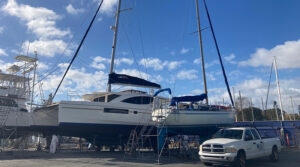
“The frustrating part is that many of these problems start small and are relatively inexpensive to address,” Lundeen said. “Regular inspections and taking care of issues as soon as they appear can make the difference between a routine maintenance visit and a major, unexpected repair bill.”
At The BoatYard, Schem said corrosion of underwater metals and blistering of fiberglass hulls are two of the more common problems that can become increasingly expensive when ignored.
Corrosion can affect propellers, shafts, struts, rudders and other underwater hardware. Blistering can also progress beyond what initially appears to be a cosmetic problem, with some blisters potentially indicating moisture intrusion or deterioration beneath the gelcoat.
“A common misconception is that if a boat is operating normally, everything below the waterline must be in good condition,” Schem said. “Unfortunately, many expensive problems develop long before there are obvious symptoms.”
One misconception the Volaskis caution against is assuming that a boat needs less maintenance simply because it spends more time tied to the dock.
“One thing we always remind customers is that a boat sitting at the dock still requires maintenance,” the Volaskis said. “Just because a boat isn’t being used doesn’t mean it isn’t deteriorating.”
Those observations underscore why several of the boatyard professionals interviewed for this story emphasized the importance of a knowledgeable diver between haul-outs.
A diver may be among the first people to notice unusual anode wear, propeller damage, marine growth, rust, blistering or changes beneath the waterline that the owner cannot see from the dock. Schem specifically encourages owners to ask their divers to watch for rust on the keel, blistering and other signs of deterioration.
Owners also should pay attention to what the boat is telling them while underway. The Volaskis identify unusual vibrations, reduced performance, increased fuel consumption, unexpected water in the bilge and visible corrosion as potential warning signs that deserve investigation.
Lundeen also singled out vibration as a symptom that should not be ignored. Propeller damage or misalignment can cause vibration and, if allowed to continue, may contribute to additional wear on shafts, bearings and other components.
A bent propeller, fouled running gear or another underwater problem may be easier to diagnose once the vessel is out of the water, but recognizing those symptoms beforehand gives the yard a place to start.
The hull itself should also receive more than a quick glance. After pressure washing removes marine growth, inspect the bottom for blistering, cracks, impact damage and other irregularities. Signs of previous repairs should also be examined to determine whether those areas remain sound.
This is also a good opportunity to photograph the hull and running gear. Those images provide a record of the boat’s condition and can make it easier to compare changes during future haul-outs.
Preparing for Haul-Out Day
Ask the yard what it wants owners to do before arrival. Procedures differ, particularly regarding fuel and water levels, onboard equipment and access to the vessel.
Remove or secure loose gear before moving the boat into the haul-out area. Owners should also make sure technicians can reach batteries, seacocks, machinery spaces and other components scheduled for inspection.
Having a clear to-do list becomes particularly useful at this stage. Instead of beginning the conversation after the vessel is already sitting on blocks, owners can identify known concerns, maintenance requirements and desired projects beforehand and discuss them with the yard.
New’s advice to clear work areas serves a similar purpose, and Lundeen emphasized that the more prepared both the owner and yard are before the vessel arrives, the more efficiently work can begin.
Schem said preparation and communication allow a yard to plan work more effectively, reduce delays and minimize unexpected costs. Service records, advance notice of known problems and clear access to equipment can all help technicians begin with a better understanding of the vessel.
If several contractors will be involved, arrange their schedules before the haul-out whenever possible. There is little benefit in having a boat sitting on blocks while everyone waits several days for a mechanic or propeller technician to become available.
Owners should also make sure the yard and contractors have current contact information. Unexpected discoveries are not unusual once a boat is out of the water, and quickly approving or declining additional work can help keep the project moving.
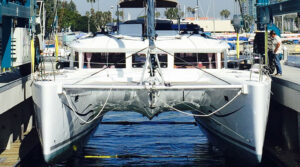
How Often Should a Boat Be Hauled Out?
There is no universal haul-out schedule that works for every vessel, and the boatyard professionals interviewed by The Log offered a range of recommendations.
Fernandez recommends that owners plan to haul their boats at least every 18 to 24 months. New also points to approximately two years as a useful benchmark, although vessel use and the condition of the bottom paint and running gear can affect that schedule.
The Volaskis said many Southern California boat owners plan on bottom painting approximately every 18 to 24 months, depending on the type and condition of the paint, where the vessel is kept and how well it is maintained. Regular underwater inspections between haul-outs remain important for monitoring zincs, marine growth and running gear.
“Every boat is different, so we recommend having a regular maintenance plan rather than waiting until something goes wrong,” the Volaskis said.
Marine Group Boat Works recommends a more frequent schedule. Lundeen said owners should plan for a haul-out at least once a year for regular bottom maintenance and inspection, while recognizing that vessel use, where the boat is kept and the type of bottom paint can change the appropriate interval.
Between haul-outs, Lundeen recommends regular bottom cleaning and inspection, typically every three to four weeks during warmer months, with attention paid to zincs, propellers and running gear.
The BoatYard takes a somewhat different approach. For most recreational vessels in Southern California, Schem generally recommends planning a haul-out every two to four years, depending on the vessel, operating environment and type and condition of the bottom paint.
Hull material, marina conditions, frequency of use, underwater cleaning practices and the condition of the running gear can all affect that interval.
Schem cautioned, however, that a two- to four-year haul-out schedule should not be interpreted as a two- to four-year inspection schedule.
“Underwater components should be monitored regularly between haul-outs, particularly sacrificial anodes, running gear and through-hull fittings,” Schem said.
That is another reason he considers a relationship with a knowledgeable diver valuable. A diver may recognize a developing problem long before the vessel reaches its next scheduled haul-out.
The recommendations from the five yards range from annual haul-outs to intervals as long as four years, illustrating why there is no single calendar that applies to every Southern California boat. Bottom paint, vessel use, marina conditions, hull material, cleaning practices and the results of regular underwater inspections all play a role in determining when a boat actually needs to come out.
The amount of time a boat spends in the yard can vary just as widely. A straightforward bottom job on a smaller boat may take several days when the yard isn’t busy and no additional problems are discovered. More extensive work involving fiberglass repairs, running gear, mechanical service or multiple contractors can keep a vessel ashore considerably longer.
Weather can affect the schedule as well. Certain coatings and repairs require appropriate temperature and moisture conditions, and rain can interrupt exterior work.
That makes timing important. Spring and the period leading into summer can be busy as Southern California boat owners prepare for the primary boating season. Scheduling farther in advance or asking a yard about less congested periods may provide more flexibility.
Avoid the “While We’re Here” Trap
A haul-out can become expensive quickly because it’s tempting to tackle every project once the boat is ashore.
Some additional work makes sense. If an aging through-hull is already accessible or a propeller clearly needs attention, handling it during the existing haul-out could prevent another trip to the yard.
Schem pointed out that the incremental cost of addressing a developing problem during an already scheduled haul-out can be substantially less than having to haul the boat again specifically for that repair.
Other projects may be able to wait.
Before the haul-out, divide the work into three categories: required maintenance, repairs that make sense while the boat is ashore and optional improvements. Establishing priorities beforehand can make it easier to respond when the yard calls with additional recommendations.
Owners can also ask for approval before work exceeds an agreed amount. That provides some control over a project that can otherwise expand as additional issues are discovered.
Preventative maintenance between haul-outs can also determine how long that list becomes.
“Follow preventive maintenance recommended by the manufacturer,” Fernandez said. “Use your boat and run all of the systems periodically. A simple routine inspection by the boat owner or captain can save a lot of money.”
The Volaskis offer similar advice, particularly for owners who may be tempted to postpone maintenance until a component fails.
“Don’t wait until something breaks to maintain your boat,” they said. “Preventative maintenance is one of the best investments a boat owner can make. Something as simple as checking your zincs, keeping your hull clean or addressing a small leak can potentially save thousands of dollars later.”
Lundeen’s advice follows the same principle: Do not put off preventative maintenance simply because everything appears to be working properly.
He recommends regularly inspecting engines, cooling systems, through-hull fittings, electrical connections and running gear and addressing unusual conditions early. Manufacturer-recommended service intervals should also be followed even when equipment appears to be operating normally.
For Schem, the financial argument for preventive maintenance is equally straightforward.
“One of the best ways to save money on boat maintenance is to identify small problems before they become major repairs,” he said.
New recommends having a professional look over the vessel regularly rather than relying solely on scheduled haul-outs to uncover problems. His recommendation is a monthly inspection, with particular attention paid to through-hulls and other critical components.
Taken together, the advice emphasizes that yard maintenance should not begin and end with the travel lift. Regularly using the boat, monitoring its systems, listening to feedback from divers and having critical equipment inspected between haul-outs can help identify developing problems before they turn into larger repairs.
For more information about Basin Marine, please visit basinmarine.com.
Inspect Before Relaunching
Before the boat returns to the water, walk around it.
Check the completed bottom coating, verify that anodes and other scheduled components were addressed and inspect the running gear. Confirm that drain plugs, transducers and through-hull components are properly installed and that any work orders have been completed.
Once the vessel is launched, the inspection isn’t yet finished. Check the bilge and every area where below-the-waterline work was performed for signs of leaks. Test steering and controls and pay attention to vibration or other changes during the trip back to the slip.
Keep invoices and notes describing what was completed, including the type of bottom paint used and the date it was applied. Schem’s advice adds another reason to maintain those records: knowing precisely what coating was previously applied can affect the preparation and products required during the next bottom job.
Those records can also help establish future maintenance intervals and provide useful information when the boat is eventually sold.
For the Volaskis, maintaining boats is also connected to preserving the boating culture surrounding Channel Islands Harbor. They said they are especially proud of the relationships Anacapa Boatyard has developed with customers and the Southern California boating community since they took ownership of the yard in 2014.
“For us, it’s about more than hauling boats,” they said. “It’s about helping people maintain their investment, enjoy boating and preserve the maritime tradition of Channel Islands Harbor.”
For more information on Anacapa Boatyard, please visit anacapaboatyard.com.
Schem expressed a similar connection to the boating community in Marina del Rey. As an active boater himself, he said he understands the importance of owners having a dependable yard they can trust. The BoatYard’s involvement with Del Rey Landing and local yacht clubs also keeps the business connected with recreational boaters throughout the harbor.
For Southern California boat owners, hauling out may never be the most exciting part of owning a boat, but it’s one of the few opportunities to see the entire vessel from the waterline down. Whether the boat is hauled close to its home slip or travels farther for yard work, the principle is the same: look beyond the project that brought the boat out of the water in the first place.
A careful inspection, a clear plan and routine preventative maintenance can reveal small problems while they are still manageable, rather than waiting for them to become considerably larger and more expensive once the boat is back in the water.