For those who spend their lives on the water, the ocean is more than a backdrop — it’s a constant presence that shapes decisions, livelihoods, and identity. From commercial fishermen tracking seasonal changes to recreational boaters navigating familiar harbors, the rhythms of the sea influence nearly every aspect of maritime life. This spring, the Santa Barbara Maritime Museum is inviting that same maritime community to step ashore and view the ocean through a different lens with its newest exhibition, Aquean.
Opening April 9 and running through July 26, 2026, “Aquean: Photographs, Paintings, and Prints by David Ellis and Larry Vigon,” offers a multimedia exploration of the sea that resonates deeply with those who know it best. Through photography, painting, printmaking, video, and mixed media, the exhibition reflects on time, transformation, and the ever-changing nature of California’s coastline — concepts that are inherently familiar to boaters, anglers, and maritime professionals alike.
Rather than presenting the ocean as a static subject, Aquean captures its unpredictability and constant evolution, something the maritime community experiences firsthand. Weather shifts, coastal erosion, changing fisheries, and harbor developments all reflect the same underlying truth explored in the exhibition: the ocean is never still, and neither are the lives connected to it.
Artist David Ellis brings this perspective into focus through his long-term project “Lobospheres: The Lost Souls of Point Lobos,” a body of work developed over more than two decades. His abstract and impressionistic photographs highlight textures, shapes, and figures formed naturally by wave action along the rugged coastline of Point Lobos. For mariners who have spent years observing subtle changes in familiar coastlines, Ellis’s work echoes a shared understanding — that the ocean quietly reshapes everything it touches.
In describing the project, Ellis emphasized the dual nature of the marine environment, noting that it reflects both beauty and uncertainty. That balance is something Southern California’s boating and fishing community knows well, where calm seas can quickly give way to challenging conditions and where productive fishing grounds can shift with changing ocean patterns.
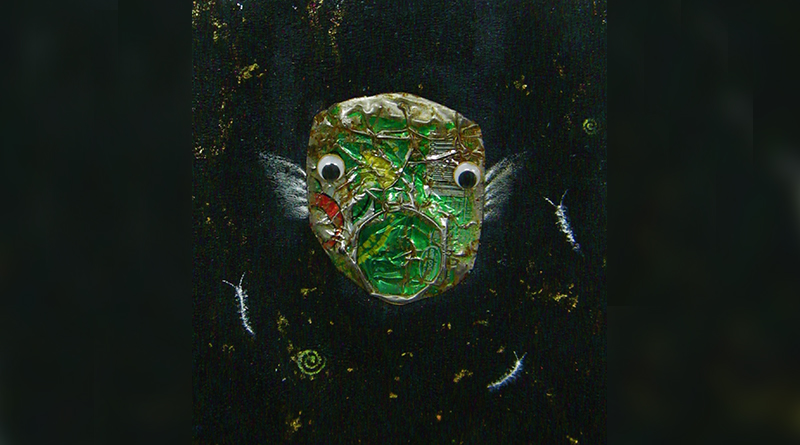
Complementing Ellis’s work is Flotsam & Jetsam by Larry Vigon, a wide-ranging collection that incorporates paintings, prints, found objects, and dimensional pieces inspired by the sea. For those in the maritime world, the concept of flotsam and jetsam is more than artistic — it’s part of everyday vocabulary, referring to the debris and remnants carried by currents and tides. Vigon transforms those familiar elements into visual narratives that reflect both the physical and symbolic impact of the ocean.
His work draws from decades of creative experience, including a career designing iconic album covers and visual identities, yet in Aquean, the focus shifts toward a more elemental connection with the marine environment. The pieces invite viewers to interpret the ocean not only as a place of recreation or work, but as a force that leaves lasting impressions on everything it encounters.
For the maritime community, this perspective aligns closely with lived experience. Harbors evolve, shorelines shift, and even well-known anchorages can look different from one season to the next. The exhibition reinforces a reality that many boaters and anglers understand intuitively: the ocean is both enduring and constantly changing.
According to SBMM Curator and Director of Collections and Exhibits, Emily Falke, the exhibition was designed to highlight that connection. By bringing together the works of Ellis and Vigon, Aquean captures the dynamic relationship between the ocean and the coastline, while also reflecting on broader themes of time and environmental change.
For those who spend time on the water, these themes are not abstract. They are reflected in everyday decisions, from choosing when to leave the dock to understanding how shifting conditions affect navigation, fishing, and safety. The exhibition offers an opportunity to step back from those practical considerations and view the ocean through an artistic and reflective lens.
At the same time, Aquean serves as a reminder of the importance of stewardship within the maritime community. As coastal environments face increasing pressure from development, climate change, and human activity, the balance between use and preservation becomes more critical. The exhibition subtly underscores that responsibility, encouraging viewers to consider what is being preserved and what may be lost over time.
For The Log’s readership, who include a wide range of Southern California boaters, anglers, and marine professionals, Aquean offers a unique point of connection. It bridges the gap between art and experience, translating the familiar sights and forces of the ocean into a new form of storytelling.
Whether navigating offshore waters, cruising along the coast, or spending time in local harbors, the maritime community shares a common relationship with the sea — one defined by respect, awareness, and a recognition of its power. Aquean reflects that relationship in a way that is both visual and emotional, offering a perspective that complements, rather than replaces, time spent on the water.
As the exhibition opens this spring, it provides an opportunity for boaters and anglers to engage with the ocean in a different context, one that highlights not just its function, but its meaning. In doing so, it reinforces a connection that extends beyond navigation charts and fishing reports, reminding the maritime community that the sea continues to shape not only the coastline, but the people who depend on it.
For more information about exhibit hours and programming, visit sbmm.org.