Every angler in California has heard the question at some point: “Do you have your fishing license?” For some, it feels routine. For others, it’s something remembered only after arriving at the water. What often gets overlooked is that a California sport fishing license is much more than a legal requirement. It’s a direct investment in the fisheries, habitats, and conservation programs that make fishing in this state possible in the first place.
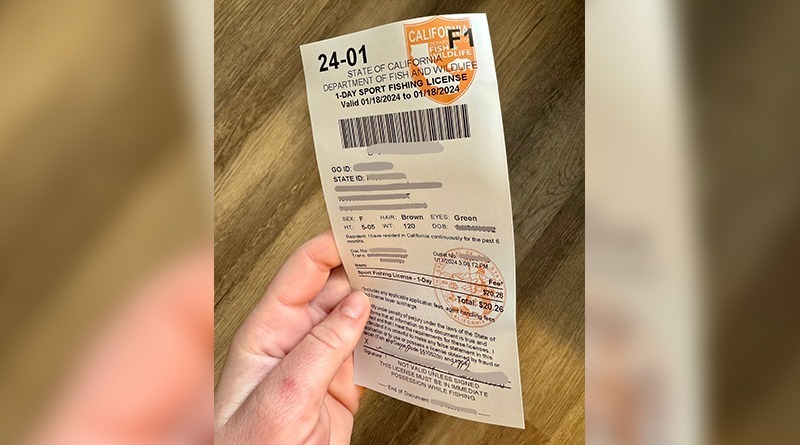
By law, any person attempting to take fish, mollusks, crustaceans, invertebrates, amphibians, or reptiles in inland or ocean waters must carry a valid sport fishing license issued by the California Department of Fish and Wildlife. This requirement applies whether an angler is casting from a skiff, working hoop nets at night for lobster, fishing from shore, or drifting a river for steelhead. While there are limited exceptions, such as fishing from a public pier or on designated free fishing days, those exceptions do not remove the need for report cards when targeting certain species.
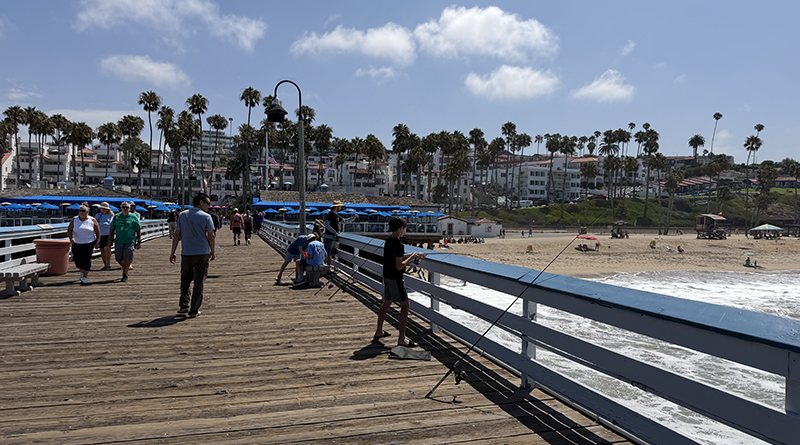
However, according to the Department’s Marine Region Outreach Team, one of the most common misunderstandings revolves around those very pier exemptions. “The most common misunderstanding is people think you do not need a fishing license to fish from any pier or manmade structure,” they explain. “While it is true a fishing license is not required when you’re fishing from a ‘public pier,’ there is a very specific definition of what constitutes a public pier.” They point to the formal definition in California Code of Regulations Title 14, Section 1.88, which requires that the pier be publicly owned, connected to land, and purposely built or functioning to allow public fishing access, or be a publicly owned jetty or breakwater forming the seaward-most boundary of a harbor.
Another frequent misconception involves how anglers carry their license. “Another common misunderstanding is that people think Wardens are able to look up a person’s fishing license at any time,” the Department notes. “This isn’t the case and even if it is possible to look up a person’s fishing license, the law states the license must be in the angler’s immediate possession.” They add that while anglers can now display their license on their phone, it must be accessed through the official CDFW License App, and users should log in before losing cellular service so the license remains visible offline.
Understanding where license money goes helps explain why this requirement is so important. Sport fishing license revenue is one of the primary funding sources used by the state to manage fisheries, conduct biological research, restore habitat, operate hatcheries, and enforce regulations. These funds pay for fish counts, stock assessments, water quality monitoring, and the scientific work that determines seasons, bag limits, and conservation measures. In effect, every license purchased supports the protection of sturgeon in the Delta, steelhead in inland rivers, lobster along the coast, and the ecosystems that sustain halibut, bass, tuna, and rockfish offshore.
Because of this, a fishing license isn’t simply permission to fish. It’s part of the system that keeps fishing viable for the future.
California now offers a 365-day sport fishing license that remains valid for a full year from the date of purchase rather than expiring at the end of the calendar year. Yet despite easier access, wardens still encounter the same issue most often in the field. “Fishing without a valid sportfishing license in possession is always the most common violation Wardens find,” the Department says. They also note frequent violations tied to spiny lobster report cards, particularly failing to obtain one before taking lobster or failing to fill it out properly.
The consequences can be more serious than many anglers realize. “Someone who is fishing without the proper license or required report cards are liable to receive a citation which could result in a fine,” they explain. “These violations are typically infractions and carry a fine up to $1,000. Additionally, someone who is fishing without the proper license or report card cannot legally catch fish, so anything they may have caught and kept could be seized by the Warden.”
As anglers prepare for a trip, it’s often the additional validations and report cards that are forgotten. For anyone fishing in ocean waters south of Point Arguello, an Ocean Enhancement Validation is required unless fishing under a one- or two-day license. Anglers fishing with two rods in inland waters must have a Second Rod Validation, and those using crab traps instead of hoop nets must carry a Recreational Crab Trap Validation.
Beyond validations, report cards are mandatory when targeting certain species, including steelhead, sturgeon, North Coast salmon, and spiny lobster. Even anglers who don’t need a sport fishing license, such as children under 16 or those fishing from public piers, must still carry the appropriate report card when pursuing these species.
This is where the data becomes critical. “The data collected from report cards are a vital part of the fishery management of many species,” the Department explains. “Report data helps to estimate the overall populations of species, the total take of the recreational fishery, and which areas are more regularly fished by recreational anglers.” They note that this information is shared with state and federal agencies and directly informs decisions on bag limits, size limits, and season dates.
The importance of that data has become evident in recent regulation updates. The Department points to a new 2-fish sub-bag limit for canary rockfish implemented in late 2025 that will remain in place for the 2026 groundfish season, as well as the statewide management of sunset and vermilion rockfish together as a species complex due to their nearly indistinguishable appearance. They also remind anglers using hoop nets to be aware of new rules regarding colored lines that may conflict with markings required in other fisheries.
Before heading out, the Department encourages anglers to use the Marine Region’s Ocean Fishing webpage and the Ocean Sport Fishing Interactive Web Map to check regulations by location, view management boundaries and marine protected areas, and confirm bag and size limits. They also recommend checking licenses in advance and using the CDFW mobile app to ensure it is accessible even without service.
In the end, purchasing a fishing license is one of the simplest ways anglers can contribute to the long-term health of the fisheries they enjoy. It funds conservation, research, enforcement, and habitat protection while ensuring that fishing opportunities remain available throughout California’s waters.
Before heading out on the next trip, whether offshore, to a local lake, or to a favorite stretch of beach, take a moment to confirm that your license is current and your validations and report cards are in order. This is not only a legal requirement, but also part of being a responsible angler and a steward of