Experienced boaters know that even a short sail to Catalina Island can result in a boat incurring minor damage, be it to the engine, propeller, sails, rigging, or even plumbing in the galley or head. The best way to prepare for such inconveniences is to carry a modest collection of tools, test equipment, and repair materials, which will all help you tend to these little mishaps and, in most cases, get you back to enjoying your boat outing in little time.
Hull and Deck
Some of the most common cases of damage found on a boat are cracks and gouges in the hull and deck. A crew member drops the anchor on the foredeck — cracking the fiberglass laminate. Or, perhaps someone pops a running light off its place on the cabin coaming, damaging the gelcoat. Filling small cracks and holes in fiberglass is an easy, though potentially messy job, if not done correctly.
First clean the area well and mask the area to be repaired to protect the surrounding gelcoat. Then apply either 3M 4200 or 5200, depending on the type of damage. For repairs you may want to modify at some point, use 4200, which can be cut and removed easily. For permanent repairs or installations, 5200 is the ultimate glue. But beware, once 5200 sets and cures, you’ll need cutting tools to remove it.
If you want a good, all-around, waterproof sealant for thru-hull fittings and deck-mounted fixtures, Life-Calk from BoatLIFE is the choice of many sailors. It’s easy to work with, fairly easy to clean, and lasts a long time in the tube — even after repeated opening and capping.
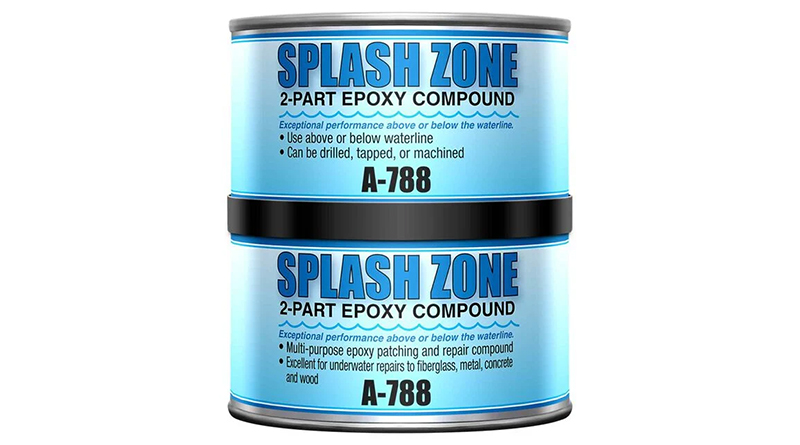
Every boater’s worst fear is water rushing into the hull through broken fiberglass, especially around the prop shaft. Pettit Splash Zone Epoxy A-788 is a thick putty you knead with your hands and stuff into a fissure in the hull where it hardens, even while submerged in water. Splash Zone adheres to aluminum, steel, fiberglass and wood and is available in quart, gallon and two-gallon kits.
Hand Tools
A modest collection of hand tools for a coastal boat should include screwdrivers, end wrenches, socket wrenches, socket extensions, pliers, Vise Grips, and a ball peen hammer. For larger vessels, a cordless drill can make repairs and device installations easier; a prop puller can make the job of switching or repairing a prop much faster and simpler.
While some skippers talk about acquiring stainless wrenches and other hand tools, their higher cost and lower tensile strength doesn’t make a very convincing argument. Vanadium steel socket wrenches and breaker bars stand up better to extreme forces, an important consideration if you’re 30 miles offshore and trying to switch out a faulty spark plug — or at anchor in Catalina Harbor, trying to loosen the bow roller before raising the anchor. Protect steel tools with a light coat of machine oil and they’ll last on your boat for decades.
Power Tools
Generally speaking, you shouldn’t expect to need power tools for short, weekend coastal voyages. However, if you’re considering a trip to Ensenada or the Channel Islands for a few weeks, carrying a limited set of power tools may be in order.
At the very least, a cordless drill with a set of high-test bits will give you peace of mind in the event that a broken flange or piece of deck hardware needs mending with a couple of bolts or screws. Another essential item is a cordless Dremel tool, which can be used as a grinder, vibrator sander, hacksaw, or multipurpose saw. It’s ideal for repairs and fabrications on wood and plastic — from the masthead of a sailboat to the engine stringers in a cabin cruiser.
Plumbing
A healthy assortment of plumbing supplies not only guarantees freshwater to the galley and head sinks, but it also means keeping your vessel afloat and the engine properly cooled. Crevice corrosion is the mortal enemy of every stainless hose clamp ever made, so carry a pile of these in different sizes. Also, a wooden plug should be attached by string to each thru-hull fitting, just in case one breaks off and allows sea water to flood the vessel.
Also worth considering are basic repair parts for the head, faucets and bilge pumps. Electric utility pumps have changeable impellers similar to those in raw water cooling pumps for engines, so carrying a spare impeller could save you some headache in case of pump failure.
Twelve-volt pumps can also die from water intrusion and subsequent motor failure, so it’s wise to carry a spare bilge pump.
Carrying a spare raw water engine cooling pump for coastal cruising isn’t necessary, but if you’re planning an offshore cruise to Cabo San Lucas or Hawaii, consider taking one along. At the very least, carry an extra impeller and pair of shaft seals, just in case.
Electrical
The degree of complexity of each vessel’s electrical and multi-input battery charging system will dictate the list of spares and equipment to be packed in the electrical kit. First and most important in your electrical toolbox is a multimeter for measuring voltage, amperage, and resistance. This will allow you to test battery charge and continuity in electrical circuits throughout your vessel.
The ultimate multimeter for boaters is the Fluke 87V Digital Multimeter, capable of measuring up to 1,000V AC/DC, along with ohms for continuity testing. The Fluke 87V with wire test leads and alligator clips fits in a small bag and is easy to store in your toolbox. For a great tester at a much lower price, check out the CEN-TECH 9-Function Digital Multimeter at Harbor Freight.
All coastal and offshore vessels should carry an array of LED or halogen bulbs, coax cable connectors, cable ties, and marine-grade wire of various gauge sizes and colors. Store electrical materials, such as eye fittings, sleeve connectors, and buss fuses, in a plastic organizer tray in the same manner as bolts and screws. Also carry along a tool for cutting wire and crimping eye and sleeve connectors, permitting quick repairs while at anchor.
Having aboard a small pencil soldering iron with two or three sizes of tips can make wiring repairs easy, as long as you have an AC inverter. Handheld, gas-powered soldering guns are also available; however, I’ve found them to be little more than a nuisance, so I stick with the AC electric variety. Also, carry a roll of small-gauge soldering wire and a little jar of flux, which should make your soldering jobs far easier. For wiring, you can use acid flux, but for copper freshwater pipes — which your boat probably doesn’t have — use only non-acid flux.
Keeping your floating castle in top operating condition on coastal or offshore journeys depends on carrying the repair and maintenance supplies necessary for safety and comfort. Keep your toolbox and repair supplies properly stocked and enjoy many years of fun, safe voyaging.