Part 2: What Anchor Is Right for Your Boat? Matching Type to Bottom
Anchoring is one of the most fundamental skills in boating, yet it remains one of the most misunderstood. Many boaters assume that once the anchor reaches the bottom, the job is finished. In reality, staying securely in place has far more to do with the type of anchor on your bow, the bottom beneath your hull, and how your entire ground tackle system is configured than most people realize.
This becomes especially important in Southern California, where boaters routinely encounter sand flats, silty mud, eelgrass, thick kelp, and rocky bottoms — sometimes within the same anchorage. In these conditions, the anchor you rely on can mean the difference between a calm night at anchor and an anxious watch as the boat slowly drifts toward shore.
Not all anchors are designed to perform in the same environments, and understanding how they work is the first step toward making the right choice.
An anchor does not hold because of its weight alone. Its true purpose is to dig into the seabed, bury itself, and create resistance against a horizontal pull. The more efficiently it can penetrate the bottom and stay buried, the better it will perform. This is why anchor design often matters more than simply selecting a heavier model.
Despite this, many boaters still use whatever anchor came with the boat when they purchased it, without ever considering whether it’s suited for the type of anchoring they do most often. For those cruising to Catalina Island, anchoring inside Newport Harbor, or dropping the hook along sandy coves in San Diego, the bottom composition should directly influence the anchor choice.
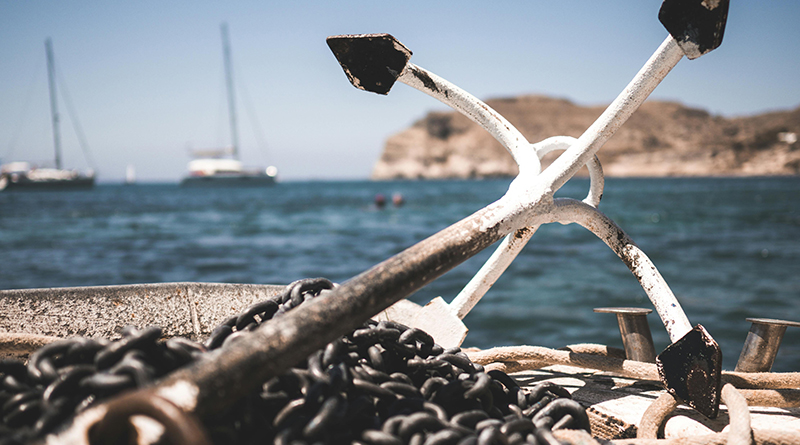
Traditional fluke anchors, often referred to as Danforth-style anchors, are known for their excellent performance in sand and mud. Their wide, flat flukes bury quickly into soft bottoms and generate impressive holding power for their size. However, they perform poorly in rocky areas and can be nearly useless in heavy kelp, where vegetation prevents the flukes from reaching the seabed.
Plow anchors, with their single curved blade, tend to perform better in mixed bottoms. They can reset if the wind or current shifts and work reasonably well in sand, mud, and some rocky conditions. For this reason, they are popular among cruisers, although they depend heavily on proper scope and sufficient chain to function effectively.
Claw-style anchors, commonly known as Bruce anchors, are valued for their reliability across a variety of bottoms, particularly sand and mud. While they may not bury as deeply as fluke anchors, they are forgiving and reset easily, making them useful in changing conditions.
Newer spade and scoop-style anchors represent a more modern approach to anchor design. These anchors are engineered to penetrate quickly and hold across a broad range of bottom types. They perform exceptionally well in sand and mud and tend to do better than traditional designs in kelp and grass because their shape allows them to slice through vegetation and reach the bottom below.
For boaters who frequently anchor in kelp-heavy areas such as Catalina, this distinction becomes critical. Kelp can foul traditional anchors before they ever reach the seabed, leaving them suspended in vegetation with little to no holding power.
Another common misunderstanding among boaters is the belief that a heavier anchor automatically provides better holding. While weight contributes to performance, the design of the anchor plays a far more significant role in how effectively it can bury itself. A properly sized modern anchor with an efficient design will often outperform a heavier, outdated design in the same conditions. Many boaters try to compensate for poor holding by increasing anchor weight instead of selecting a design better suited to their cruising grounds.
Even the best anchor, however, cannot do its job without the right rode setup. The combination of chain, nylon line, and proper scope determines whether the anchor is being pulled horizontally, allowing it to dig in, or vertically, which can cause it to break free. Chain adds weight that keeps the pull angle low, while nylon line provides the shock absorption needed to handle wind and swell.
Insufficient chain, worn line, or inadequate scope are some of the most common reasons anchors drag, regardless of design. As a general guideline, a minimum of 5:1 scope should be used in calm conditions, with more deployed as weather and sea state change. Without enough scope, even the best anchor cannot perform as intended.
Many anchoring issues stem from simple oversights. Boaters often drop anchor without considering the bottom type, fail to back down slowly to ensure the anchor is properly set, or rely solely on visual landmarks instead of checking for movement using GPS. Just as frequently, the anchoring system itself is not inspected before the season begins. Shackles, swivels, chain, and line all wear over time, and a failure at any point in the system can render the anchor ineffective.
As boating season approaches, this is the ideal time to evaluate ground tackle. Is the anchor on the bow truly suited for the conditions you anchor in most often? Is there enough chain? Is the line in good condition? Are the connections free from corrosion and wear?
Anchoring is not simply about convenience. It’s one of the primary safety systems on any cruising boat. Whether stopping for lunch in a quiet cove or spending the night at anchor, the ability to stay securely in place is essential.
Choosing the right anchor for your boat, matched to the bottoms you frequent, and ensuring the rode is properly configured can be the difference between confidence and concern every time you drop the hook.