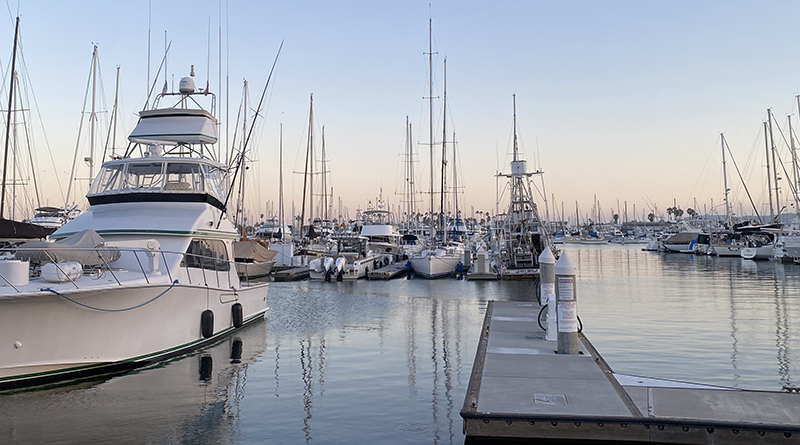
As the boating world looks ahead to 2026, the yacht market is entering a phase that many buyers and brokers have been waiting for: stability.
After several years marked by supply-chain disruptions, unpredictable delivery timelines, and rapid price swings, the market is settling into a more balanced rhythm. According to industry reporting, including SuperYacht Times’ 2025 State of Yachting, brokerage activity has remained steady, new-build pipelines are more reliable, and inventory levels have normalized. For buyers, that translates to clarity. For sellers and builders, it signals a healthier, more sustainable marketplace.
From The Log’s perspective, the story of the 2026 yacht market is not about dramatic spikes or sharp corrections. It is about predictability returning to an industry that thrives on long-term planning.
Across premium yacht categories, transaction activity has remained consistent. Late-model inventory, particularly in the 40- to 70-foot range, has become more available, giving buyers real options without the pressure seen in earlier years. Pricing has stabilized, allowing for more accurate valuations and fewer emotional decisions driven by scarcity. Experienced owners are driving much of the demand, especially for pedigree brands, and buyers are approaching purchases with more research and intention.
Looking at the broader North American boat market helps put the yacht segment into context. While overall powerboat sales softened through 2024 and 2025, yachts stood out as the only category to post measurable growth. Mainstream segments such as pontoons, wake boats, jet boats, and stern drives saw declines, while value-oriented categories like freshwater fishing boats and personal watercraft showed resilience. Yachts, however, continued to attract buyers who were less sensitive to short-term economic fluctuations.
Heading into 2026, that trend is expected to continue. Pontoon and leisure craft sales are projected to remain flat or decline slightly, reflecting price sensitivity among those buyers. Wake-sport boats and similar categories are likely to stay soft unless broader economic confidence improves. Fishing boats and practical trailerable models should remain stable. Yachts and premium boats, meanwhile, are expected to see modest growth, supported by high-net-worth buyers who continue to upgrade and transact regardless of broader market noise.
For yacht buyers, this divergence matters. While the mass market recalibrates, the yacht segment continues to outperform, offering consistency rather than volatility.
On the new-build side, builders have shifted their focus from expansion to execution. Build schedules are more predictable, delivery windows are clearer, and manufacturers are investing in efficiency and comfort rather than chasing rapid volume. Stabilization systems, joystick docking, and advanced handling technology are becoming standard rather than optional. Interior layouts are increasingly lifestyle-driven, with more emphasis on outdoor living, flexible spaces, and connection to the water. In some cases, selective incentives are available on prior-year inventory, but the overall tone of the new-yacht market is confidence rather than urgency.
The brokerage market is equally compelling. Buyers in 2026 can expect a deeper pool of well-maintained, late-model yachts, along with sellers who are motivated but realistic. Negotiation is once again part of the process, especially compared to the highly competitive conditions of 2021 and 2022. At the same time, the gap between well-serviced yachts and those with deferred maintenance has widened. Modern systems, updated electronics, and stabilization equipment have become key differentiators.
Ownership planning remains a central theme. Interest rates still factor into decision-making, but for many yacht buyers, opportunity and long-term value matter more than short-term financing friction. Insurance and dockage costs, which surged in recent years, have begun to stabilize. Upgrades related to comfort and efficiency continue to enhance resale value, and clean service records remain one of the strongest predictors of buyer confidence.
Design trends for 2026 reflect how owners actually use their boats. Expansive outdoor social areas, brighter interiors with larger windows, multi-purpose layouts, and advanced comfort systems are now baseline expectations. Builders are responding to a demand for versatility, allowing owners to cruise farther, stay aboard longer, and entertain more comfortably.
One factor that continues to grow in importance is after-sale service. Buyers are increasingly loyal to dealerships and brokers who remain involved well beyond delivery day. Trusted service networks, trained technicians, and detailed maintenance documentation are no longer secondary considerations. They are central to both enjoyment and long-term value.
Within specific segments, sportfishing yachts between 50 and 90 feet remain in steady demand, driven by performance-minded owners. Motor yachts in the 40- to 70-foot range represent one of the most active and well-supplied categories. Larger motor yachts and superyachts are seeing healthy brokerage conditions, with sellers pricing realistically. Center consoles between 30 and 45 feet remain competitive, particularly for second-boat owners.
So is 2026 a good year to buy a yacht? From where The Log sits, the answer is yes, especially for informed and prepared buyers. The market offers predictable values, improved inventory, stable builder schedules, and a brokerage environment that rewards due diligence rather than speed.
In a year defined less by hype and more by balance, yacht ownership in 2026 looks less like a gamble and more like a considered investment in lifestyle, time on the water, and long-term enjoyment.