Historic craftsmanship, living history, and one of Southern California’s most recognizable schooners return to Balboa Bay this June.
There is something different about wooden boats.
Perhaps it’s the way sunlight catches varnished rails. The sound of timber beneath your feet. Or the realization that unlike many modern vessels designed for convenience and efficiency, wooden boats often tell stories long before they leave the dock.
That appreciation for craftsmanship, preservation, and maritime tradition returns to Newport Harbor this summer as the Newport Beach Wooden Boat Festival welcomes visitors back to Balboa Bay for another year of historic vessels, dockside exploration, and waterfront celebration.
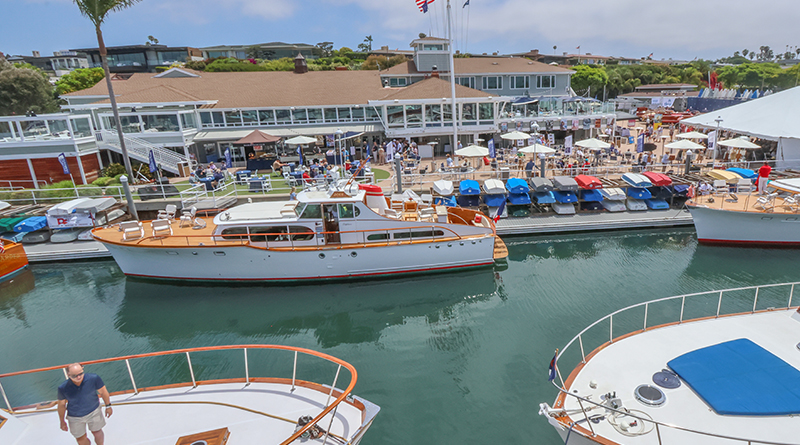
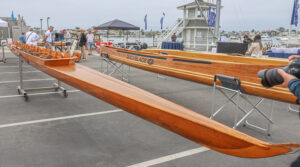
Set for Saturday, June 13, from 10:00 a.m. to 5:00 p.m., at Balboa Yacht Club in Corona del Mar, the annual event invites attendees to experience more than 40 wooden vessels displayed both on land and in the water while connecting directly with the owners, restorers, and caretakers helping keep maritime heritage alive.
Admission is $10 for adults, while children under 12 are free.
One thing that becomes clear through conversations with organizers is that the festival’s appeal extends far beyond simply looking at beautiful boats.
According to Emily O’Connell, Communications Manager for Balboa Yacht Club, what continues drawing both longtime wooden boat owners and first-time visitors is the opportunity to experience maritime history in a way that feels active and personal rather than distant.
“The Newport Beach Wooden Boat Festival continues to resonate because it offers something increasingly rare: a living connection to maritime history,” O’Connell said. “For longtime owners, it’s a chance to share their passion with a community that understands the time, skill, and dedication these vessels require. For first-time visitors, the appeal is often immediate and emotional.”
She explained that wooden boats tend to leave an impression that many modern vessels do not.
“Wooden boats have a warmth, character, and craftsmanship that isn’t commonly seen in modern production boats,” O’Connell said. “The combination of hands-on storytelling, on-the-water display, and direct access to owners creates an experience that feels both educational and deeply personal.”
This year’s featured vessel arrives with a very different story than last year’s headliner.
In 2025, festival visitors gathered around the Western Flyer, the legendary fishing vessel best known for carrying author John Steinbeck and marine biologist Ed Ricketts on their landmark 1940 expedition into the Gulf of California. Their observations eventually became Sea of Cortez, later reworked into Steinbeck’s The Log from the Sea of Cortez, cementing the vessel’s place in literary and maritime history.
This year, however, the spotlight shifts from literary exploration to the age of sail.
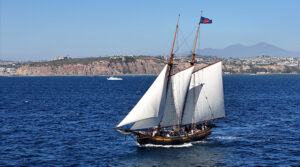
The featured vessel for 2026 is the Spirit of Dana Point, Southern California’s iconic tall ship and one of the region’s most recognizable examples of living maritime history.
O’Connell said the vessel stood out as a natural fit for this year’s festival because it reflects one of the event’s broader goals: celebrating boats that remain active rather than simply preserved.
“One of the highlights this year is the continued celebration of the Spirit of Dana Point, which represents both historical interpretation and active seamanship,” O’Connell said. “Visitors are especially drawn to vessels that are beautifully restored and still actively sailed, and that balance between preservation and use is a central theme of the show.”
She added that another aspect visitors consistently connect with is hearing directly from owners who have spent years restoring their boats.
“We also consistently see strong interest in privately restored boats where owners have documented multi-year restoration journeys,” she said. “These stories tend to be a major point of engagement for attendees.”
Stretching approximately 118 feet in length, the schooner was built as a full-scale operational interpretation of the swift privateer vessels that sailed during the late 18th century. Unlike museum replicas designed only for display, the Spirit was created to function as a real sailing vessel capable of bringing historic seamanship back to life.
Its story began in Orange County in 1970 when builder Dennis Holland set out to construct an authentic privateer schooner using historical research and original plans obtained through the Smithsonian Institution. Rather than modernizing the process, construction emphasized traditional methods and craftsmanship over more than a decade of work.
When the vessel launched in the early 1980s under its original name, Pilgrim of Newport, it represented more than a reproduction. It became a working demonstration of maritime history.
Today, after becoming the Spirit of Dana Point, the vessel continues operating as a hands-on educational platform that introduces visitors to sailing traditions that once defined California’s coastline.
Guests visiting the festival will have the opportunity to step aboard and experience the vessel up close while meeting crew members and learning about traditional sailing techniques.
Visitors can explore the deck, see how lines are handled and sails are raised, and imagine what navigation looked like centuries before GPS and modern electronics. Opportunities to help raise sails, observe ship operations, and interact with the crew turn the vessel into something far more immersive than a museum exhibit.
O’Connell noted that many attendees arrive expecting to see fragile antiques but leave with a very different understanding of wooden vessels.
“Most visitors are surprised by the level of ongoing care and craftsmanship required to keep wooden boats in active condition,” she said. “Owners often explain that maintenance isn’t occasional, it’s continuous and deeply intentional.”
She said visitors are also often surprised by how capable these boats remain.
“People are also surprised by how seaworthy and capable these vessels still are,” O’Connell said. “Rather than being fragile antiques, many wooden boats are fully functional, regularly sailed, and maintained to a very high standard of safety and performance.”
That idea is central to the festival itself.
Its appearance this year reinforces one of the event’s broader themes: preserving maritime heritage through vessels that continue operating rather than remaining behind ropes or glass.
For organizers, keeping these vessels active is essential to preserving the traditions they represent.
“Wooden boats were designed to be used, and their stories are best understood in motion,” O’Connell said. “Preserving them in active use keeps the craft alive, not just as artifacts, but as working examples of maritime ingenuity.”
She added that the educational value comes directly from allowing people to experience the boats rather than simply observe them.
“When these boats are sailed, maintained, and shared with the public, they continue to teach, inspire, and connect generations while remaining in better condition than an unused boat,” she said. “Keeping them active ensures the knowledge of traditional boatbuilding and seamanship is passed forward in a meaningful, experiential way.”
Beyond the featured ship, attendees will find a broad collection of wooden vessels representing different eras and purposes.
The small boat collection highlights craftsmanship at a more personal scale, featuring classic runabouts, preserved sailboats, and historic small craft that showcase generations of regional boatbuilding and waterfront culture.
Meanwhile, the large boat collection offers a reminder of how wooden construction once dominated the world’s waterways. These vessels tell stories of exploration, recreation, commerce, and even appearances in books and films, demonstrating why many boaters continue viewing wood as one of the most beautiful and enduring materials ever used on the water.
The event’s atmosphere extends beyond the docks.
Guests can spend the afternoon enjoying artisan foods served until 4:00 p.m., along with craft cocktails, wine, beer, and non-alcoholic beverages available through 5:00 p.m. Organizers note that kid-friendly options will also be available throughout the day. Purchases onsite will be credit card only. No cash will be accepted.
For visitors looking to add time on the water, gondola rides will also be offered for purchase onsite, providing another way to experience Balboa Bay from a different perspective.
O’Connell said the event also reflects Newport Beach’s broader identity as one of California’s most established boating communities.
“Newport Beach has a long-standing identity, rooted in recreational boating, shipbuilding history, and waterfront culture,” she said. “The Wooden Boat Festival reflects that heritage by showcasing the evolution of boating in the harbor, from early handcrafted vessels to today’s active classic fleets.”
She added that the festival reinforces something many locals already understand.
“It reinforces the idea that Newport is not just a modern boating destination, but a place where maritime tradition is actively preserved, celebrated, and shared with the public.”
The festival takes place at:
Balboa Yacht Club
1801 Bayside Drive
Corona del Mar, CA
To simplify arrival, organizers are offering free parking and shuttle service from:
Newport Beach Country Club
1600 Newport Center Drive
Corona del Mar, CA 92625
Advance tickets are available, although same-day admission will also be sold at the gate subject to availability.
For Southern California boaters, festivals like this offer something increasingly rare: a chance to slow down and appreciate not just where boats can take us, but how they’re built and the traditions they carry.
And this year, visitors can do that aboard a vessel that still raises sail, still teaches seamanship, and still proves that some of the best maritime stories are the ones still being written.
For more information, visit newportbeachwoodenboatfestival.com.