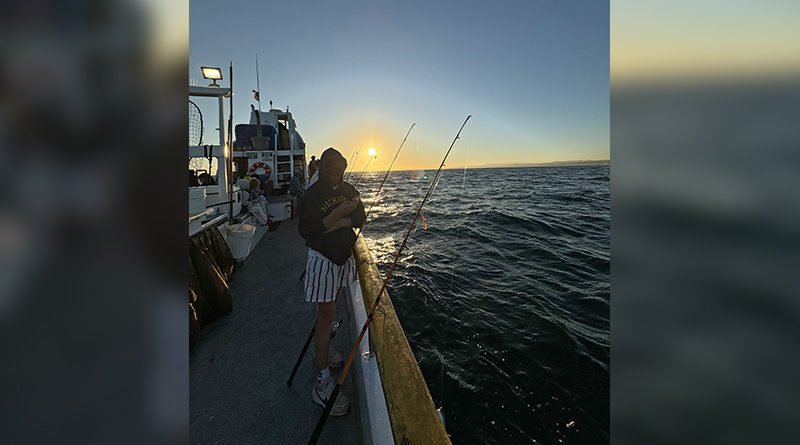
From squid and calico bass to tuna under the moonlight, the action doesn’t stop when the sun goes down.
For many Southern California anglers, the fishing day ends when the sun dips below the horizon. But for others, that’s when the adventure truly begins.
Whether drifting over squid grounds off Catalina Island, casting for bass beneath harbor lights or chasing bluefin tuna beneath the glow of the moon, night fishing has become one of Southern California’s most productive — and rewarding — ways to spend time on the water.
The cooler temperatures, quieter waterways and feeding behavior of many game fish create opportunities that simply don’t exist during daylight hours. With the right preparation and equipment, nighttime trips can produce memorable catches while offering an entirely different perspective of Southern California’s coastline.
One of the biggest attractions of fishing after dark is the behavior of the fish themselves.
Many baitfish move closer to the surface at night, particularly around artificial lighting or during certain moon phases. Predators often follow, creating feeding opportunities for anglers targeting everything from calico bass and halibut to yellowtail and tuna.
For offshore anglers, nighttime has become synonymous with bluefin tuna.
In recent years, Southern California’s overnight sport boats have routinely found success targeting bluefin after sunset, when the fish often become more willing to feed. Knife jigs, flat-fall style jigs and sinker rigs have become staples aboard overnight trips, with anglers dropping lures hundreds of feet into the darkness while waiting for the unmistakable bite.
Closer to shore, calico bass often remain active well after sunset.
Harbor docks, bridge pilings, rocky shorelines and kelp edges provide ideal ambush points where bass hunt baitfish under the cover of darkness. Artificial lights from marinas and waterfront homes frequently concentrate bait, creating productive areas for anglers casting swimbaits, jerkbaits and topwater lures.
Night also presents opportunities for anglers interested in catching live squid.
When conditions are right, squid gather around lighted areas and become accessible to anglers equipped with squid jigs and dip nets. Live squid has long been considered one of Southern California’s premier natural baits for species including white seabass, yellowtail and large halibut, making nighttime squid gathering almost as rewarding as the fishing that follows.
While the fishing can be exceptional, operating a boat after dark requires a different level of preparation than a daytime outing.
Visibility changes dramatically once the sun sets, making navigation more challenging even in familiar waters. Floating debris, lobster trap buoys, kelp paddies and smaller vessels can become difficult to spot until they are much closer.
For that reason, many experienced boaters rely heavily on modern electronics during nighttime runs.
GPS chartplotters, radar, sonar and AIS systems can all improve situational awareness, especially when navigating through busy harbors or crossing open water before dawn. Although electronics are valuable tools, they should complement — not replace — a proper lookout and safe operating speeds.
Good lighting is equally important.
A quality waterproof flashlight or headlamp allows anglers to rig tackle, land fish and move safely around the deck while keeping both hands free. Many anglers prefer red-light settings, which preserve night vision while minimizing glare inside the cockpit.
Deck lighting should also be used thoughtfully.
Excessively bright lights can reduce an operator’s night vision and create unnecessary glare, making it harder to see navigation lights from approaching vessels. Using only the lighting necessary to complete a task helps maintain visibility both aboard and on the surrounding water.
Safety equipment takes on added importance during nighttime trips.
Every passenger should know where life jackets, throwable flotation devices, fire extinguishers and first aid supplies are located before leaving the dock. Communication devices such as VHF radios remain essential, particularly for offshore anglers traveling long distances from shore.
Because temperatures often drop significantly after sunset—even during the summer months — bringing extra layers, waterproof clothing and warm beverages can make long nights considerably more comfortable.
Before departing, anglers should also share a float plan with someone on shore. Letting a friend or family member know where you’re fishing and when you expect to return provides an added layer of safety should unexpected delays occur.
Nighttime charters have also become increasingly popular throughout Southern California.
Many sportfishing landings offer overnight and twilight trips targeting bluefin tuna, yellowtail, bass and other species. Fishing with an experienced captain allows anglers to experience the excitement of night fishing while benefiting from local knowledge of seasonal conditions, productive techniques and safe nighttime navigation.
Perhaps the biggest appeal of fishing after dark, however, has little to do with the fish.
Away from crowded beaches and busy waterways, Southern California’s coastline takes on a completely different character. City lights shimmer across calm harbors, stars emerge overhead, dolphins occasionally appear in the glow of the bow light, and the sounds of the ocean replace the bustle of the daytime boating scene.
For many anglers, those quiet moments become just as memorable as the catch itself.
Whether gathering squid for tomorrow’s bite, working harbor lights for bass or chasing bluefin beneath a moonlit sky, night fishing offers an experience unlike any other. With proper preparation, reliable equipment and a healthy respect for safety, some of Southern California’s best fishing begins long after most boats have headed back to the dock.