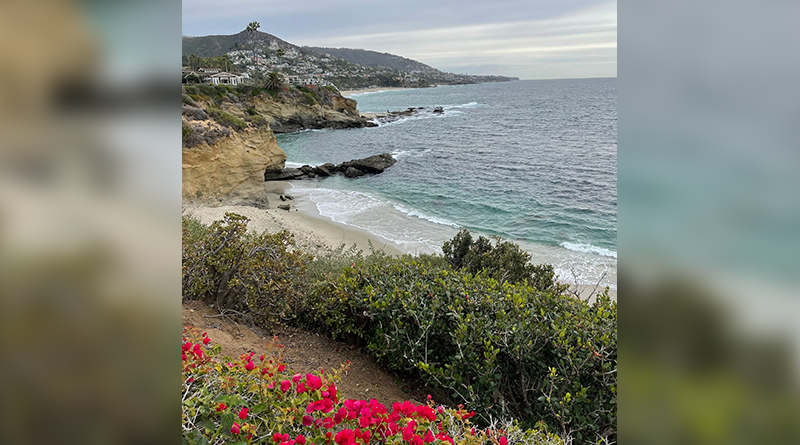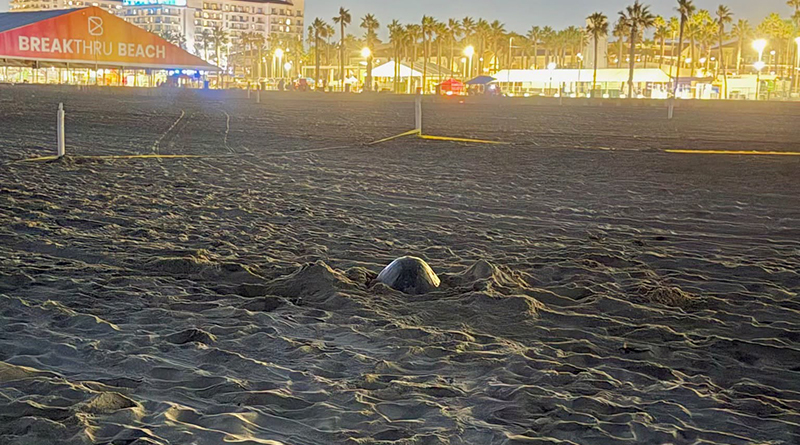
From nesting sea turtles in Orange County to a rare tropical sea snake and an early showing of pelagic gamefish, unusually warm Pacific waters are bringing unexpected marine life north.
By Katherine Clements
Southern California boaters and anglers are accustomed to watching water temperatures closely. A few degrees can change where bait gathers, where gamefish travel, and what anglers might find at the end of their line. But in 2026, the changes unfolding along the coast have gone well beyond the fishing grounds.
Two olive ridley sea turtles have laid eggs on Orange County beaches in what officials say are the first known natural sea turtle nests recorded on the U.S. West Coast. Days earlier, a rare yellow-bellied sea snake, a tropical and highly venomous species seldom documented in California, washed ashore at Crystal Cove.
Offshore, anglers have already been seeing another side of the same warm-water story. Dorado and yellowfin tuna arrived unusually early this year, while other warm-water species have expanded their ranges northward.
Together, the sightings are turning Southern California’s coastline into a living example of what can happen when an already warm ocean meets a developing El Niño.
The National Oceanic and Atmospheric Administration (NOAA) reported in August that El Niño conditions were present and expected to strengthen through the 2026-27 winter. Forecast models at the time indicated greater than a 90% chance of a “very strong” El Niño between November and January. At the same time, a marine heatwave that began in 2025 has continued to affect waters off central and Southern California.
The two phenomena are related to warm ocean conditions but are not the same thing. NOAA scientists have emphasized that the existing coastal marine heatwave was not initially caused by El Niño. Instead, Southern California entered the developing El Niño with portions of the coastal ocean already unusually warm. As El Niño’s influence increases, NOAA says it could prolong the period of elevated temperatures and the resulting stress and changes within marine ecosystems.
For boaters, anglers, and anyone spending time along the Southern California coast, some of those changes are becoming increasingly difficult to miss.
Sea turtles make history in Orange County
One of the most remarkable examples occurred Sept. 16, when an olive ridley sea turtle came ashore in the Surfside area of Seal Beach, dug into the sand, and deposited a clutch of eggs before returning to the Pacific.
Three days later, another olive ridley came ashore approximately eight miles away in Huntington Beach and also nested.
According to reporting by the Los Angeles Times, the nests represent the first known natural sea turtle nesting events documented on the U.S. West Coast. Before the Orange County discoveries, the northernmost known nesting area for olive ridleys was in Baja California Sur, Mexico.
Olive ridleys are tropical sea turtles found throughout portions of the Pacific, Indian and Atlantic oceans. Major nesting populations occur much farther south, including in Mexico and Central America.
The Orange County nests therefore represent much more than unusual wildlife sightings.
NOAA and the U.S. Fish and Wildlife Service became involved after the turtles were reported and protective barriers were placed around the nesting areas. The nests are expected to remain protected and monitored during an incubation period that typically lasts about 45 to 60 days.
The Times reported that scientists aren’t yet able to say whether the two nests represent isolated events or an indication that olive ridleys could begin nesting farther north more regularly. Researchers interviewed by the newspaper pointed to warming ocean and beach conditions as factors that could make northward shifts possible.
For now, two tropical sea turtles choosing Orange County beaches to lay their eggs provide a particularly visible example of how unusual the marine environment has become.
A venomous visitor arrives at Crystal Cove
The turtles were not Orange County’s only unexpected guests.
A yellow-bellied sea snake was spotted on the sand at Crystal Cove in September, according to the Los Angeles Times. The tropical species spends essentially its entire life at sea and is rarely documented in California waters.
The Times reported that the sighting was the first in California since 2018. Two yellow-bellied sea snakes were documented in Orange County that year, while other California appearances occurred during the powerful 2015-16 El Niño.
Yellow-bellied sea snakes normally occupy tropical and subtropical waters and can be carried far beyond their typical range by currents. Their appearance in Southern California has previously been associated with unusually warm ocean conditions.
Although the species possesses potent venom, experts cited by the Times said the snakes generally don’t present a danger to people unless handled. Anyone encountering one on a beach should keep a safe distance and contact wildlife authorities rather than attempting to move or return the animal to the ocean.
That advice is especially relevant because the animals are poorly equipped to move on land, making a stranded snake appear helpless even though handling it can be dangerous.
Anglers were already seeing the change offshore
For Southern California anglers, the tropical shift began showing itself before sea turtles started digging nests on local beaches.
NOAA Fisheries reported in June that Southern California anglers were already encountering dorado and yellowfin tuna unusually early in the season, potentially signaling the northward redistribution of warm-water species.
The pattern is familiar from previous warm-water periods.
During the marine heatwave and El Niño conditions roughly a decade ago, tropical and subtropical species appeared well north of their usual ranges. NOAA documented appearances by whale sharks and hammerhead sharks off Southern California, while other unusual species reached waters much farther north. Scientists ultimately documented dozens of unusual species off California during the extended warm period.
The fishing consequences can be dramatic. Species including dorado, yellowfin tuna, yellowtail, and marlin can become more prevalent or move farther north when warm water expands their suitable habitat.
But warmer water does not simply mean better fishing.
El Niño can alter the basic mechanics of the California Current ecosystem. Under normal conditions, coastal upwelling brings cold, nutrient-rich water toward the surface. Those nutrients support phytoplankton, which help form the foundation of a food web extending through baitfish and ultimately to larger predators.
El Niño can weaken that upwelling. The resulting changes can alter where forage species concentrate and force predators to travel farther or shift their diets.
That means the same conditions that put dorado within reach of Southern California anglers can create difficulties elsewhere in the ecosystem.
NOAA Fisheries has warned that prolonged warm-water conditions can affect sardines and anchovies relied upon by California sea lions. During the 2013-16 warm period, thousands of underweight sea lion pups stranded on California beaches after changes in prey availability forced mothers to travel farther for food. Warm conditions can also contribute to harmful algal blooms, which can produce toxins affecting marine mammals and fisheries.
El Niño is arriving in an ocean that was already warm
The unusual wildlife sightings also come with an important scientific distinction.
Not every tropical fish, turtle or snake appearing in Southern California this year can be attributed solely to El Niño.
NOAA scientists reported that parts of the West Coast had been experiencing a substantial marine heatwave before the current El Niño developed. The coastal heatwave affecting central and Southern California has been tracked since May 2025.
That makes 2026 unusual because one warming influence is effectively being followed by another.
In September, NOAA explained that species such as dorado, striped marlin, and yellowfin tuna had already expanded northward because of marine heatwave conditions, making their presence less useful as a standalone signal that El Niño had reached the West Coast.
In other words, Southern California’s marine ecosystem was already operating under unusually warm conditions before El Niño began adding its influence.
NOAA’s August assessment warned that the greatest ecological concern may not necessarily be how hot the water becomes at any single moment, but how long elevated temperatures persist. If El Niño-driven warming follows directly behind the existing marine heatwave, organisms that depend on cooler conditions may have less opportunity for relief.
For anglers, that could mean continued opportunities to encounter species normally associated with warmer waters. For scientists, it means watching how prey, predators and entire food webs respond. And for boaters simply paying attention to what swims past the transom, 2026 may continue delivering surprises.
The olive ridley nests may ultimately prove to be isolated events. A yellow-bellied sea snake on an Orange County beach remains exceedingly rare. Dorado and yellowfin may retreat as conditions eventually change.
But viewed together, they tell a larger story about an ocean in motion.
This year, Southern California hasn’t had to travel to tropical waters to encounter tropical marine life. Increasingly, some of that marine life is coming here.
Sept. 25 Update: Olive Ridley Sea Turtle Eggs Relocated Ahead of Hazardous Surf
Wildlife officials relocated the historic olive ridley sea turtle eggs discovered in Seal Beach and Huntington Beach to the Aquarium of the Pacific on Sept. 25 as hazardous surf and high tides threatened the two nests.
The nests made national headlines earlier this month after olive ridley sea turtles came ashore in Seal Beach and Huntington Beach to lay eggs. According to wildlife officials, the discoveries marked the first documented sea turtle nesting events along the U.S. West Coast.
With dangerous surf associated with Hurricane Polo expected to affect the Orange County coastline, an interagency team monitoring the nests determined that leaving the eggs on the beaches could put them at risk of being washed away.
Biologists carefully removed the eggs from the sand Thursday morning and transferred them to the Aquarium of the Pacific, where they’ll be maintained in a temperature-controlled environment and closely monitored.
If the eggs are viable, wildlife officials expect them to hatch within approximately 45 to 60 days, putting a potential hatch date in early November. Officials said additional updates will be provided as the incubation period continues.
Breeding populations of olive ridley sea turtles along Mexico’s Pacific coast are listed as endangered under the federal Endangered Species Act. The U.S. Fish and Wildlife Service and NOAA Fisheries work together on the management and conservation of olive ridleys.
The relocation involved coordination among federal, state, and local agencies and organizations, including the U.S. Fish and Wildlife Service, NOAA, California Department of Fish and Wildlife, Aquarium of the Pacific, Huntington Beach and Seal Beach officials, local marine safety departments, Bolsa Chica Ecological Preserve, and U.S. Navy personnel in Seal Beach.
The eggs will now remain under the care of biologists at the Aquarium of the Pacific as officials wait to see whether Southern California’s unprecedented nesting events will produce hatchlings later this fall.