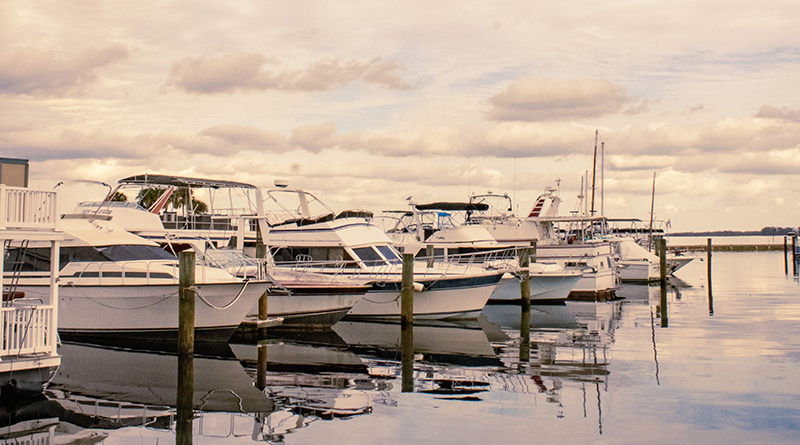
An available slip can be hard to pass up, but boaters should consider location, vessel fit, protection, amenities, and contract terms before committing.
In honor of The Log’s annual Slips Guide, we’re diving a little deeper into the slip itself. Finding an available berth is one thing, but choosing the right one means considering everything from location and vessel fit to marina amenities, protection, and the fine print in the dock agreement.
That can make it tempting to accept the first opening that comes along. However, the right slip involves more than an available space and an affordable monthly rate. Before signing a dock agreement, boaters should consider how well the slip fits the vessel, how protected it is, what amenities are included and what obligations come with the contract.
The first question is whether the boat actually fits.
Marinas commonly use a vessel’s length overall, or LOA, when determining slip eligibility and pricing. That measurement may include more than the length associated with the boat’s model. Swim platforms, bowsprits, outboard motors and other equipment can increase the vessel’s actual footprint.
Beam and draft can be just as important. A boat needs enough clearance to enter and leave the slip safely, while deeper-draft vessels need sufficient water beneath them throughout normal tidal conditions.
For that reason, boaters should provide the marina with accurate vessel dimensions and ask how the facility measures boats before signing an agreement. They should also find out whether there are restrictions on overhang and whether the marina charges based on the boat’s length or the size of the assigned slip.
Once the boat’s dimensions are addressed, the physical location of the slip deserves attention. Whenever possible, prospective tenants should walk the dock and look at the actual berth before committing.
A marina map can’t always show how a slip behaves when the wind picks up, harbor traffic increases, or a swell works its way inside. Boaters should consider exposure to wind, wakes, currents and surge, along with the amount of maneuvering room available in the fairway.
Protection is particularly important because the boat may spend considerably more time tied to the dock than underway. Properly sized lines and fenders can protect a vessel, but constant movement can increase chafe and wear on lines, cleats and other equipment.
Location within the harbor can also affect convenience. A slip near the entrance may shorten the run to open water, an advantage for anglers leaving before sunrise or boaters who head offshore frequently. A berth farther inside the harbor may offer different protection or put the owner closer to shoreside facilities.
The marina’s location relative to home matters as well. Saving money on a slip farther away may seem worthwhile until every boating trip requires significantly more driving. A conveniently located marina can make it easier to check on the boat, perform routine maintenance, and use it more frequently.
After evaluating the berth itself, boaters should determine exactly what comes with it.
Water and shore power are common amenities, but electrical service can vary. Owners should confirm that the pedestal provides the appropriate service for their vessel and ask whether electricity is included in the monthly rent or metered separately.
Parking can be equally important. Boaters routinely carry coolers, fishing equipment, provisions, tools and other gear between their vehicles and boats. Prospective tenants should ask how many parking permits are included, whether guest parking is available and whether access changes during busy weekends or special events.
Other marina amenities may include restrooms, showers, laundry facilities, Wi-Fi, pumpout stations, dock carts, storage, fuel docks, and nearby marine services. The value of those amenities depends largely on how the boat is used.
An angler who primarily makes day trips may care more about early gate access, parking and proximity to the harbor entrance. Someone who regularly spends weekends aboard may place greater value on showers, laundry and other shoreside facilities. Rather than choosing the marina with the longest amenities list, boaters should consider which services they’ll actually use.
With the physical details covered, attention should turn to the dock agreement itself.
The monthly rate is only one part of the cost. Boaters should ask about deposits, electricity, parking, keys or access cards, administrative charges and any other recurring or one-time fees. Comparing the total cost rather than the advertised slip rate can provide a more accurate picture of what keeping the boat there will cost.
Prospective tenants should also determine whether the agreement is month-to-month or for a fixed term, how much notice is required before leaving and under what circumstances deposits are refundable. Those provisions can become important if the owner sells the boat, purchases a larger vessel, or decides to move to another marina.
Insurance requirements should also be reviewed before the agreement is signed. Marinas may establish minimum liability limits or require that the marina, property owner or other parties be listed on the policy. Providing the marina’s requirements to an insurance agent before moving in can help avoid discovering later that existing coverage doesn’t satisfy the agreement.
Marina rules can also govern how the boat is used while in the slip. Owners should ask about maintenance, outside contractors, charter activity, dock storage, pets and overnight stays — if any of those are relevant to them.
In particular, boaters should not assume that renting a slip allows them to live aboard the vessel. Some marinas prohibit liveaboards entirely, while others allow a limited number of overnight stays or maintain separate liveaboard permits and waiting lists.
Maintenance policies are another consideration for hands-on owners. Some marinas allow minor work at the dock but restrict activities such as sanding, painting or major mechanical repairs. Outside contractors may also need approval or proof of insurance before working on the property. Asking about those policies in advance is particularly important for owners who regularly maintain their own boats.
Availability can complicate all of these considerations. When slips are scarce, boaters may have less flexibility about location or size, but they can improve their chances by contacting several marinas and asking about waiting lists.
Before paying to join one, find out whether there is an application fee or deposit, whether it is refundable and what happens when a slip becomes available. Some marinas give applicants a limited amount of time to accept an opening, so keeping registration, insurance information and vessel dimensions readily available can make the process easier.
Boaters can also ask whether nearby slip sizes have shorter waiting lists. Moving into a slightly larger berth may open additional options, although the marina may charge according to the slip size rather than the boat’s dimensions.
When an opening finally becomes available, owners may also wonder whether the rate is negotiable. In many high-demand Southern California marinas, rates are established by a published schedule and there may be little room for traditional negotiation. However, it’s still worth asking about different slip sizes, lease terms and what’s included in the quoted rate.
Most importantly, boaters should avoid allowing limited availability to rush them through the contract.
A slip is more than a parking space for a boat. It’s where the vessel may spend most of its life, exposed to changing tides, weather and harbor conditions. It’s also the starting point for every fishing trip, cruise and afternoon on the water.
Before signing, prospective tenants should know the true dimensions of their vessel, inspect the berth, understand the marina’s rules and calculate the complete cost of keeping the boat there. They should also know what happens if their boating needs change and they eventually need to leave.
In a competitive slip market, simply finding an opening can feel like good fortune. Taking a little more time before signing can help make sure the available slip is not just somewhere to keep the boat, but a place that actually works for the boat and the person who owns it.