

Warmer ocean temperatures may influence rockfish distribution, feeding and reproduction, but scientists say some of the most significant effects could take years to materialize.
Southern California anglers have become accustomed to watching ocean temperatures, bait conditions, and fishing reports for clues about where fish might be found. During an El Niño event, those observations can become particularly important as warmer water and changing ocean conditions influence marine life throughout the region. But while some species respond to environmental changes in ways anglers can immediately recognize, rockfish present a more complicated picture.
According to John Field, director of the Fisheries Ecology Division at the National Oceanic and Atmospheric Administration’s (NOAA) Southwest Fisheries Science Center, El Niño is expected to affect Southern California rockfish, although many of the consequences may be difficult for recreational anglers to detect. Field, who provided responses to The Log with assistance from other NOAA fisheries scientists, explained that changes in food availability, growth, reproduction and the survival of young fish could be more significant than any immediate difference in the number of fish coming over the rail.
“El Niño conditions will certainly have impacts on Southern California rockfish, particularly in response to the unusually warm waters currently being experienced, but most of these are not likely to be very obvious to recreational anglers,” Field said.
One of the most likely consequences is reduced food availability, which can slow growth and decrease the number of eggs and larvae produced by adult fish. Although those changes may not immediately affect fishing success, they can influence how rockfish populations develop over time.
Warm Water Doesn’t Stop at the Surface
One common assumption about El Niño is that its effects are concentrated near the ocean’s surface, leaving deep-water species relatively unaffected. Field explained that the reality is more complicated.
El Niño-related changes can extend well below 200 meters, or approximately 656 feet, reaching depths occupied by many rockfish species targeted in Southern California waters.
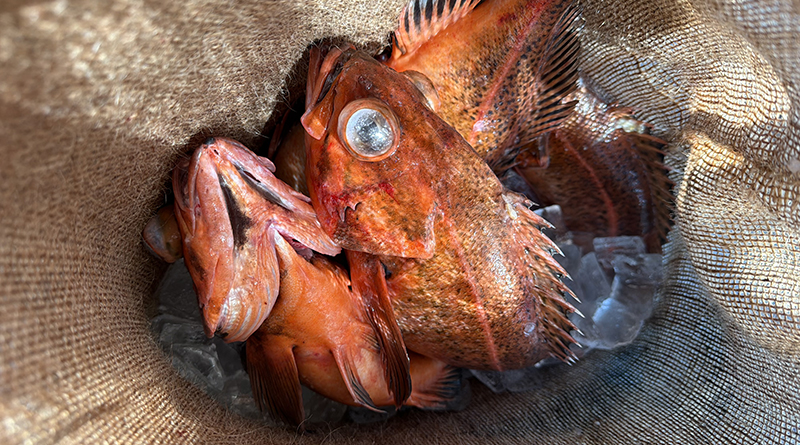
The Southern California Bight supports approximately 50 to 60 rockfish species, each with different habitat preferences and responses to environmental conditions. Some, such as grass rockfish, inhabit shallow coastal environments, while others, including blackgill and aurora rockfish, occupy much deeper waters.
Strong warming may cause some fish to move into deeper, cooler water. However, changes in dissolved oxygen can produce different responses, particularly among species already living at greater depths.
“In general strong warming would be expected to make many fish redistribute to slightly deeper waters, but declines in dissolved oxygen at depth would be expected to lead some species (particularly deeper dwelling species) to slightly more shallow depths,” Field explained.
Interestingly, NOAA’s recent forecasts suggest oxygen concentrations at many depths during the ongoing event may remain above long-term averages, potentially reducing some negative effects and even benefiting certain species.
This means rockfish movements cannot be predicted by temperature alone. Oxygen availability, prey distribution, habitat preferences, and the age or size of individual fish can all influence where they concentrate.
Not All Rockfish Respond the Same Way
One of the challenges in understanding El Niño’s effects is that rockfish species differ considerably in their ability to tolerate changing conditions.
Field pointed to a 2025 study examining how cowcod and bocaccio respond to low oxygen concentrations. The research, conducted with assistance from the captain and crew of the Outer Limits, found notable differences between the two species.
“Cowcod tolerance to low oxygen ranks especially high among fishes and likely facilitates a sit-and-wait approach to episodic low-oxygen exposure, whereas more mobile bocaccio are more likely to behaviorally avoid hypoxia and seek favorable conditions,” the study concluded.
For anglers, that distinction helps explain why one species might remain in familiar habitat during unfavorable conditions while another moves in search of more suitable water.
Some rockfish may shift their distribution in response to temperature or oxygen changes, while others may remain in place and reduce activity until conditions improve.
Field and his colleagues also noted that rockfish responses may depend on how their prey reacts to changing ocean conditions.
One NOAA biologist with more than four decades of experience conducting underwater surveys recalled relatively few obvious distribution changes among nearshore rockfish during previous environmental events. However, the arrival of pelagic red crabs in 1984 prompted an immediate feeding response across numerous nearshore fish species.
The example illustrates how changes in prey availability can influence fish behavior even when the fish themselves do not move into entirely new areas.
With the strength of the ongoing event, Field said unusual shifts in rockfish distribution, feeding behavior, and interactions with other marine species remain possible.
Why Deep-Water Rockfish May Be More Resilient
Although deep-water rockfish are not completely protected from El Niño-related changes, certain biological characteristics may help them tolerate unfavorable conditions.
Many rockfish are exceptionally long-lived. Species such as cowcod, bronzespotted rockfish and blackgill rockfish can live 50 to 100 years, while their relatively slow growth and lower metabolic demands may allow them to endure periods of reduced food availability.
Field explained that these characteristics can make some species less sensitive to short-term environmental disruptions.
Rather than responding immediately to warmer water or reduced food supplies, long-lived rockfish may be able to withstand temporary changes and resume normal activity when conditions improve.
That resilience, however, does not mean all species or life stages are equally protected.
Research examining long-term climate vulnerability has identified bocaccio, canary rockfish, and yelloweye rockfish among species potentially more vulnerable to cumulative environmental changes. Field emphasized that vulnerability to long-term climate change does not necessarily translate into a strong population response to a single El Niño event.
The Biggest Effects May Appear Years Later
While anglers often focus on whether changing ocean conditions will improve or reduce their immediate catch, Field said some of El Niño’s most important effects may occur during the earliest stages of a rockfish’s life.
Warmer water and reduced food availability can influence reproduction, larval survival and recruitment, the process through which young fish survive and eventually enter the population.
“The event is very likely to also be associated with poor environmental conditions for larval fishes that are produced, such that recruitment is likely to be below average,” Field explained.
Young rockfish are generally more vulnerable to environmental changes than mature adults. Poor conditions during early development can reduce the number of juveniles surviving to become part of the adult population.
However, rockfish populations naturally experience considerable variation in reproductive success from year to year. Some years produce relatively few surviving young, while others generate exceptionally strong year classes.
Because many rockfish are long-lived and slow-growing, a single year of poor recruitment does not necessarily produce an immediate or lasting decline in the adult population.
In fact, Field noted that strong El Niño events have sometimes been followed by unusually successful recruitment during cooler, more productive La Niña conditions.
Bocaccio provide a particularly interesting example. Following major El Niño events in 1983 and 1998, the species produced notably strong year classes in 1984 and 1999.
Those periods of successful recruitment helped demonstrate how conditions following an El Niño can be just as important as those experienced during the event itself.
For recreational anglers, the effects of a particularly strong or weak year class may not become apparent until surviving fish have grown large enough to enter the fishery.
What Anglers Should Expect on the Water
Despite the potential biological effects, Field cautioned against assuming that an El Niño year will automatically lead to poor rockfish fishing.
A review of available recreational fishing data did not reveal clear declines in catch rates for several species, including blue, copper and vermilion rockfish, associated with previous El Niño events in central or Southern California.
Although the historical data have limitations, the findings suggest that widespread or prolonged reductions in rockfish catch rates are unlikely.
Individual fishing trips may still be affected by changes in distribution, feeding behavior or local ocean conditions. Anglers might encounter certain species at different depths, notice changes in bait availability or find that previously productive areas are temporarily less consistent.
However, those observations do not necessarily indicate a broader decline in rockfish abundance.
Field emphasized that fishing conditions naturally vary from day to day, week to week and season to season, making it difficult to attribute any single change in catch rates directly to El Niño.
For Southern California anglers, this means paying attention to local conditions remains important, but warmer surface temperatures alone should not be used to predict rockfish behavior or fishing success.
NOAA Wants to Hear From Anglers
Beyond monitoring ocean temperatures and conducting scientific surveys, NOAA is also seeking observations from the people who spend time fishing along the California coast.
Recreational anglers and commercial fishermen can provide information about unusual catches, changes in species distribution, unexpected feeding behavior and shifts in fishing activity that may not be immediately captured through scientific monitoring.
Reports of fish appearing outside their typical depth or geographic range may be particularly valuable. NOAA is also interested in understanding how changing conditions affect fishing operations, including costs, fishing effort, and decisions about where and when to fish.
The agency has established an online resource to collect fishing industry observations during the 2026-27 California Current ecosystem event.
Anglers can submit information through NOAA’s Fishing Industry Input Needed webpage.
According to Field, these firsthand observations can help researchers develop a more complete understanding of how fish respond to changing environmental conditions and support future fisheries management decisions.
For Southern California’s recreational fishing community, the takeaway is that El Niño’s influence on rockfish extends well beyond whether fish are biting on a particular day.
Changes in temperature, oxygen and food availability may affect where fish live, how they feed and how successfully they reproduce. Yet the long lifespans and varied adaptations of rockfish mean that many populations may be capable of weathering short-term disruptions without dramatic changes in fishing success.
As scientists continue monitoring the developing event, anglers have an opportunity to contribute their own observations and help document how Southern California’s rockfish respond to another period of unusual ocean conditions.