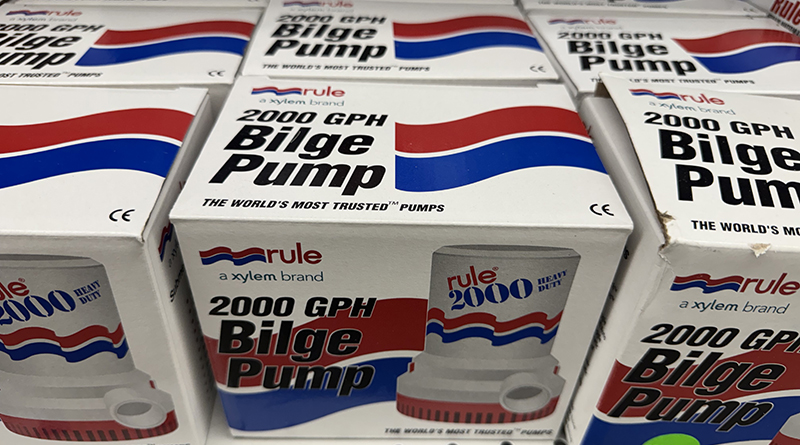
Few pieces of onboard equipment work as quietly and consistently as a bilge pump, and few are as critical when something goes wrong. Often hidden out of sight in the lowest part of a boat, bilge pumps serve a simple but essential purpose: removing unwanted water before it becomes a serious problem. For experienced boaters, the lesson is clear. One bilge pump is good. Two can be the difference between inconvenience and catastrophe.
The bilge is the lowest interior area of a boat’s hull, beneath floorboards and engines, where water naturally collects. Even a well-maintained vessel takes on water in small amounts from rain, spray, washing, condensation, and minor seepage around hatches and fittings. A bilge pump is designed to automatically activate when water reaches a certain level, moving it overboard through a discharge hose and keeping the interior dry and stable.
In everyday conditions, this process is routine and easy to overlook. Over time, however, accumulated water can lead to corrosion, mold, mildew, foul odors, and electrical issues. More critically, an unchecked influx of water can compromise stability or overwhelm a vessel before the problem is noticed.
Electric bilge pumps are the primary line of defense on most boats. They rely on power, wiring, float switches, and sensors to operate correctly. While modern pumps are reliable, they are not immune to failure. Corroded wiring, stuck float switches, blown fuses, dead batteries, or debris clogging the intake are among the most common reasons electric pumps stop working — often without warning.
This is where redundancy becomes essential. Many marine professionals recommend not only multiple electric bilge pumps but also a secondary, manual bilge pump that does not rely on power. Manual pumps are simple, hand-operated devices that allow a boater to move water out of the bilge even during electrical failure. In real-world scenarios involving flooding, battery loss, or electrical shorts, a manual pump has bought valuable time to make repairs, call for assistance, or reach safety.
Bilge pump capacity is measured in gallons per hour, and sizing matters. Smaller pumps are often installed at the lowest point of the bilge to handle routine water accumulation. Larger-capacity pumps are typically mounted slightly higher to activate during more serious flooding events. Larger vessels may have multiple pumps in separate compartments to isolate and manage water intrusion more effectively.
While bilge pumps are not designed to save a vessel from a catastrophic hull breach, they can slow flooding enough to prevent panic and allow boaters to respond deliberately. That window of time can be critical offshore or in busy harbors where assistance may not be immediate.
There are two primary types of bilge pumps commonly used aboard boats. Centrifugal pumps rely on a spinning impeller to move water and are valued for their ability to move large volumes with minimal maintenance. They are affordable, durable, and tolerant of small debris, but they do not self-prime and must be mounted low in the bilge. Diaphragm pumps, by contrast, use suction and pressure to move water and can self-prime even when dry. They are often installed higher and are better at moving water uphill, though they typically move less water and are more sensitive to debris.
Regardless of pump type, regular inspection is essential. Testing pumps, checking float switches, inspecting hoses and wiring, and keeping the bilge clean all contribute to reliability. Oil, debris, and residue in the bilge can clog pumps or interfere with sensors, and some newer systems are designed to shut down if oil is detected to prevent environmental contamination.
Keeping the bilge clean also protects other onboard systems. Corrosion, bacteria growth, and persistent odors are all symptoms of neglect that can be avoided with routine attention. Simple practices, such as using drip pans under engines and periodically flushing the bilge with clean water, help extend the life of pumps and surrounding equipment.
For boaters, bilge pumps are easy to take for granted — until they are needed most. They operate quietly in the background, asking little attention on calm days. But when water starts coming aboard faster than expected, a properly functioning bilge pump system, backed up by redundancy and a manual option, becomes one of the most important safety features on the vessel.
In boating, preparation is rarely dramatic, but it is always deliberate. The modest investment in reliable bilge pumps and routine maintenance is a small price to pay for the peace of mind that comes with knowing a vessel is ready to handle the unexpected.