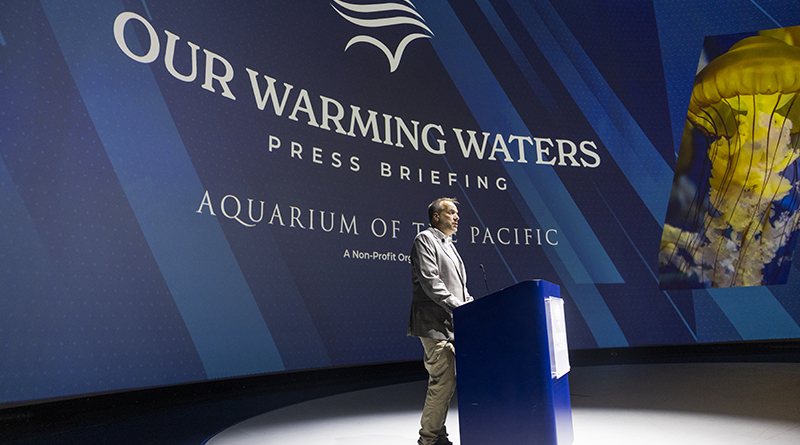
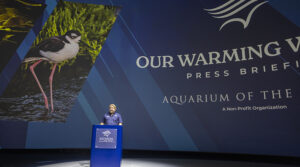
LONG BEACH — Scientists, conservation leaders and marine wildlife experts gathered at the Aquarium of the Pacific on June 11, 2026, to discuss two major developments expected to influence Southern California waters in the months ahead: an ongoing marine heatwave that NOAA predicts will persist through August and a developing El Niño that forecasters expect to emerge in late summer.
The media briefing brought together experts from the Aquarium of the Pacific, NOAA’s National Weather Service and NOAA’s Southwest Fisheries Science Center to explain how warming ocean conditions may influence everything from tuna fishing and tropical fish sightings to whale behavior, kelp forests, harmful algal blooms and endangered species recovery.
For Southern California boaters and anglers, many of the topics discussed are already being talked about up and down the coast. Conversations about the developing El Niño are heard everywhere from anglers gathered around the bait receivers and tackle shops to captains discussing ocean conditions in the wheelhouse. As warm-water species begin appearing farther north and ocean temperatures continue to fluctuate, many of the changes highlighted during the briefing are already playing out on the water.
Warm-water species have been appearing farther north than usual, unusual seabirds have been reported off the coast, and oceanographers continue to monitor conditions that could influence fisheries and marine ecosystems throughout the summer and fall.
While much of the public focuses on El Niño as a weather phenomenon, experts emphasized that some of the most significant impacts occur beneath the ocean’s surface.
One of the first points discussed during the briefing was that El Niño and marine heatwaves aren’t the same thing.
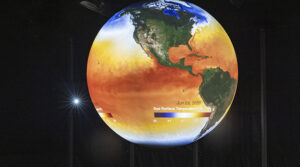
NOAA scientists explained that El Niño is a naturally occurring climate pattern that develops when ocean temperatures in the equatorial Pacific become warmer than average. These warming events can alter atmospheric circulation, storm tracks, rainfall patterns and ocean conditions across much of the Pacific Ocean.
Marine heatwaves, by contrast, occur when ocean temperatures remain abnormally warm in a specific region for an extended period.
According to NOAA Fisheries research oceanographer Dr. Andrew Leising, Southern California has already been experiencing marine heatwave conditions offshore since late 2025.

Marine heatwaves have become an increasing area of study because of their potential impacts on fisheries, wildlife and ocean productivity.
One of the most famous examples was the marine heatwave known as “The Blob,” which developed in the northeastern Pacific between 2015 and 2016.
During that event, ocean temperatures rose dramatically above average across a massive area of the Pacific Ocean. The effects were felt throughout the marine food web and contributed to harmful algal blooms, seabird die-offs, marine mammal strandings and significant changes in fish distribution.
Scientists at NOAA now use tools such as the California Current Marine Heatwave Tracker, often referred to as “BlobTracker,” to monitor developing warm-water events.
While the current marine heatwave isn’t expected to reach the magnitude of The Blob (it’s currently at about 1/3 of The Blob’s potency), NOAA forecasts presented during the briefing indicate that the warm-water event off Southern California, along with a separate marine heatwave in the Gulf of Alaska, is expected to continue through at least August. Scientists said the impacts could ultimately fall somewhere between those experienced during previous strong El Niño events and the conditions observed during The Blob.
One of the most important concepts discussed during the event was upwelling, a process many anglers have heard about but may not fully understand.
Along the California coast, winds normally push surface water offshore. As that water moves away, cold, nutrient-rich water rises from the depths to replace it.
This process is known as upwelling.
The nutrients delivered through upwelling fuel the growth of phytoplankton, microscopic organisms that form the foundation of the marine food web.
Phytoplankton support zooplankton and krill populations. Those organisms feed anchovies, sardines and other forage species. In turn, those baitfish support tuna, yellowtail, seabirds, whales and countless other marine animals.
When upwelling is strong, California’s ocean ecosystem tends to be highly productive.
When upwelling weakens during El Niño conditions, the entire food web can be affected.
Leising explained that reduced upwelling often means reduced plankton production, which can eventually influence everything from bait availability to predator distribution.
For anglers, that can translate into changes in where fish are found, what they’re feeding on and how productive certain fishing grounds become.
Researchers also discussed a phenomenon known as habitat compression, which occurs when marine species are squeezed into smaller areas of suitable water temperatures and oxygen levels. As conditions change, baitfish, predators and marine mammals may shift their distribution in search of food and favorable habitat.
For anglers, that can create new opportunities while also altering fishing patterns that many have relied upon for years.
Not all effects of warming ocean conditions are negative.
Historically, El Niño years have often produced excellent fishing opportunities for certain species.
Warmer water can bring tropical and subtropical fish farther north than normal, expanding fishing opportunities for Southern California anglers.
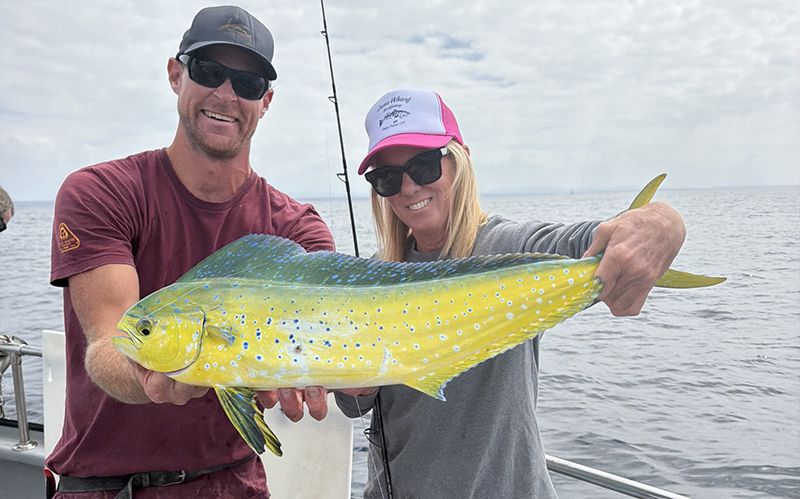
Species such as yellowfin tuna, dorado and other warm-water visitors have historically become more common during strong El Niño years.
Leising noted that warming conditions can create opportunities for highly migratory species and may alter where some fish are found throughout the season.
At the same time, changes in ocean productivity can affect bait populations and the broader food web.
Leising discussed how anchovies have remained more abundant than sardines in recent years and suggested that squid populations may shift farther north as ocean temperatures increase.
For sportfishing operators and private boaters alike, these shifts can have a direct impact on fishing strategies and target species.
One of the most intriguing topics for Southern California boaters was the possibility of increased sightings of tropical marine species.
Nate Jaros, vice president of animal care for fish and invertebrates at the Aquarium of the Pacific, said the public should expect to see more tropical species and shark sightings if warming conditions continue.
“The public here in Southern California should expect to see an increase in shark sightings and tropical species, including sport fish like tuna, pelagic red crabs, as well as marine animals washing up on our shores,” Jaros said. “Warmer waters are enticing to some sharks, who may be displaced from tropical or warm temperate areas.”
Potential visitors include yellowfin tuna, mahi-mahi, seahorses, whale sharks and even yellow-bellied sea snakes.
Not all warm-water indicators are large or rare species. Jaros noted that conditions can also influence the abundance of pelagic organisms such as Velella velella, often referred to as “by-the-wind sailors.” These small, sail-equipped creatures are harmless to humans and are frequently carried ashore along the West Coast during spring and early summer.
Anglers and boaters may also notice them floating on the ocean’s surface in large numbers. During recent offshore fishing trips, by-the-wind sailors have become a common sight across portions of Southern California’s coastal waters.
Warm-water events can occasionally bring less common visitors as well. Although extremely rare in Southern California, Portuguese man o’ war may appear during strong El Niño years. While they resemble by-the-wind sailors, Portuguese man o’ war possess a painful sting and should be avoided.
Recent sightings of tropical seabirds and unusual marine life have already generated significant interest among birders, anglers and researchers. The recent suspected sighting of a Lesser Frigatebird off Orange County serves as another example of the species that can occasionally appear when warm-water conditions develop.
Kelp forests were also highlighted as an area of ongoing conservation focus.
Kelp habitat provides food, shelter and nursery grounds for a wide variety of marine life, including many species targeted by Southern California anglers. In recent years, portions of California’s coastline have experienced significant declines in bull kelp, particularly following marine heatwaves and other environmental stressors.
The Aquarium has been actively involved in preserving bull kelp genetic material since 2022. The material is stored in specialized refrigeration systems and may eventually be used in future out-planting projects designed to help restore kelp forest ecosystems along the California coast.
Several Aquarium experts are also involved in conservation programs focused on recovering some of California’s most vulnerable marine species.
Among those efforts is the recovery of white abalone, once common in Southern California waters but now considered one of the rarest marine invertebrates in the world. Aquarium staff contribute to collaborative recovery efforts that include captive breeding, research and eventual reintroduction into the wild.
The Aquarium is also involved in efforts to recover the critically endangered sunflower sea star, which suffered catastrophic losses following the outbreak of sea star wasting disease. Scientists estimate that more than 90 percent of the population disappeared in some areas along the West Coast. Because sunflower sea stars prey on sea urchins, their decline has contributed to the expansion of urchin barrens and the loss of kelp habitat in some regions.
While anglers often focus on fish populations and fishing conditions, warming ocean temperatures can have far-reaching impacts on marine mammals and seabirds as well.
Scientists have observed that marine heatwaves and other warming-water events can disrupt the availability of baitfish, squid and krill, forcing marine mammals and seabirds to travel farther in search of food. Young animals are often the most vulnerable, and previous warm-water events along the West Coast have been linked to increased sea lion strandings, particularly among pups and juveniles.
California sea lions are also considered indicator species, often among the first animals to show signs of ecosystem stress, including domoic acid poisoning associated with harmful algal blooms.
Scientists also noted that warming-water events can alter where whales forage. As prey becomes less available offshore, whales may move closer to shore in search of food, potentially increasing the risk of entanglements and interactions with human activities.
Harmful algal blooms remain another area of concern as ocean conditions continue to change.
Although microscopic, plankton form the foundation of the marine food web. Under certain conditions, some species can multiply rapidly and produce toxins such as domoic acid, which has been linked to illness and mortality among sea lions, dolphins and seabirds along the California coast.
Scientists continue studying the factors that contribute to harmful algal blooms, including ocean temperature, nutrient availability, upwelling and water circulation. Marine heatwaves and prolonged periods of unusually warm water can sometimes create favorable conditions for bloom development.
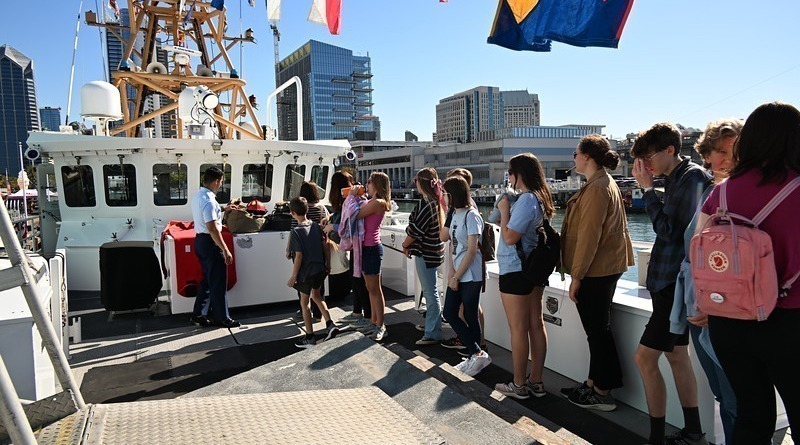
Public education and climate resilience also remain a major focus of the Aquarium’s mission.
Visitors can explore many of these concepts through NOAA’s Science on a Sphere, a six-foot rotating globe located at the Aquarium’s Ocean Science Center. The exhibit displays NOAA and NASA satellite data in near real time, allowing visitors to visualize sea surface temperatures, weather systems, climate trends and changing ocean conditions.
The Aquarium also supports whale photo-identification programs, plankton monitoring efforts and community science initiatives that help researchers better understand changing ocean conditions.
Aquarium President and CEO Jeff Flocken said the institution’s role extends beyond education to direct conservation action.
“As the impacts of these warming waters continue to unfold, the Aquarium of the Pacific will serve a pivotal role in directly responding to aid wildlife in need of rescue, as well as providing rehabilitation care and sanctuary for impacted animals when needed,” Flocken said.
While scientists continue monitoring conditions, one message emerged clearly throughout the June 11 briefing: the ocean is constantly changing, and understanding those changes is critical.
For Southern California anglers, warming waters could bring opportunities in the form of tuna, dorado and other warm-water species.
For scientists and conservationists, those same conditions present questions about ecosystem health, wildlife resilience and long-term environmental change.
The coming months may offer a glimpse into how interconnected California’s marine ecosystem truly is — with clue involving unusual bird sightings, tropical fish appearances, shifting bait populations or changes in kelp forests,
And for the boating and fishing communities that spend countless hours on the water, those changes are often first noticed not in scientific reports, but at the rail, on the sonar screen or at the end of a fishing line.