After years of closures, commercial fishermen, seafood companies, and anglers are finally seeing Chinook salmon return to California waters.
By Katherine Clements
For the first time in three years, California’s commercial salmon season is back, and along the waterfront, the excitement is hard to miss.
From Ventura to Dana Point, commercial fishermen, seafood markets, and recreational anglers are once again talking about Chinook salmon runs instead of closures, restrictions, and uncertainty. After multiple years of shutdowns tied to declining salmon populations and difficult environmental conditions, the reopening of limited commercial and recreational salmon opportunities is being welcomed as both an economic boost and an emotional one for California’s fishing community.
The reopening follows significant improvements in key salmon populations, particularly Sacramento River fall-run Chinook and Klamath River fall-run Chinook, according to the California Department of Fish and Wildlife (CDFW). Those rebounds allowed the Pacific Fishery Management Council to approve a return of commercial fishing opportunities and expanded recreational access moving into 2026.
For many in the industry, it marks a long-awaited turning point.
“Seeing our salmon populations recover is incredibly heartening and demonstrates what’s possible when we all work together,” said CDFW Director Meghan Hertel in a statement announcing the reopening. “Salmon are part of the cultural fabric of California, and I’m delighted more Californians will have the opportunity to enjoy these magnificent fish whether that’s in the water, on the end of their fishing lines or on their dinner plates.”
That renewed access is already being reflected in seafood markets and commercial operations across the coast.
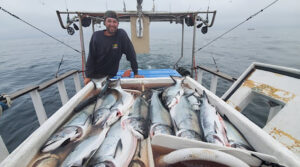
In Ventura, companies like Wild Local Seafood have built much of their identity around directly connecting consumers with sustainably harvested local seafood, and salmon’s return represents another opportunity to strengthen that relationship between fishermen and coastal communities.
For Ben Hyman, owner of Wild Local Seafood in Ventura, the reopening carries both economic and personal significance after several difficult years of closures.
“Salmon fishing has been closed since 2022, and it’s been very hard for businesses and fishermen that make the majority of their money catching salmon,” Hyman explained. “This is very important for our coastal communities, breathing life into harbors that need it. It also gives the public access to one of the tastiest proteins on the California coast.”
Hyman added that beyond the business side of the fishery, salmon remains deeply meaningful to many commercial crews who view it as one of California’s most exciting fisheries.
“Of all the fisheries that I participate in, lobster, crab, groundfish, and others, salmon fishing is by far my favorite,” he said. “It’s exhilarating to bring king salmon in by hand on fishing line one at a time.”
The return of salmon has also generated excitement among customers, restaurants, and the broader fishing community eager to once again see California king salmon available locally.
According to Hyman, anticipation for the reopening began months before boats even hit the water.
“People are ecstatic to have an opportunity to eat California kings for the first time since 2022,” he said. “The same goes for local restaurants that want to use local salmon on their menu. We had people excited to eat salmon back in March when news of a season first came out. In fact, we had people pre-ordering salmon months ago.”
Further south, Harbor Fish Company in Dana Point has also been actively involved in the season, documenting the fishery and its collaborative scientific monitoring efforts through social media updates from the water.
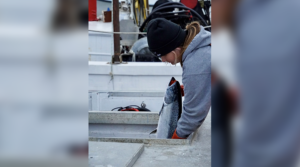
In a recent Instagram post, Harbor Fish Company shared that for the month of May they’d be working with the crew of the Alcor, fishing out of Central California for Chinook salmon. According to the post, the crew calls Orange County home and spends its fall lobster season fishing out of Dana Point.
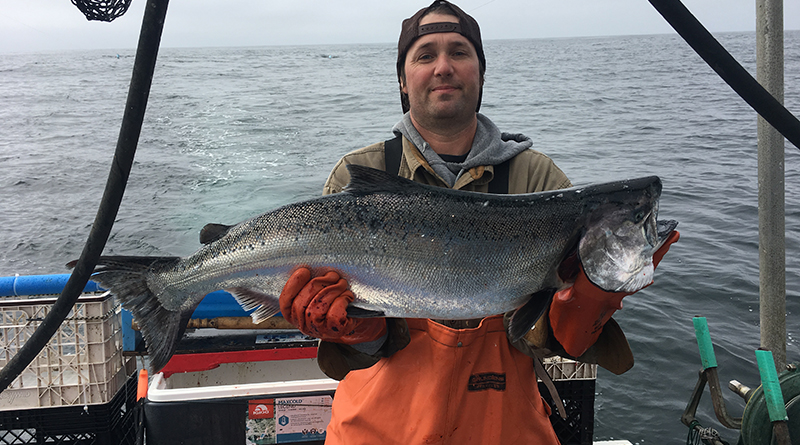
The company also highlighted the highly selective nature of the fishery, explaining that the salmon are harvested through trolling with barbless lures, a method designed to minimize bycatch and allow for careful fish handling.
Harbor Fish Company also noted that biologists are actively working alongside fishermen during the season to collect data and inspect fish as part of ongoing efforts to better understand and manage the recovering fishery. According to the company, the collaboration between scientists and commercial fishermen has been encouraging to witness firsthand, with both sides focused on long-term sustainability and gathering meaningful information about salmon population health.
That cooperative approach reflects a broader statewide effort currently underway.
California’s Salmon Strategy for a Hotter, Drier Future, launched in 2024, has focused heavily on habitat restoration, infrastructure improvements, river connectivity, and science-based fisheries management aimed at rebuilding salmon populations after years of drought, warming river conditions, and declining returns.
“The health of our salmon populations fluctuates with environmental conditions, and we’ve seen just how vulnerable these fish are to recent droughts, changing river conditions and a warming climate,” California Natural Resources Secretary Wade Crowfoot said in a statement. “This year’s return of ocean salmon fishing is an encouraging sign as we advance California’s long-term, science-based Salmon Strategy.”
The strategy has involved major investments into salmon habitat restoration, migration corridors, spawning grounds, and water management improvements throughout the state.
At the same time, fishery managers are making it clear that the reopening does not mean unrestricted harvest.
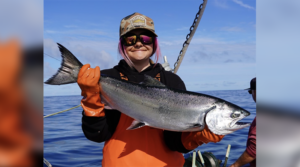
Both commercial and recreational seasons will continue operating under carefully monitored harvest guidelines and in-season management systems designed to prevent overharvest if catch limits are reached. California first implemented limited in-season management during the restricted 2025 recreational salmon season and is now expanding those monitoring systems into the commercial fishery as well.
Hyman noted that this year’s fishery remains highly regulated, with strict quotas and limited fishing windows shaping how the season will unfold.
“This season is unique,” Hyman said. “For one of the few times in the fishery’s history, we are operating on strict quotas. We have a total of 83,000 kings to catch as a fleet. Our openers are only five to seven days, and we cannot catch more than 160 kings per opener.”
Because of those limitations, Hyman expects the season to move quickly.
“This will be a short season ending in June, so people should get out and get their hands on some before it’s too late,” he added.
For recreational anglers, the reopening also represents a dramatic improvement compared to recent years.
California’s recreational ocean salmon fisheries were fully closed in both 2023 and 2024, followed by only six open fishing days in 2025. Expanded access in 2026 is being viewed by many anglers as the first meaningful opportunity in years to once again pursue salmon along the California coast.
That anticipation is especially strong among West Coast anglers who view Chinook salmon as one of the region’s most iconic gamefish.
Known for their powerful runs, size, and exceptional table quality, Chinook, or king salmon, have long held a special place within California’s fishing culture. Their return is not only benefiting commercial fishermen and seafood companies, but also charter operators, tackle manufacturers, marinas, fuel docks, processors, and coastal communities that rely heavily on seasonal fishing activity.
The reopening also carries symbolic weight for many within the maritime industry.
For years, closures forced commercial fishermen to pivot toward alternative fisheries or absorb difficult financial losses while waiting for salmon populations to recover. The reopening now offers cautious optimism that collaborative management and conservation efforts may be producing measurable results.
For fishermen like Hyman, the reopening also provides much-needed financial relief after years of carrying the costs associated with maintaining commercial salmon operations despite not being allowed to fish.
“This opening is significant for those of us who have been paying insurance and state fees to keep our salmon boats permitted and in good shape,” Hyman said. “We can finally get some income to help offset those costs. We probably won’t make a lot of money, but it will help many of us keep the lights on after three closure years.”
At the same time, Hyman believes there are signs of progress happening behind the scenes through restoration efforts and fisheries management work designed to improve long-term salmon survival.
“It also feels like there is some light at the end of the tunnel with increased hatchery production, work by stakeholders to improve survival rates of smolts in the rivers, and efforts by the Department of Fish and Wildlife and other federal organizations to try to right the ship in creating thriving salmon populations,” he said.
Still, he emphasized that long-term salmon recovery will ultimately depend on water conditions and responsible resource management throughout California’s river systems.
“At the end of the day, a lot of the issues these salmon face have to do with water and how it’s used,” Hyman explained. “Most of the fish we catch come from the Sacramento River system, and they need cold, clean water to thrive. We hope for more fish next year and a longer season.”
Still, officials continue urging patience and responsible management moving forward.
CDFW notes that in-season closures remain possible if harvest thresholds are reached, and anglers are encouraged to monitor current regulations, catch limits, gear restrictions, and season updates before planning trips.
For now, however, the mood surrounding California’s salmon fishery is noticeably different than it has been in years.
Along fish markets, harbor docks, and offshore trolling grounds, salmon are once again part of the conversation, not simply as a memory of better seasons, but as a fishery actively returning to life.
And for many California anglers and commercial crews, that alone feels worth celebrating.