Anglers, divers, and boaters encouraged to help slow the spread of invasive Sargassum horneri along the California coast.
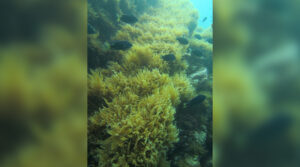
An invasive seaweed species spreading throughout Southern California waters is drawing renewed attention from marine conservation groups, anglers, and scientists concerned about the health of the region’s native kelp forests.
The Coastal Conservation Association of California (CCA CAL) recently launched its new “Help the Kelp” campaign, an ongoing public awareness and education initiative focused on combating the spread of Sargassum horneri, an invasive brown seaweed commonly referred to by many in the marine community as “Devil Weed.”
The campaign was introduced earlier this year during the Pacific Coast Sportfishing shows in Orange County and San Diego, where CCA CAL representatives used exhibits, educational displays, and presentations to introduce attendees to the growing ecological issue.
The organization said the effort is aimed at educating anglers, divers, and recreational boaters about how the invasive species spreads, how to identify it, and what steps the public can take to help reduce further expansion along the coast and around the Channel Islands.
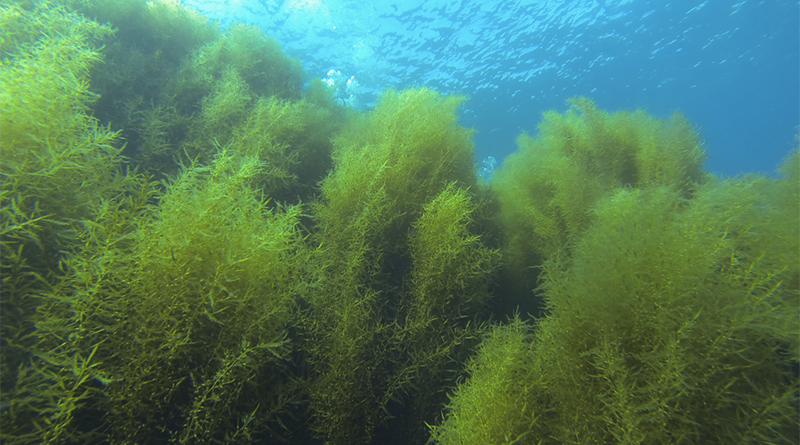
Originally introduced from Japan and Korea through international shipping activity, Sargassum horneri has been present in California waters for more than two decades. Marine scientists and conservation advocates say the species has become increasingly problematic because it competes directly with native kelp forests, which play a critical role in Southern California’s marine ecosystems.
Unlike native kelp species, Sargassum horneri thrives during warmer water cycles and can spread rapidly once established. As ocean temperatures fluctuate and warm-water conditions become more frequent, many researchers believe the invasive seaweed’s expansion has accelerated in recent years.
Native kelp forests serve as important habitat and nursery grounds for numerous fish species, invertebrates, and marine mammals. They also support recreational fishing, diving, and broader coastal biodiversity. When invasive species displace native kelp, the impacts can ripple throughout the surrounding ecosystem.
CCA CAL President Doug Lasko described the issue as one that directly affects the recreational boating and fishing communities.
According to Lasko, the goal of the campaign is not only to raise awareness but also to encourage practical action from those who spend time on the water.
Throughout the year, CCA CAL plans to continue distributing educational materials online and at events, while also speaking at fishing clubs, boating organizations, and conservation gatherings throughout the region.
CCA CAL Habitat Committee Chair Luke Burson noted that the campaign is intended to be an ongoing effort rather than a single outreach push tied only to the sportfishing shows.
Part of the campaign focuses on helping the public identify the invasive seaweed correctly.
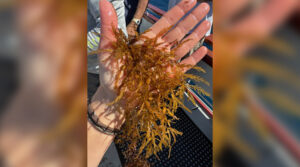
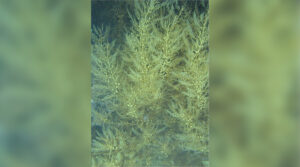
Sargassum horneri can appear differently throughout its life stages, but it’s generally recognized by its long, bushy appearance and floating air bladders that help keep portions of the plant suspended in the water column. Fragments can break loose easily and continue spreading when transported by anchors, fishing gear, boat hulls, or ocean currents.
Because of that, one of the campaign’s central messages is to avoid unintentionally contributing to its spread.
CCA CAL is encouraging boaters, anglers, and divers to carefully inspect anchors, lines, fishing gear, trailers, and hulls after visiting infested areas. Any fragments found onboard should be disposed of properly on land rather than returned to the water.
The organization is also asking the public to report sightings of Sargassum horneri through monitoring platforms such as MarineInvasives.org, allowing researchers and marine managers to better track the species’ distribution and expansion.
Divers are specifically being advised not to disturb or attempt to manually remove the invasive seaweed underwater, as breaking it apart can unintentionally worsen the problem by spreading fragments to new areas.
Among the practical recommendations promoted through the campaign are avoiding anchoring directly in infested kelp beds when possible, cleaning hulls thoroughly after returning to harbor, and learning how to identify the species before heading offshore.
CCA CAL representatives emphasized that despite the growing spread of the invasive algae, they don’t view the issue as hopeless.
Instead, the campaign focuses heavily on public participation and the idea that recreational ocean users can become an important part of long-term monitoring, education, and prevention efforts.
For Southern California boaters and anglers, the issue represents another reminder of how interconnected the region’s marine ecosystems are with recreational access and coastal recreation itself.
Healthy kelp forests not only support marine life populations, but also contribute to diving conditions, fish habitat, coastal resilience, and the broader ocean experience many recreational users value.
As the “Help the Kelp” campaign continues expanding throughout the year, organizers hope increased awareness within the boating and fishing community can help slow the spread of Sargassum horneri before further damage occurs to native kelp ecosystems already facing pressure from warming waters and environmental change.
More information about the campaign, identification resources, and reporting tools can be found through CCA CAL at ccacalifornia.org.