When you go to crank on your boat engine for a day of fun with friends and family, you expect fast ignition and clean operation at the first turn of the key. And the most critically important factor in guaranteeing instant ignition is a clean fuel system free of water and sludge.
Keeping your boat’s fuel system clean starts at the tank and ends at the injectors, or for gasoline engines, such as the Universal Atomic Four, the carburetor. On outboard engines, the basic function of prefilters and injector filters is the same for inboard engines, but the actual devices involved are designed very differently and, naturally, require a different set of procedures for cleaning. If you have any doubts about maintaining marine fuel systems, it is advisable to seek the services of a qualified marine engine mechanic.
Gasoline and diesel are very different types of fuel, so the filters and hoses used for each of the two may differ from each other. Gasoline is a highly volatile fuel capable of eating through some types of rubber hoses, so if you have a gas engine, make sure the hoses you install meet U.S. Coast Guard and SAE J1527 standards for gasoline fuel lines.
Diesel, on the other hand, is basically just a very light oil that ignites from glow plugs and compression ignition rather than with spark plugs, which are used in gasoline engines. Hoses leading from a diesel fuel tank through the primary filter and leading to the secondary filter right before the injector pump are often made of thick, soft rubber. Gasoline fuel lines are made of a specialized rubber designed to handle a variety of fuels, including diesel and kerosene.
The most effective means of protecting your vessel’s fuel filters and injection system is preventing water from entering the fuel tank. One way to keep the fuel tank free of water is to keep the tank full. This prevents condensation from forming and converting into liquid water, which drips down to the bottom of the tank and, in the case of a diesel tank, creates a biome for the proliferation of microbial life. Although this is less of a problem for gasoline engines, it is better to stay on the safe side with a biocide tank treatment for both types of fuel. If you have a diesel engine, adding a biocide is absolutely necessary to prevent microbes and fungi growth in the fuel tank.
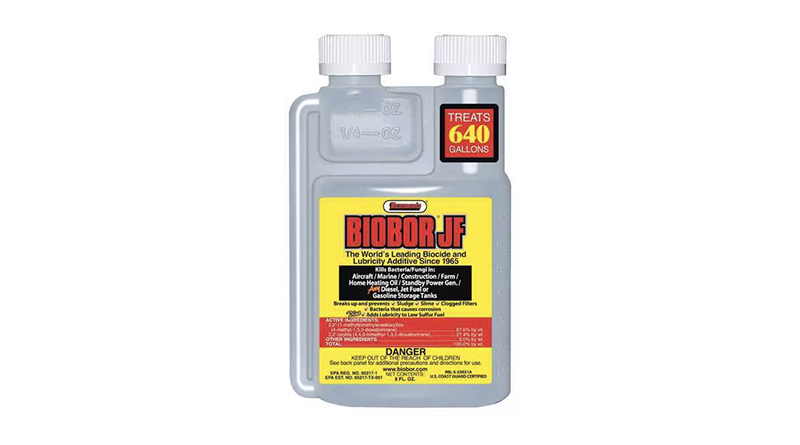
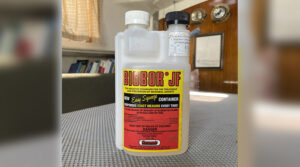
One very popular fuel additive is Biobor, which can be used for both gas and diesel. You will recognize the plastic bottle’s distinctive design, which includes a measuring chamber into which you squeeze the treatment fluid before pouring it into the tank. This simple measuring and pouring device prevents spillage and overtreatment of the fuel tank. Biobor adds lubricity to low-sulfur diesel fuel, kills microbial growth in all fuels and helps to prevent clogged filters and corrosion.
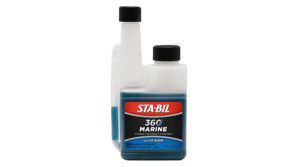
Another popular fuel additive is STA-BIL 360 Marine fuel treatment, which keeps both gasoline and diesel fuel clean from the tank to the injectors or carburetor. As a “performance booster,” STA-BIL is designed to optimize performance and mileage while removing water, gum and varnish, thus enhancing mileage and engine longevity. STA-BIL is available in several sizes, and the eight-ounce and 32-ounce bottles include an internal measuring device to guarantee the correct dose of treatment.
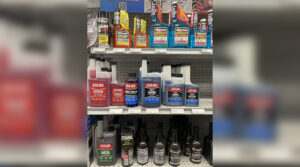
Lucas Marine Fuel Treatment, another well-known product among boat owners, keeps gas and diesel injectors clean and lubricates piston rings, promoting better cylinder compression, better fuel economy and longer, cleaner service. A single pint treats 80 gallons of fuel and costs only $11, which comes to roughly 14 cents a gallon, a darn good deal when your primary power source is at stake.
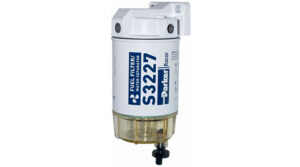
The fuel filters are another maintenance item every boat owner should know how to change as part of a regular maintenance schedule for the engine. Both gasoline and diesel fuel require a primary and secondary filter to prevent water and particulates from entering into the carburetor or fuel injection system. The primary filter may also have a water separator with a clear, plastic inspection bowl on the bottom.
The Racor line of spin-on, fuel filter water separators, such as the R60P, is popular with owners of inboard gasoline and diesel engines. This type of filter allows you to inspect the transparent sump bowl at the bottom of the filter and drain impurities that otherwise would clog the secondary filter.
To clean a fuel filter sump bowl, first turn off the fuel line valve, which is probably mounted on or near the fuel tank. If not, grab your flashlight and search along the fuel line until you find the small, brass fitting with a handle you turn 90 degrees to shut off the fuel supply. Then turn the bowl counterclockwise, taking care not to spill the fuel. Dump the fuel into a plastic container and clean out the bowl with a clean, lint-free rag. You may take the dirty fuel to a local hazardous waste (HHW) facility or automotive repair shop for proper disposal. Finally, remember to reopen the valve before starting the engine to prevent damage to the fuel pump.
For a dependable secondary filter, which is usually situated near the injector pump, the filter should be rated at 10 microns or less to prevent clogging of the injectors. Refer to the engine manual for the recommended rating. Clogged injectors can cut off an engine during operation, potentially placing vessel and crew in danger, especially in a crowded harbor or marina. Racor, Sierra, Bosch and Baldwin are well-regarded names in diesel engine filters, but you will need to shop around to find the best primary and secondary filters for your vessel.
Many sailors prefer to leave the complexities of boat engine maintenance to an experienced mechanic who deals with fuel tanks, pumps, filters and additives on a daily basis. C.C. Marine Service in Marina del Rey, R&R Marine in Orange, Dockside Marine in Wilmington, and for larger vessels, Marine Engine Service, also in Wilmington, are just a few of the many highly regarded providers of marine mechanical services in Southern California.
Keeping your boat’s fuel tank and filters clean and free of water will help add thousands of operating hours to the engine. The Kubota/Beta Marine, 20-horsepower diesel engine in my Cal 30 sloop Saltaire has 2,552 original hours of operation and has never given me a moment of trouble. I perform scheduled maintenance on the engine and fuel system, and I enter the details in a journal kept near the engine. If you perform regular maintenance on your engine, fuel tank, filters and hoses, you can rest assured your vessel’s main power source will always perform at the first turn of the key.