Until recently, the only means we had for communicating with other vessels or with family back home while underway offshore was via VHF marine radio or HF amateur radio, the latter requiring a significant amount of study to pass a licensure exam.
Today’s coastal and offshore cruisers typically carry a satellite communication device, or “sat phone,” to stay in constant contact with family and friends. Sat phones, as the name suggests, communicate through satellite repeaters more or less the same way cell phones transmit and receive via earth-bound towers.

In the early days of sat phones, monthly plan charges were prohibitively high, leaving these devices for only the wealthiest of offshore sailors. Today, prices for both the device and monthly service are well within reach of the average boater.
One very popular sat phone is the Garmin inReach Mini2, which retails for as low as $300, roughly the price of a handheld VHF radio. This text-only device measures 2 inches x 4 inches x 1 inch, snug enough to fit in the palm of your hand or in your pocket. The phone features GPS, inReach Weather, texting and email capability, along with a rechargeable, internal, lithium-ion battery.
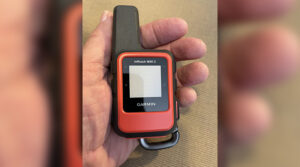
The Garmin inReach includes compatibility with the Garmin Messenger app, permitting access to smart switching among Wi-Fi, cellular and satellite communications. The inReach also offers Bluetooth and ANT+ connectivity. And since you’ll be on a boat, you can count on the IPX7 waterproof rating to keep your little phone operating even if you forget to pull it out of your pocket when you go for a swim.
For a very reasonable price, you can communicate with loved ones and fellow cruisers from virtually any point on the planet. If you can’t afford a full-service sat phone, this is the potential lifesaver we can all afford. A final, all-important point to note is that the Garmin inReach does not require the installation of a dome antenna out on deck or on a mast spreader.
Last spring, when I sailed singlehanded from Los Angeles Harbor to Hanalei Bay, Kauai, Hawaii, on my 1966 Cal 30 sloop Saltaire, I communicated every day with my wife, Marilu, along with other close ones, during the long voyage around the North Pacific Gyre, thanks to my Garmin inReach Mini2.
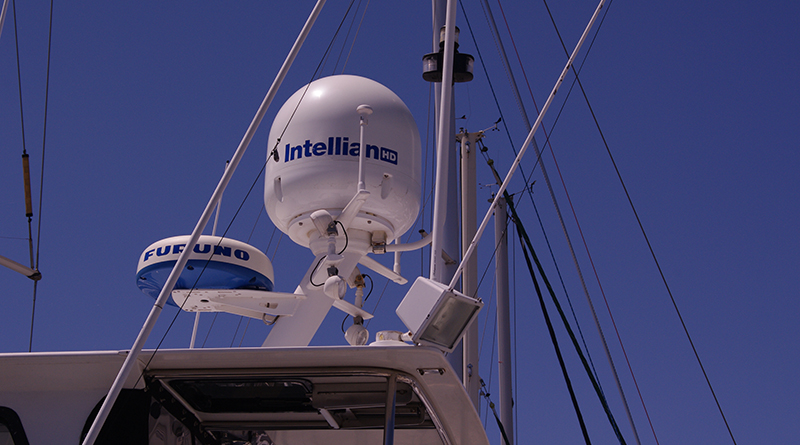
The Globalstar SPOT is another small, handheld Android device enabling text communication from any point on the globe. As a small yet aggressive competitor in the low Earth orbit (LEO) satellite internet industry, Globalstar currently has 48 low-orbit satellites around the globe providing worldwide service. Pack one of these devices aboard your boat or in your ditch bag to ensure being able to reach emergency services from any corner of the globe. For full voice and internet service, you’ll need to install a satellite dome aboard your vessel. No doubt you have seen these on larger vessels in your local marina.
Starlink, a leading competitor in satellite communication, now offers full internet service for both land-based and maritime access. “The world’s first and largest satellite constellation,” Starlink uses a LEO array of satellites to provide larger, faster downloads (up to 350 Mbps) than ever before.
After ordering your antenna and other installation equipment, you’ll need to subscribe to a monthly Starlink plan, such as that offered by Network Innovations, a global leader in communication solutions and services. This service provider boasts a long list of services, starting with professional installation and technical support.
KVH, another prominent communications provider, is a leader in marine internet services offering three grades of service through its KVH ONE “hybrid network.” Each KVH installation consists of “integrated satellite, cellular and Wi-Fi technology,” including intelligent, automatic switching designed to keep the user connected around the clock.
If you walk over to the “big-boat section” of your local marina, you’ll see the familiar, white TracNet domes from KVH. These domes are available in three sizes: the TracNet H30, H60 and H90. The H90 features “a tuned carbon fiber dish” and includes integrated satellite, cellular and Wi-Fi technology with “intelligent, automatic switching.” The H90’s data speeds can reach 20/3 Mbps.
With the dome measuring a full meter in diameter and weighing 189 pounds, heavier than the typical crew member, this system is recommended for vessels measuring over 90 feet on deck. At the humbler end of the scale, the TracNet H30 offers data speeds of 6/2 Mbps and features a dome diameter of 14.6 inches and weight of 24.6 pounds, a much more manageable package for smaller vessels.
Just as with any other relatively young and rapidly evolving technology, we can expect continually better performance with smaller, lighter sat phone systems at lower prices over time. As an example, in early 2022, Starlink was charging $10,000 for its antenna and receiver system plus $5,000 per month for service. Only four years later, the price for a Starlink offshore-capable antenna has dropped to $500 with a service plan as low as $250 per month. This still isn’t exactly cheap, but certainly within the range of many cruising families.
With a growing wide range of satphone systems and pricing, you have much from which to choose. If all you require is an affordable, offshore satellite communication system for your vessel, set aside your desire for chit-chat and invest in a text-only device. Remember, if your boat’s batteries are submerged and no longer capable of powering your VHF and shortwave radios, you can still summon help with your inReach, SPOT or similar text device.
On the other hand, if you want to talk, text and watch Netflix in the same manner you do on land, invest in a full-service satellite communication system complete with antenna dome and wide-screen monitor in the main cabin and enjoy all the entertainment and visual communication you enjoy back home.