As the year winds down, so does one of Southern California’s most productive and anticipated fisheries. The deepwater rockfish season, which opened on October 1, 2025, under the California Department of Fish and Wildlife’s (CDFW) Southern Groundfish Management Area, officially closes on December 31, 2025. This unique window gives anglers a final chance to target prized bottom species such as vermilion rockfish, bocaccio, and lingcod before the fishery pauses for the first quarter of the new year.
The fall and early winter deepwater season is limited to waters seaward of the 50-fathom line, from Point Conception to the U.S.–Mexico border. For many anglers, that restriction has become part of the tradition — long boat rides to deep structure, calm winter seas, and the reward of coolers packed with color. The fishery includes the shelf and slope rockfish complexes and lingcod, which thrive in the colder months when many other fisheries slow down.
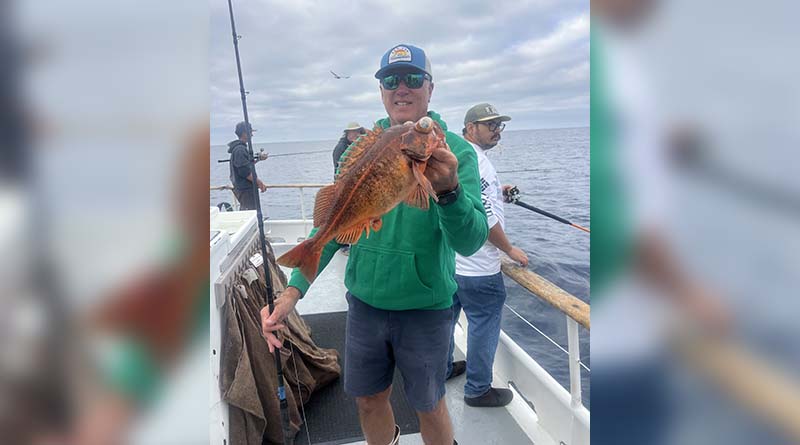
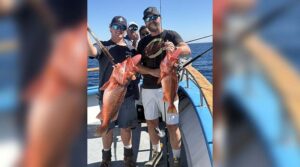
From the first week of October, captains reported strong results across Southern California. Many landings in Los Angeles, Orange, and San Diego counties noted steady limits of vermilion rockfish, along with a mix of copper, canary, and starry rockfish. The winter bite proved especially good for anglers aboard three-quarter and half-day boats, which often began the morning in deep water before returning to shallower spots to finish the day catching bass, sculpin, and sheephead.
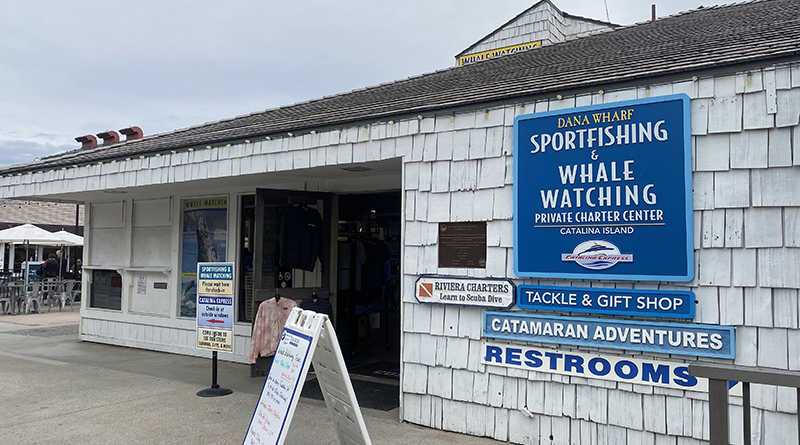
According to Dana Wharf Sportfishing, deepwater efforts on the offshore banks proved especially productive this season. “Our fishing efforts out in the deeper water on the 14 Mile Bank have been the most impressive and productive areas,” said Dana Wharf Sportfishing. “We’ve been targeting rockfish on depths of over 100 fathoms (600 feet). Since the deep water only season opened October 1, we have really been engaged in finding fish in the deep waters. Yes, we’ve fished the more shallow areas along the coast that fit into the depth restrictions set forth by the DFW, but we haven’t seen the quality of rockfish that we are seeing and catching out deep. Let me be clear in saying we are still catching plenty of fish in the more shallow areas (250’ to 350’), but the quality of fish has been best deep on the 14 Mile Bank.”
As for techniques and tackle, the crew at Dana Wharf found that simple setups often yielded the most reliable results. “For ease and simplicity, it’s hard to beat the double dropper loop setups,” said Dana Wharf Sportfishing. “Live bait like anchovy and sardine is always the easier option. But the slow pitch jig game has really become popular and has allowed anglers to use lighter rods and smaller reels and scale down their gear. Not having to send a one-pound sinker to the bottom, but instead using a jig in the 250- to 350-gram range, allows the anglers to really fish the entire water column for the rockfish.”
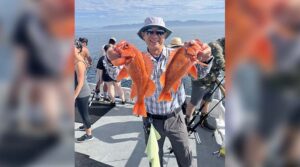
When it came to species mix, anglers saw a healthy variety of rockfish throughout the fall. “Along the coast, the primary rockfish catch has been made up of smaller bocaccio and vermilion rockfish,” said Dana Wharf Sportfishing. “Out in the deeper water, the bank rockfish, chili pepper rockfish, and big bocaccio have been the staple species that have filled bag limits for our anglers.”
Favorable ocean conditions also contributed to the steady action throughout the season. “We’ve been very lucky that the weather has been cooperating in our efforts,” said Dana Wharf Sportfishing. “Factors such as current and wind are key components to success whenever you fish a boat in a drift, and sometimes on the 14 Mile Bank we’ve had to make fast drifts to compensate for the prevailing conditions.
Another factor on the bank is natural feed that is present. The upwellings from the current push nutrient-rich water up, and that in turn attracts both fin bait like anchovy and sardine as well as market squid. When the naturally occurring bait settles in on the bank, it can be hard to catch fish as they have plenty of food easily available. On the coast, the same is true with the natural bait, but when the currents and breeze are a bit tricky, we’re able to keep the boat stationary by anchoring and adjusting sinker sizes and jig sizes in the more shallow water.”
Captains across the region echoed that sentiment, noting that long stretches of calm weather allowed boats to reach deeper structure more consistently than in past seasons. Combined with active fish and stable conditions, the 2025 deepwater rockfish season is closing out as one of the strongest in recent memory.
Once the season closes at the end of December, anglers will enter a brief winter pause. The CDFW closure from January 1 through March 31 of 2026 allows managers to balance harvest across depth zones and protect species that are more vulnerable to overfishing during colder months. The fishery reopens on April 1, when anglers will once again be able to target most shelf and slope rockfish, lingcod, cabezon, and greenlings at all depths through June 30. By midsummer, depth restrictions will return, limiting fishing to shallower waters inside the 50-fathom line from July 1 through September 30, 2026.
For now, the final weeks of December mark the last opportunity for anglers to enjoy the deepwater season before the annual reset. From Dana Point to San Diego, party boats are running full schedules to finish the year strong, with anglers eager to fill coolers, swap stories, and celebrate another successful season of Southern California bottom fishing before the spring opener returns.