



DIY-friendly boatyards give hands-on owners another option for repairs and upgrades, but doing the work yourself does not mean working without rules
By The Log Staff
For some boat owners, hauling a vessel out of the water means handing over a work list and waiting for the yard to call. For others, haul-out day means breaking out the coveralls, tools and sandpaper and getting to work themselves.
The latter is the idea behind a do-it-yourself, or DIY, boatyard.
Unlike a traditional full-service yard, where repairs and maintenance may be performed by yard employees or approved marine contractors, a DIY-friendly facility allows owners to perform at least some work on their own vessels. Depending on the yard, that could include bottom painting, fiberglass repairs, replacing zincs and through-hulls, mechanical work, electrical projects, or even substantial refits.
But “DIY” does not mean anything goes.
Every boatyard establishes its own policies governing what owners can do, where they can work and what equipment, materials and contractors can be brought onto the property. Environmental regulations, insurance requirements and workplace safety considerations can also determine which jobs are permitted.
For Southern California boaters accustomed to doing their own maintenance, finding a yard that permits owner-performed work can therefore be almost as important as finding one capable of hauling the boat.
What Is a Lay Day?
When a boat is hauled out at a DIY shipyard, the work doesn’t always happen in a day. A “lay day” is a day in which the vessel remains out of the water and occupies space in the boatyard while maintenance, repairs or upgrades are being completed.
Many yards charge a daily lay-day fee — in addition to expenses such as hauling, blocking, pressure washing, and launching. That makes project timing important for DIY boaters. A three-day bottom job can quickly become a weeklong project if sanding reveals damaged fiberglass, worn running gear, or another unexpected repair.
Policies vary by facility. Some yards include a certain number of lay days with a haul-out, while others charge from the first day or offer weekly or monthly rates. Before hauling out, boaters should ask when lay-day charges begin, what the daily rate includes, and whether rates change for longer projects.
DIY does not mean hauling the boat yourself
Even at a DIY facility, the boatyard generally remains responsible for some of the most specialized parts of the haul-out process.
A yard may use a Travelift, crane, or other equipment to remove the vessel from the water before positioning and blocking it in an approved work area. Once the vessel is safely secured, the owner can begin whatever work the facility permits.
The arrangement provides access to something most boat owners cannot replicate in a driveway or marina slip: the underside of the boat.
That can make DIY haul-outs particularly useful for bottom maintenance. Antifouling paint, zinc replacement, through-hull inspection, running gear work and fiberglass repairs are among the projects that may require a vessel to be out of the water.
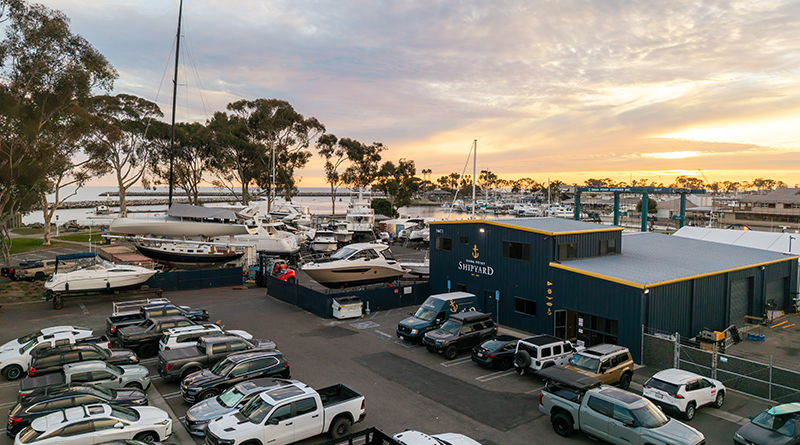
Sunset Aquatic Shipyard in Huntington Beach is one Southern California example. The yard describes its program as the only DIY boatyard in Orange County and offers haul-out and blocking along with workspace, power and water. According to the yard, owners use the program for projects ranging from bottom painting and zinc replacement to fiberglass work, repowers and complete refits. Professional shipwright services are also available when an owner needs assistance.
That combination illustrates an important point about DIY yards: choosing to work on your own boat doesn’t necessarily mean completing every job yourself.
Somewhere between DIY and full service
Boatyards don’t necessarily fit neatly into two categories.
A full-service yard may perform nearly everything in-house. Another may allow approved outside contractors but not owner-performed work. A third might permit owners to handle basic maintenance but restrict welding, spraying, electrical work or other specialized jobs. Still another may operate as both a professional repair facility and a DIY yard.
Derecktor Ventura is an example of the latter. The Ventura Harbor facility provides professional mechanical, electrical, fiberglass, painting, fabrication, and other services while also offering DIY haul-out options. Its current policies specify that DIY repairs are limited to certain areas and must comply with yard safety requirements, meaning owners should confirm that their particular project is permitted before beginning work.
That flexibility can be particularly useful when a project grows beyond an owner’s capabilities. For example, a boater may be comfortable preparing and painting a bottom, but when it comes to corrosion, damaged running gear, or a fiberglass problem, the job calls for professional attention.
The ability to bring in professional help without moving the vessel to another facility can keep a DIY project from becoming an all-or-nothing proposition.
Why boaters choose DIY
Cost is an obvious attraction, particularly for labor-intensive projects. A boat owner willing and able to provide the labor may be able to reduce part of the expense associated with maintenance or a restoration.
There is another motivation, however: some boaters simply like working on their boats.
A hands-on owner may already understand the vessel’s systems, keep a detailed maintenance schedule, and prefer to inspect components personally. A haul-out can provide an opportunity to examine areas normally hidden below the waterline and address several maintenance items at once.
DIY facilities can also accommodate longer projects that might not fit the traditional model of a short haul-out followed by a quick return to the water.
San Diego Boat Storage operates a DIY working yard in San Diego and advertises space for projects ranging from simple repairs and repowers to major hull work and multiyear restorations. The facility says owners can work on vessels ranging from small boats to power cruisers up to 60 feet, while marine service providers are available on-site for carpentry, engines, electrical systems, plumbing, canvas and bottom work.
The facility also illustrates another variation on the DIY concept. It’s geared toward working storage and longer-term projects rather than functioning solely as a conventional waterfront haul-out yard. Owners considering a facility therefore need to look beyond the word “DIY” and determine exactly how the boat will get there, how long it can remain and what services are actually available.
Bringing your own contractor is another question
Owner-performed work and outside-contractor work are also not necessarily the same thing.
A yard that allows an owner to work on a boat may have separate requirements for a freelance mechanic, electrician, painter, rigger, or other marine professional hired by that owner. Contractors may need to provide proof of insurance, meet yard requirements, register with the facility or receive permission before beginning work.
That distinction matters when planning a project.
An owner might intend to handle sanding and painting personally while hiring an electrician to replace wiring or a mechanic to tackle an engine problem. Before scheduling the haul-out, the owner should find out whether that contractor will actually be permitted into the yard and what documentation will be required.
It’s also worth asking whether the yard has its own preferred or approved contractors. Having qualified marine trades already working on-site can provide a middle ground for owners who want to perform much of a project themselves without being responsible for every component.
Environmental rules still apply
Bottom work is also considerably different from a weekend project in the garage.
Sanding old antifouling coatings can generate dust and debris containing materials that should not enter the harbor, storm drains or surrounding environment. Paint, solvents, oil, fuel, batteries and other marine-maintenance products can require specific handling and disposal procedures.
As a result, DIY boaters may be required to use containment systems, ground coverings, dust collection or other protective measures. A yard may also prohibit particular methods or materials.
The same principle applies to safety. Welding, grinding, electrical work, fuel-system repairs and other projects can create hazards for the owner, neighboring boats and yard employees. A facility allowing DIY work still retains an interest in controlling what happens on its property.
For that reason, boaters should discuss the entire project with the yard before arriving rather than assuming that “DIY allowed” means every planned job will be approved.
Ask before you haul
The first question for a DIY-minded boater is simple: Does the yard allow owners to work on their own boats?
The questions after that are just as important.
Owners should determine which projects are permitted; whether outside contractors are allowed; what insurance contractors must carry; whether there are restrictions on sanding and painting; what environmental containment is required; and whether electricity, water, tools or equipment are included. Haul-out charges, lay-day or monthly yard rates, storage requirements and launch fees should also be understood before work begins.
For larger projects, boaters should ask what happens if the job takes longer than expected. A bottom-painting project might fit comfortably into a short haul-out. Discovering damaged fiberglass, a worn cutlass bearing, or an unexpected mechanical problem can change that schedule quickly.
Also, DIY work isn’t necessarily the right option for every owner or every repair. Saving money on labor loses its advantage if a project requires specialized expertise an owner does not have, and mistakes involving structural, electrical, fuel or propulsion systems can become considerably more expensive than hiring a professional in the first place.
Still, for boaters with the experience, time and willingness to get dirty, Southern California’s remaining DIY-friendly yards offer something increasingly valuable: a place to take ownership of the work as well as the boat.
And for the owner who knows exactly what needs to be done and would rather hold the wrench than hand it over, that freedom can be part of the boating experience itself.
Potential sidebar: Before Booking a DIY Haul-Out
Boaters should ask the yard whether owner-performed work is allowed; which projects are prohibited or restricted; whether outside contractors are permitted and what insurance they need; what environmental containment is required; whether power and water are provided; how haul-out, blocking and launching are charged; whether yard time is billed daily or monthly; and whether professional assistance is available if the project becomes more complicated than expected.