What boaters need to know before bringing pets onboard, from life jackets and leash routines to floating potty breaks and seasick dogs.
By Katherine Clements
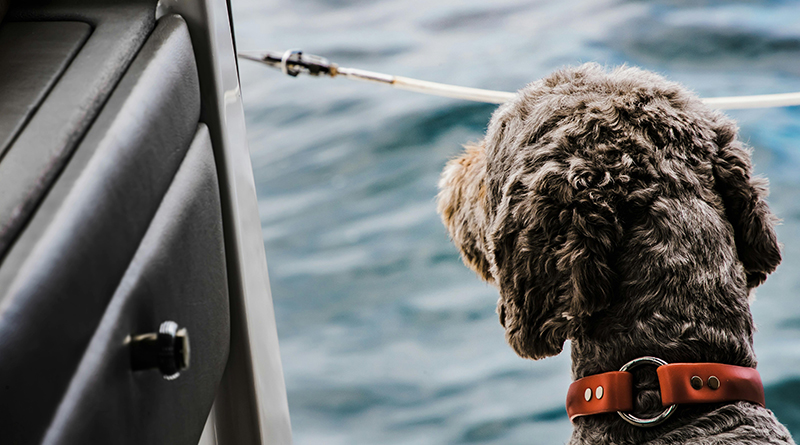
For many boaters, a day on the water feels incomplete without the entire family aboard, including the four-legged crew members. Across California’s marinas, harbors, and anchorages, dogs perched on bow cushions or lounging in shaded cockpits have become an increasingly familiar sight. From weekend cruises to Catalina Island to sunset harbor runs and extended coastal adventures, more boat owners are finding ways to safely and comfortably integrate pets into life onboard.
But while boating with pets can be rewarding, it also introduces a new layer of responsibility. Unlike a backyard or neighborhood walk, the marine environment presents unique challenges for animals, from slippery decks and intense sun exposure to motion sickness, unfamiliar sounds, and the obvious risk of going overboard.
The reality is that boating with pets requires preparation, training, patience, and often a few creative solutions.
For many first-time pet boaters, one of the biggest misconceptions is assuming that a dog who enjoys swimming will automatically adapt well to boating. In practice, the two experiences can be very different. Boats move unpredictably, surfaces shift underfoot, and engine noise or wave action can create anxiety for animals unfamiliar with the environment.
That is why experts often recommend easing pets into boating gradually rather than immediately attempting long trips offshore or overnight cruises.
The process usually begins at the dock. Allowing a pet to explore the boat while stationary helps familiarize them with the layout, textures, and movement in a controlled setting. Treats, reassurance, and positive reinforcement can help create a calm association before ever leaving the slip.
For many boaters, the adjustment period is shorter than expected.
While some dogs take naturally to life aboard, others need time to learn where they’re allowed to move, how to balance underway, and where they should rest when conditions become rougher. Cats can also adapt surprisingly well, though they often require slower introductions and secure indoor spaces where they feel protected.
Temperament matters just as much as training. High-energy dogs that struggle with confinement may find extended time onboard difficult, while older or calmer animals often settle in quickly. Some boaters note that dogs who once would have struggled with boating become much more comfortable later in life once their energy levels mellow.
The boat itself also plays a role. Wide side decks, lower freeboard, easier companionway access, and non-slip surfaces tend to create a more pet-friendly environment from the start. However, many boat owners modify existing layouts to improve safety and comfort.
One of the most common upgrades is lifeline netting, particularly for smaller dogs. Installed along the railings, the mesh creates an additional barrier that helps prevent pets from slipping or squeezing through open sections along the deck.
Inside the cabin, many boaters add carpets, yoga mats, or non-skid runners to help pets maintain footing while underway. Companionway stairs are another area frequently modified with traction tape or padded coverings to reduce slipping.
For older dogs, ramps and wider stair treads can make moving below deck significantly easier.
The biggest safety priority, however, remains flotation.
Even strong swimmers should wear properly fitted pet life jackets whenever underway or near the water. Conditions offshore or even inside a harbor can change quickly, and pets that fall overboard may panic or become disoriented.
Modern pet life jackets are designed specifically for marine use and often include reflective strips, grab handles, and adjustable straps. The handle is especially important because lifting a wet dog back onto a boat can be surprisingly difficult, particularly from the waterline or dinghy.
Many boaters recommend testing the life jacket before heading offshore, allowing pets to walk and swim in shallow water while wearing it so they become comfortable with the added buoyancy and fit.
Beyond flotation, heat management is another major concern onboard.
Dogs are particularly vulnerable to overheating, especially on fiberglass decks that absorb and radiate heat throughout the day. Dark-colored dogs and breeds with shorter snouts can be even more susceptible.
Providing shaded areas, cooling mats, and constant access to fresh water becomes essential during warmer months. Some boaters create designated pet rest zones beneath canvas covers or inside ventilated cabins where animals can cool down away from direct sun exposure.
Hydration is equally important. Pets should never drink seawater, which can quickly lead to dehydration and illness. Carrying additional fresh water specifically for pets is strongly recommended, particularly during longer crossings or beach days.
Sun exposure can also affect pets more than many owners realize. Dogs with short fur or lighter skin can develop sunburn on exposed areas like noses, ears, and bellies. Pet-safe sunscreen is increasingly common among boating pet owners, especially for animals spending extended time on deck.
But perhaps one of the least glamorous and most discussed realities of boating with pets is bathroom logistics.
For day trips, many dogs simply wait until they return to shore. However, overnight cruising or multi-day trips require more deliberate planning.
Some dogs adapt quickly to onboard potty systems, while others stubbornly refuse.
Artificial turf pads have become one of the most popular solutions. Positioned on swim platforms or designated corners of the deck, they mimic grass while remaining washable and reusable. Others rely on absorbent pads or portable litter systems depending on the type of pet and available space onboard.
Training often takes patience.
Some dogs refuse to relieve themselves onboard until absolutely necessary, which can become stressful during rough weather or overnight passages. Boaters who successfully train pets to use a designated onboard potty area often describe it as one of the most valuable long-term adjustments they made.
Positive reinforcement is key. Once the animal successfully uses the area, treats and praise help reinforce the behavior.
Cleaning supplies quickly become another onboard necessity.
Experienced pet boaters often keep towels, pet wipes, cleaning sprays, and spare water jugs in the dinghy or cockpit for muddy beach landings, accidents, or saltwater rinses after swimming.
Hair management also becomes part of daily boat maintenance. Pet hair and sand have a tendency to migrate into bilge pumps, drains, upholstery, and cabin corners with surprising efficiency. Many owners joke that dogs become unofficial “maintenance crew” by testing the limits of onboard vacuum systems and drainage.
Motion sickness presents another challenge, particularly for pets new to boating.
Some animals become lethargic, drool excessively, pace, or vomit underway. Veterinarians can often recommend anti-nausea medications appropriate for marine travel, and many owners find that shorter trips and gradual exposure help animals acclimate over time.
Creating a calm, secure resting area below deck can also reduce anxiety and motion-related stress. Soft-sided crates, familiar blankets, and quiet corners often help pets settle during rougher conditions or busy docking situations.
Docking itself can become one of the more chaotic moments onboard with pets present.
Many boaters prefer keeping dogs safely inside the cabin while docking to prevent sudden movements, leash tangles, or distractions while crew members focus on lines and maneuvering. Others use harnesses with sturdy grab handles to safely lift pets between dinghies, docks, and swim platforms.
The unpredictability of animals also means retrieval planning matters.
If a dog falls overboard, every second counts. Practicing retrieval techniques using the life jacket handle before an emergency happens can make an enormous difference. Some boaters also install pet boarding ladders or floating ramps to help dogs climb back aboard more easily.
As boating with pets becomes more common, marinas themselves are increasingly adapting.
Many harbors now offer dog relief stations, walking paths, pet waste stations, and nearby parks. Waterfront restaurants and pet-friendly patios have also become a growing part of the marina culture, particularly in boating destinations where extended stays are common.
Planning ahead remains important, however, because rules can vary significantly between marinas, beaches, and coastal towns. Some areas restrict dogs seasonally or require leashes in marina districts and waterfront parks.
Longer-range cruisers face additional considerations involving pet food, veterinary care, and international regulations.
Veterinary paperwork, vaccination records, flea prevention, and medication supplies become essential for boaters venturing beyond local waters. Some experienced cruisers maintain digital copies of veterinary records onboard and stock extra medication or specialty food before heading into remote areas.
Pet food availability can vary widely depending on location, and many cruisers learn quickly to buy extra supplies whenever familiar brands become available.
Emergency preparedness is equally important.
Pet-specific first aid kits are becoming increasingly common aboard cruising vessels and often include bandages, antiseptics, tweezers, anti-nausea medication, flea prevention, syringes, and emergency contact information for veterinarians along the cruising route.
In many ways, boating with pets mirrors boating itself. Preparation, routine, and adaptability determine whether the experience becomes stressful or rewarding.
And despite the extra planning, many boaters say the companionship is worth every adjustment.
Dogs curled up beneath cockpit tables during sunset anchorages, dinghy rides to shore, beach runs at secluded coves, and quiet nights at anchor all become part of the experience. For many owners, pets quickly adapt to the rhythms of boating life and become surprisingly capable crew members.
Still, responsible boating with pets ultimately comes down to understanding their limitations and prioritizing their safety over convenience or adventure.
That includes recognizing when conditions may simply be too hot, rough, crowded, or stressful for an animal to enjoy safely.
Organizations such as America’s Boating Club continue encouraging boaters to approach pet safety with the same seriousness as any other aspect of boating preparedness. Education courses covering navigation, emergency planning, and safe vessel operation benefit not only the captain and crew, but every passenger onboard, including the furry ones.
Because while boating with pets may require a little extra effort, the reward is often simple: another family member getting to experience life on the water right alongside you.