image 1 (1)

Tackle Tip: When Live Bait Is Scarce, Make Your Own

With Southern California’s live-bait supply inconsistent this season, a Sabiki rig can give private boaters a simple backup plan for putting fresh bait in the tank.


For Southern California anglers, a productive day offshore often starts with a tank of healthy live bait. But when sardines, anchovies and other popular offerings become scarce or inconsistent at local bait receivers, anglers may need a backup plan.

One of the simplest options is already a staple in many Southern California tackle boxes: the Sabiki rig.

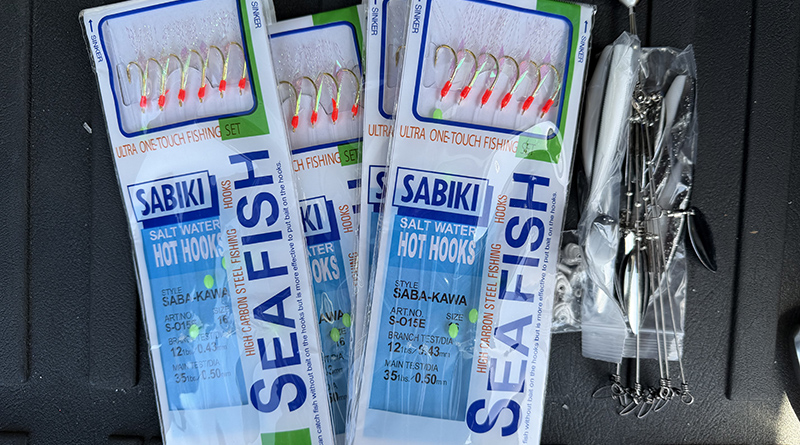
A Sabiki is a multi-hook rig designed specifically for catching small baitfish. Several short branch lines extend from a main leader, each carrying a tiny hook dressed with feathers, reflective material or other attractants. A sinker is attached to the bottom of the rig.

To use one, anglers first need to locate a school of baitfish. Once bait is found, the Sabiki is lowered into the school and gently jigged through the water column. Because several hooks are fishing simultaneously, it’s possible to catch multiple baitfish on a single drop.

Depending on what is available in a particular area, Sabikis can be effective for catching mackerel, sardines, anchovies and other legal bait species.

For private boaters, that makes the rig particularly useful during periods of inconsistent bait availability. A Sabiki will not solve Southern California’s larger bait-supply problem, nor does it guarantee anglers will find bait, but it gives boaters another option when the bait receiver does not have the preferred species or supply is limited.

The strategy is commonly known as “making bait.” Instead of purchasing an entire supply before heading to the fishing grounds, boaters locate and catch suitable bait themselves.

Finding it is the first challenge. Anglers can use their fishfinder to locate schools in the water column and watch for other signs of bait activity. Once caught, bait should be transferred quickly and carefully into a properly functioning bait tank with adequate circulation.

Avoid overcrowding the tank. Healthy bait is the goal, and packing too many fish into limited space can increase stress and reduce how well the bait performs when it’s finally put on a hook.

Sabikis also require careful handling. With several small hooks attached to a single rig, swinging a loaded Sabiki onto the deck can create unnecessary tangles and safety problems. Bring the rig aboard under control and remove each baitfish carefully before placing it in the tank.

Storage is another consideration. Loose Sabiki rigs have a habit of becoming tangled with practically everything in a tackle box. Keeping rigs on their original cards or another dedicated holder can prevent headaches. Some anglers use specialized Sabiki rods that allow the rig and its hooks to retract inside the rod for easier storage and deployment.

Most importantly, anglers should check current California fishing regulations before using a multi-hook rig. Regulations concerning hook configurations, allowable gear and the species anglers may retain can vary depending on location and fishery. Anglers should also be able to identify the baitfish they catch and know whether any size, possession or other restrictions apply.

The California Department of Fish and Wildlife publishes current ocean sportfishing regulations and should be consulted before heading out.

During a season when live bait has not always been easy to secure, a few Sabiki rigs take up very little room aboard a boat and can provide a valuable alternative.

The plan is straightforward: stop at the bait receiver first. If the bait you want is available, fill the tank and go fishing. If it isn’t, having a Sabiki aboard means the search for bait does not necessarily end there.

Sometimes the best backup bait barge is the one already swimming beneath the boat.

Leave a Reply