



Hurricanes may be uncommon in Southern California, but lessons from major storms offer practical preparation advice for local boat owners, offshore cruisers, and those heading south into Mexico.
SOUTHERN CALIFORNIA — For Southern California boaters, hurricane preparation can feel like advice intended for someone on the opposite side of the country. But between tropical systems that can influence Southern California waters, increasingly sophisticated offshore cruising and the number of local boaters who head south into Mexico, the lessons learned during hurricane season have relevance well beyond Florida and the Gulf Coast.
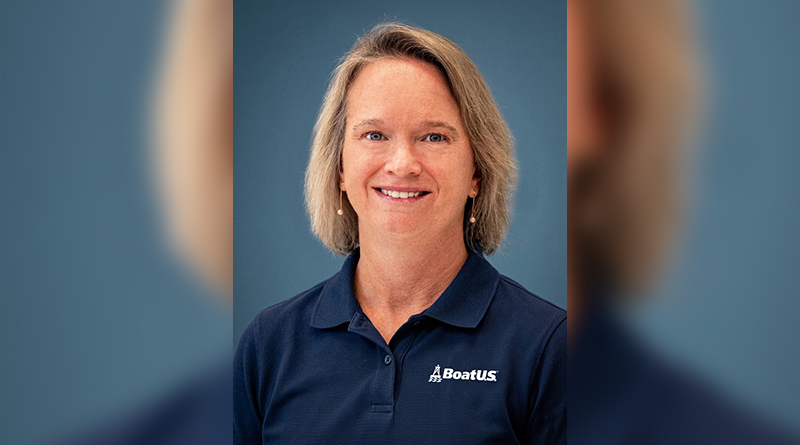
According to Heather Lougheed of BoatUS, one of the most important lessons is also one of the simplest: Severe-weather preparation should begin long before there is a storm on the forecast.
“The most important thing boat owners can do is have a plan well before hurricane season starts,” Lougheed said.
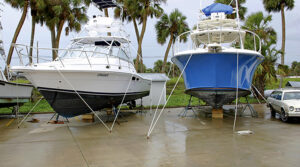
That means knowing a marina’s storm policies, deciding whether a vessel would remain in its slip, be relocated or hauled out, and identifying haul-out facilities in advance. If a boat owner intends to rely on a yard when a storm approaches, waiting until the forecast becomes concerning can leave few options as facilities fill.
BoatUS also recommends providing the marina with a copy of the boat’s hurricane plan and assembling a storm kit ahead of time. Extra dock lines, chafe protection and other equipment needed to secure the vessel should be readily available rather than purchased at the last minute.
Insurance policies, registration documents and current photographs of the vessel should also be accessible. Owners should understand the hurricane provisions and requirements within their insurance policies before a storm threatens.
“Preparing early gives you more options and fewer critical decisions to make under pressure,” Lougheed said.
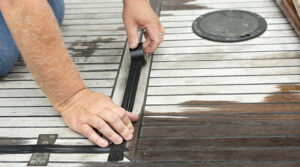
Those preparations are useful even in Southern California, where boaters regularly contend with high winds, large swells, atmospheric river events and other severe weather capable of damaging boats and marina infrastructure. The circumstances may differ from a hurricane landfall, but many of the fundamentals of preparing a vessel remain the same.
One mistake BoatUS repeatedly sees is boaters underestimating the forces severe weather can place on a vessel.
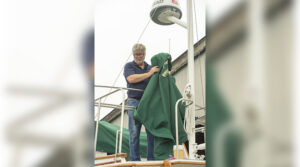
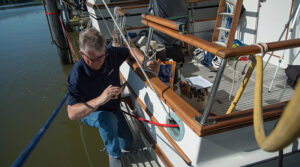
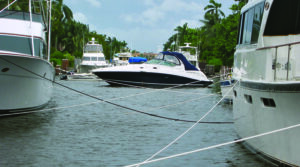
Dock lines that work under normal conditions can chafe through during prolonged movement. Biminis, roller-furling sails and other equipment can create significant windage, while loose objects can become hazards. Rising water also creates another problem, particularly when dock lines do not have enough slack to accommodate changing water levels.
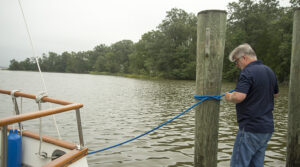
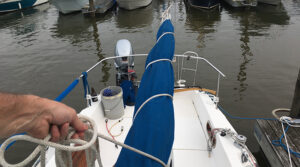
Lougheed recommends appropriately sized dock lines and chafe protection, with heavier lines considered when severe conditions warrant them. Anything capable of catching the wind, sliding, tipping or going overboard should be removed or secured.
Most importantly, she said boat owners should never remain aboard during a hurricane or other severe storm.
Choosing whether to haul a boat, relocate it or leave it secured in a marina is more complicated.
“There isn’t one answer that works for every boat or every storm,” Lougheed said.
The decision depends on vessel type and size, location, available marina or storage facilities, expected conditions and how much time remains before weather deteriorates.
Hauling a boat ashore and properly securing it using structural tie-down points can reduce exposure to waves, storm surge and damage from docks and neighboring vessels. Relocation may also be appropriate when a safer destination is available and the move can be completed well ahead of deteriorating weather.
If a boat must remain in the water, owners should follow the marina’s storm procedures and secure the vessel accordingly. But there comes a point when protecting the boat must become secondary to protecting the owner.
“A boat can be replaced; putting yourself in danger at the last minute to move or secure it’s never worth the risk,” Lougheed said.
Marinas also play an important role in determining how successfully a boating community prepares.
BoatUS recommends that boat owners learn their marina’s severe-weather procedures rather than assuming a comprehensive plan exists. Owners should know whether boats must be removed from particular areas, when preparations are expected to begin and who should be contacted if an owner cannot reach the vessel.
For marina operators, maintaining docks and infrastructure, identifying electrical and flooding hazards, securing loose equipment and establishing post-storm damage assessment procedures are among the practices that can reduce confusion and risk. Communication before, during and after an event is equally important.
Lessons from previous hurricane seasons have also changed the way boaters should interpret a forecast.
“One lesson we see reinforced season after season is that preparation cannot begin when a storm is already on the way,” Lougheed said.
Storm tracks can shift, and tropical systems can intensify quickly. BoatUS also cautions against looking only at the Saffir-Simpson hurricane category when assessing risk. The scale measures sustained wind speed, but doesn’t account for other potentially destructive hazards, including storm surge, rainfall, flooding and waves.
For Southern California boaters cruising into Mexico, that broader understanding becomes particularly important.
BoatUS recommends carefully considering whether travel through hurricane-prone areas is necessary during hurricane season and avoiding those areas when practical. Boaters who do make the trip should incorporate severe-weather planning into their itinerary before leaving Southern California.
That includes understanding regional weather patterns, identifying safe harbors and potential haul-out locations along the route and reviewing insurance coverage, including any geographic or seasonal restrictions.
Once underway, weather should be monitored regularly rather than only when a storm becomes an obvious threat.
“It’s also important to build flexibility into the itinerary,” Lougheed said. “Boaters should be prepared to change course, delay a departure or remain in a safe location if conditions warrant it.”
That advice is particularly applicable to cruisers traveling Baja California and mainland Mexico, where they may be far from their regular marina, mechanic or boatyard and unfamiliar with local resources.
Hurricane preparation also fits within a larger emergency-readiness philosophy that applies every time a boat leaves a Southern California dock.
BoatUS recommends properly fitted life jackets for everyone aboard, reliable communications, navigation and signaling equipment, a well-stocked first-aid kit, fire extinguishers and safety equipment appropriate for the vessel and where it operates. Boats should, at minimum, comply with applicable U.S. Coast Guard requirements, although BoatUS encourages owners to go beyond minimum requirements when appropriate.
Offshore and remote cruising may justify additional equipment, including an EPIRB, life raft and more advanced medical supplies. A VHF radio with Digital Selective Calling capabilities should be properly registered and programmed with an MMSI number.
A float plan should also be left with a trusted person ashore and include the destination, people aboard and expected return time. Passengers should know where safety equipment is stored and understand what to do if the operator becomes incapacitated.
Before departure, basic checks of weather, fuel, batteries and essential equipment can catch problems before they become emergencies offshore.
Technology has made that preparation easier.
Weather apps, marine forecasts, radar and satellite imagery, emergency alerts and resources from NOAA and the National Hurricane Center provide boaters with information that previous generations could not access as easily. Improved storm-surge forecasting can also provide a more complete picture of a storm than wind speed alone.
For extended passages, Lougheed noted that satellite connectivity can help boaters receive information beyond traditional communication ranges. Wi-Fi-enabled cameras can also allow owners to remotely check boats left in marinas or stored ashore.
But having more information available doesn’t eliminate the fundamentals.
“Technology is a valuable tool, but it shouldn’t replace basic preparedness or good judgment,” Lougheed said.
For Southern California boaters, that may be the larger lesson. A hurricane doesn’t have to be pointed toward a home marina for hurricane preparedness to be useful. Heavy weather, strong winds, large seas and unexpected emergencies all reward the same habits: know the boat, know the marina, know where to go, maintain the necessary equipment and make important decisions while there is still plenty of time to make them.
BoatUS offers free hurricane-preparation videos, planning tools and additional severe-weather guidance through its Hurricane Resource Center. Boaters can also obtain information about registering for an MMSI number through BoatUS MMSI services.