If you own a boat and cruise the beautiful waters of Santa Monica Bay, here’s your chance to help keep the ocean clean — and it only takes a couple of minutes. The Bay Foundation, a nonprofit environmental group working to restore and protect the Bay, is asking boaters to participate in a short, anonymous survey about marine composting toilets. Your feedback will help guide their outreach and technical assistance efforts to better serve the boating community and protect the marine environment. The survey is available at thebayfoundation.typeform.com/to/lR46vvSM.

While marine toilets aren’t exactly a glamorous topic of dockside conversation, they play a critical role in keeping local waters healthy. In fact, marine composting toilets are becoming an increasingly popular alternative for environmentally-conscious boaters who want to reduce pollution, conserve water, and simplify their onboard systems.
According to Georgia Tunioli, Environmental Engagement Program Director with The Bay Foundation, this growing interest aligns perfectly with the organization’s broader mission. “The Bay Foundation is dedicated to implementing innovative nature-based solutions along the coast of Southern California to adapt to climate change, enhance ecosystems, and benefit the community,” Tunioli explained. “One such solution is marine composting toilet systems—an eco-friendly, upstream blackwater (sewage) solution. With 4 million boaters in California, systems like these, combined with community stewardship, play a vital role in protecting the health of our waterways and surrounding communities.”
Unlike traditional marine sanitation devices (MSDs) that rely on holding tanks and pumpouts, composting toilets process human waste through natural decomposition, turning it into compostable material without the need for water or complicated plumbing. That means no more worrying about leaky hoses, overflowing tanks, or scrambling to find the nearest pumpout station. And for Santa Monica Bay — an area under constant pressure from urban runoff, marine debris, and vessel waste — that’s a big deal.
The Bay Foundation (officially known as TBF) has been working for decades to protect the health of Santa Monica Bay and its surrounding watershed. Part of that mission involves educating boaters about responsible waste management and offering solutions that support both convenience and conservation. With more boaters exploring eco-friendly options like composting toilets, TBF is looking to better understand their needs, experiences, and questions. That’s where the survey comes in.
Tunioli noted that one of the biggest barriers is simply understanding the technology. “We’re currently surveying Santa Monica Bay boaters on this, so stay tuned for the results,” she said. “Anecdotally, though, we have heard concerns around the initial cost of investment and maintenance efforts.”
Despite these concerns, the environmental and practical benefits of marine composting toilets are clear. “These systems are waterless, which is especially significant in water-scarce areas like California,” Tunioli pointed out. “In contrast, marine sanitation devices that require pumping out and treatment consume a significant amount of water and energy resources.”
Even more importantly, composting toilets help prevent sewage spills that can harm the Bay. “Marine composting toilet systems prevent sewage (blackwater) at the source from polluting Santa Monica Bay,” said Tunioli. “This is huge because untreated blackwater can have severe impacts on water quality, aquatic ecosystems, and human health. One toilet flush of untreated sewage from a boat can cause the same environmental impact as 10,000 flushes from a land-based toilet where the waste is treated.”
These systems also create compost that can be safely used for non-edible plants and trees, providing a circular, closed-loop solution. But it’s not just the Bay that benefits—boaters do, too. Tunioli explained that composting toilets offer convenience, lower maintenance, and even weight savings compared to traditional marine sanitation systems. “Because of their simple design, marine composting toilet systems allow boaters to cruise for extended periods without needing to detour for pumpout stations and/or be inconvenienced by potential plumbing issues,” she said.
Plus, many units are considerably lighter and more compact. “One of our partners who made the switch replaced a 150-pound system with a 35-pound system, significantly reducing weight and space requirements,” Tunioli added.
Santa Monica Bay, stretching from Point Dume to Palos Verdes, is a world-renowned playground for boaters, divers, surfers, and beachgoers. It’s also home to more than 5,000 species of plants, fish, birds, and marine animals — not to mention the roughly two million people who live within its sprawling watershed. Keeping this vibrant coastal ecosystem healthy requires more than just laws and regulations — it takes a community-wide commitment to smart, sustainable practices.
That’s why The Bay Foundation is looking to the boating community to help guide its clean boating outreach and technical support. “With generous funding from the California State Coastal Conservancy through The Bay Foundation’s Santa Monica Bay Coastal Habitat Restoration Program, data from this survey will inform our engagement and technical assistance to best support and guide Santa Monica Bay’s boating community,” Tunioli explained. She also noted that this research will influence The Bay Foundation’s ongoing strategy through its Clean Vessel Act Education and Outreach grant, in partnership with California State Parks Division of Boating and Waterways.
Could composting toilets become the new norm among Santa Monica Bay boaters? Time will tell, but early indications are positive. “We look forward to completing the survey and engaging directly with boating communities to further inform this,” Tunioli said. “That said, to date, The Bay Foundation has connected with dozens of marine composting toilet users across Southern California, including one with 13 years of experience. What we consistently hear is that once users have made the switch, they are enthusiastic and appreciative of the many benefits it offers.”
The importance of the boating community to the Bay’s overall health cannot be overstated. “With Marina del Rey being the largest man-made pleasure craft harbor in the country and home to roughly 6,000 Santa Monica Bay boaters, preventing boat-based pollutants such as sewage, used oil, marine debris, household hazardous waste, aquatic invasive species, and emerging contaminants is paramount to safeguarding the health of the Santa Monica Bay,” Tunioli emphasized. “Boaters are drawn to the beauty of Santa Monica Bay and California’s coastline for a reason and want to boat responsibly.”
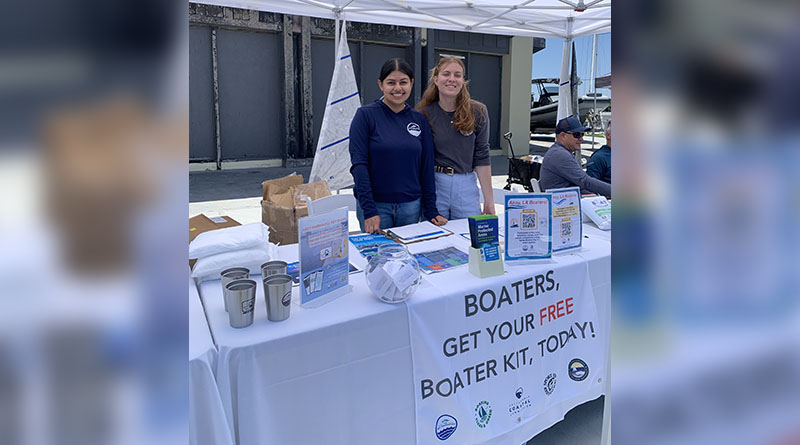
Protecting the Bay isn’t a solo effort—it requires collaboration. One example of this is the Dockwalker Program, which trains volunteers to promote clean boating practices across California. “Collaboration is central to TBF’s clean boating initiative,” said Tunioli. “The Dockwalker Program has made ripples across California, with over 1,400 Dockwalkers sharing clean boating practices directly with over 130,000 boaters.”
Boaters and residents can support the Bay Foundation beyond the survey by attending events, participating in restoration efforts, or even making a donation. “Please visit santamonicabay.org to explore upcoming events, from informational virtual webinars to in-person restoration activities along Los Angeles County’s coastline,” Tunioli encouraged. “You can stay connected by following us on social media and subscribing to our newsletter. Lastly, to advance our mission and propel our work, please consider donating.”
Marine composting toilets might not sound like the most exciting aspect of boating, but they represent an innovative solution to a long-standing problem. By keeping sewage out of the water, these systems help protect water quality, marine life, and the overall health of the Bay — all while offering boaters greater flexibility and fewer maintenance headaches.
If you’re a boater who uses or is curious about marine composting toilets — or if you simply care about the health of Santa Monica Bay — now’s your chance to be part of the solution. The Bay Foundation’s anonymous survey takes just a few minutes, and your input will directly support efforts to improve education, outreach, and technical assistance for the boating community.
After all, clean water starts with all of us — and sometimes, it starts with the toilet. To participate, visit thebayfoundation.typeform.com/to/lR46vvSM.