The future of the Newport Beach Golf Course remains increasingly uncertain as debates over housing development, recreation, environmental concerns, and the proposed surf park continue unfolding across multiple fronts.
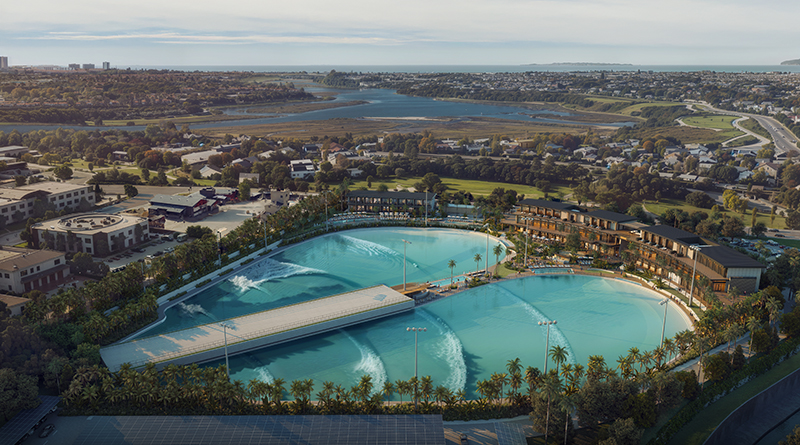
Earlier this year, The Log reported on the uncertain future of the proposed Snug Harbor Surf Park after the Newport Beach City Council reversed its approval of a key general plan amendment tied to the project. At the time, questions remained about whether the wave pool proposal could continue in a reduced form despite the council’s decision.
Now, the broader conversation surrounding the golf course property has intensified even further following recent land use approvals that could eventually allow housing development on portions of the site.
In April, the California Coastal Commission approved amendments to Newport Beach’s land use plan that would allow housing overlays on several properties throughout the city, including a portion of the Newport Beach Golf Course. The move is part of the city’s effort to comply with state housing mandates requiring Newport Beach to plan for nearly 4,845 additional housing units this decade.
While no formal housing proposal currently exists for the golf course property itself, the approved zoning changes would allow for future residential development on the southern section of the course, where holes three through eight are currently located.
During the Coastal Commission meeting, Newport Beach land-use consultant Don Schmitz explained that the city is working to satisfy state housing requirements after appeals against the housing allocation were denied.
According to Schmitz, the portion of the golf course south of Mesa Drive could potentially accommodate approximately 693 housing units.
The proposal immediately reignited opposition from local golfers and nearby residents who have spent years fighting multiple redevelopment concepts tied to the course.
Representing the advocacy group Save Newport Beach Golf Course, local golfer Jim Auster told commissioners the group has been battling development proposals connected to the property for roughly five years.
Auster argued the golf course remains the most appropriate use for the site because of its location directly beneath airport flight paths and its longstanding role as an affordable public recreational facility.
Environmental concerns were also raised during the hearing.
Heather Cieslak, operations director for the Newport Bay Conservancy, expressed concern about potential impacts future housing could have on Upper Newport Bay Nature Preserve and surrounding environmentally sensitive habitat areas.
She warned of possible habitat degradation and water quality impacts if large-scale development were ultimately pursued near the bay.
Coastal Commission Executive Director Kate Huckelbridge acknowledged the ecological sensitivity of the area but noted that the commission also faces pressure to balance environmental concerns with California’s growing housing demands.
At the same meeting, commissioners also noted that portions of the golf course remain privately owned, limiting how much influence the commission can exert over long-term land use decisions tied to recreation.
Commissioner Ray Jackson stated that while the course currently serves public recreational purposes, there is no legal mechanism requiring the property to remain a golf course indefinitely.
The ongoing uncertainty surrounding the site has been compounded by expiring lease agreements tied to portions of the property.
According to Orange County officials, the county-owned section containing holes 10 through 18 currently remains in a month-to-month holdover lease status. County representatives stated there are no active redevelopment plans for the county-owned portion at this time, although future proposals could eventually be evaluated if golf operations cease.
At the same time, the legal battle over the proposed Snug Harbor Surf Park also continues moving forward.
The surf park proposal originally received approvals in October, including a controversial general plan amendment that expanded allowable development on the site from 20,000 square feet to nearly 60,000 square feet.
The proposed development included a wave pool, surf academy, retail space, restaurant, and a roughly 50-foot-tall structure. The project would occupy land currently used for portions of the golf course, including the driving range, pro shop, and restaurant facilities.
Opponents quickly organized against the project, gathering enough petition signatures to force a referendum vote challenging the general plan amendment.
Rather than moving the issue to a public ballot, the Newport Beach City Council voted in late January to rescind the general plan amendment entirely, effectively eliminating approval for the expanded version of the project.
However, city officials later clarified that because the underlying zoning still allows a 20,000-square-foot development footprint, a smaller-scale surf park proposal could potentially still move forward.
That interpretation has now become the focus of a lawsuit filed by golf course advocates seeking to stop any surf park development on the property altogether.
The lawsuit argues that rescinding the general plan amendment should have invalidated the surf park approvals entirely, regardless of project size.
Opponents contend that any surf park proposal, even one within the original 20,000-square-foot threshold, would require a completely new entitlement process, environmental review, and public approvals.
The complaint also emphasizes the role the course plays as one of Newport Beach’s only affordable public golf facilities, noting its accessibility for retirees, veterans, younger players, and residents who cannot access private clubs.
City officials, however, maintain that the referendum and subsequent council action were narrowly focused only on the expanded square footage request tied to the general plan amendment itself.
According to the city’s position, rescinding the amendment simply reduced the allowable development scale back to existing limits rather than eliminating the surf park concept entirely.
Officials also argued that a smaller-scale project could potentially result in fewer impacts than those previously evaluated during environmental review.
As debates continue over housing mandates, recreation access, environmental concerns, and redevelopment pressure, the Newport Beach Golf Course has increasingly become a focal point for broader conversations about coastal land use and the future of open space within Orange County’s waterfront communities.
For now, both the housing overlay discussions and the surf park proposal remain unresolved, with legal proceedings and future planning decisions likely to determine what ultimately becomes of the property in the years ahead.