Laguna Beach expansion effort and statewide petitions highlight evolving conversation around ocean protection and access.
As California’s Marine Protected Area (MPA) network undergoes its first comprehensive review since its implementation more than a decade ago, a new wave of proposed changes is bringing renewed attention to how coastal waters are managed, used, and protected. From Laguna Beach to Santa Barbara, recent petitions submitted to the California Department of Fish and Wildlife (CDFW) are prompting discussions that could have lasting implications for boaters, anglers, and coastal communities throughout Southern California.
At the center of the conversation is the balance between conservation and access. While MPAs are designed to protect marine ecosystems by limiting or prohibiting certain activities, they also directly affect how the public interacts with the ocean, particularly in regions where recreational fishing and boating are deeply ingrained in local culture.
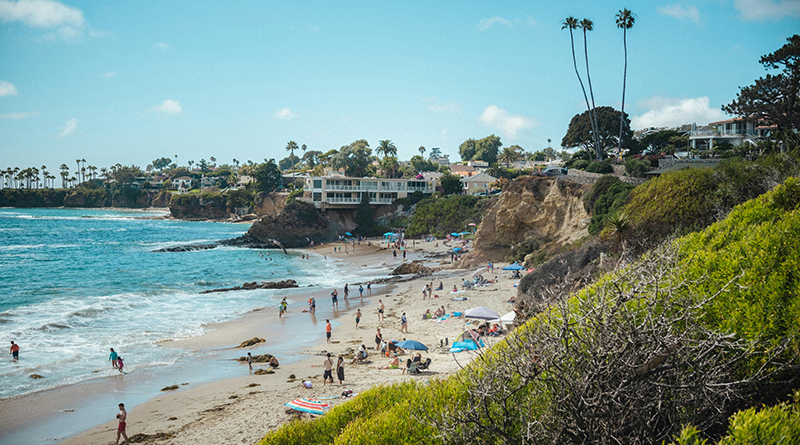
One of the most closely watched proposals is unfolding in Laguna Beach, where an existing network of MPAs already places significant restrictions on fishing activity. The area currently includes both a State Marine Reserve, where all take of marine life is prohibited, and a State Marine Conservation Area, which allows only limited, highly regulated activities.
A petition submitted by a local advocacy group seeks to expand these protections further by creating a continuous stretch of no-take waters along much of Laguna Beach’s coastline. If approved, the proposal would significantly increase the footprint of restricted areas, effectively limiting fishing access across one of Orange County’s most popular coastal zones.
The proposal has drawn both support and concern. Advocates argue that expanding protections would strengthen marine ecosystems, enhance biodiversity, and contribute to long-term ocean health. Opponents, including many in the recreational fishing community, have raised concerns about reduced access, questioning whether additional restrictions are necessary given the existing MPA network.
Among those weighing in is Captain Brian Woolley, a longtime captain for Dana Wharf Sportfishing who has been actively involved in sand bass education and was recently recognized with a Certificate of Appreciation from the Sportfishing Association of California for his contributions to fisheries research and outreach. Woolley emphasized that his perspective is rooted in both on-the-water experience and long-term involvement in local fisheries education.
“The proposal to extend the Laguna Beach No-Take SMCA to the city’s southern limit is an unnecessary overreach that ignores the success of the existing conservation framework,” Woolley said. “Currently, the Laguna Beach coastline already benefits from nearly eight miles of high-quality protected habitat, which was designed to balance ecological health with good public access.”
Woolley pointed to the findings from CDFW’s initial review as part of the ongoing discussion. “Adding this ‘last mile’ offers no proven ecological necessity, a fact that was recently reinforced by the California Department of Fish and Wildlife’s own recommendation to deny the petition,” he said. “The Department’s evaluation confirmed that the current boundaries do not pose any enforcement challenge and that simply closing more area to fishing is unlikely to drive the kelp recovery the petitioners desire without a better understanding of site-specific environmental drivers.”
He also highlighted concerns about how expanded restrictions could affect local users of the water. “Beyond the lack of scientific justification, the socioeconomic impact on our local fishing community, including lobster fishermen, would be significant,” Woolley said. “This stretch of water is one of the few remaining accessible areas for local recreational anglers, beach anglers, divers, and small-scale commercial operations who have already spent a decade adapting to the existing closures.”
At the same time, the broader conversation continues to include perspectives from those who support expanded protections, underscoring the complexity of the issue. While some stakeholders emphasize the need to preserve access and existing uses, others focus on long-term ecosystem recovery and resilience.
CDFW has reviewed the Laguna Beach proposal and, in its initial evaluation, recommended against moving forward with the expansion. However, that recommendation is not final. The California Fish and Game Commission, which holds authority over MPA designations, will ultimately determine whether the proposal advances, following additional review and public input.
Further up the coast, Santa Barbara is also part of the broader MPA discussion, though under a different framework. A tribal-led petition from the Santa Ynez Band of Chumash Indians proposes the establishment of a new or expanded protected area offshore. While smaller in geographic scope compared to the Laguna Beach proposal, the petition reflects a growing emphasis on incorporating tribal perspectives and cultural stewardship into marine management decisions.
The Santa Barbara region already plays a key role in California’s MPA system, particularly through the Channel Islands network, which is widely regarded as one of the most ecologically significant marine protection systems in the state. The addition of new or expanded protections in this area would build on that foundation, though the proposal remains under review and has not yet reached a decision stage.
These localized efforts are part of a much larger statewide process. In total, approximately 20 petitions were submitted in 2023 requesting changes to California’s MPAs. The proposals vary widely in scope, ranging from boundary adjustments and regulatory changes to entirely new protected areas.
CDFW’s initial review of these petitions indicates that most are unlikely to move forward in their current form. The agency has recommended denying the majority of non-tribal proposals, citing a lack of sufficient justification or alignment with the existing goals of the MPA network. Tribal petitions, however, are continuing through a separate evaluation process, reflecting the state’s ongoing efforts to integrate indigenous knowledge and management approaches into marine policy.
For Southern California boaters and anglers, the outcome of these decisions carries practical implications. While MPAs do not restrict vessel movement, they do regulate activities such as fishing, collecting marine life, and, in some cases, anchoring. Expanding MPA boundaries can reduce available fishing grounds, particularly in coastal areas where access is already limited by geography and development.
At the same time, supporters of MPAs point to documented ecological benefits, including increased biomass, improved habitat health, and the potential for spillover effects that can enhance fisheries outside protected zones. The debate, therefore, is not simply about access versus restriction, but about how best to manage marine resources in a way that supports both environmental sustainability and public use.
The timing of these discussions is significant. With California’s MPA network now more than a decade old, the current review represents the first major opportunity to assess its effectiveness and consider adjustments based on new data, changing conditions, and evolving priorities. This includes not only ecological outcomes, but also how the system functions for the communities that rely on the ocean for recreation, livelihood, and cultural connection.
The decision-making process will continue through 2026, with the Fish and Game Commission expected to consider recommendations, gather public comment, and ultimately vote on which, if any, proposals move forward. For stakeholders across the maritime community, the coming months will provide an important opportunity to engage in that process and help shape the future of California’s coastal waters.
For readers of The Log, the issue underscores a broader reality. The waters off Southern California are not static. They are part of a dynamic system influenced by science, policy, and public input. Whether fishing offshore, cruising the coastline, or simply enjoying a day on the water, the outcome of these MPA discussions will play a role in defining how those experiences look in the years ahead.
As the review process continues, one thing remains clear: the conversation around MPAs is evolving, and its impact will extend well beyond the boundaries drawn on a map.