Santa Barbara may be known for its palm trees and red-tile roofs, but beneath the postcard views is a busy, hard-working waterfront. Here are a few fun facts that show why this coastal city punches well above its weight on the water.
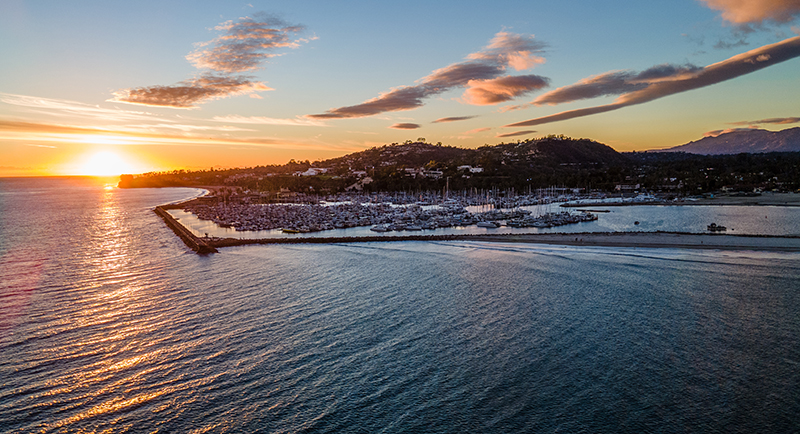
Santa Barbara Harbor is home to about 1,100 slips and roughly 40 moorings, making it one of the larger marinas on California’s Central Coast. On any given day, you’ll see everything from weekend cruisers and sportfishing boats to commercial fishing vessels and research craft heading out through the harbor mouth.
One of the most biologically productive stretches of water in the state, The Santa Barbara Channel owes. thanks to seasonal upwelling, nutrient-rich water fuels kelp forests and supports more than 120 species of fish and invertebrates landed locally each year. It’s one reason fishing has remained central to the city’s identity for generations.
Santa Barbara is one of the few places where you can buy seafood directly from the people who caught it. The Saturday Fishermen’s Market at the harbor connects the public with commercial fishermen selling fresh local catch straight off the boat.
The harbor is protected by a breakwater, but conditions outside can change fast. Afternoon winds, shifting swell, and open-channel weather keep even experienced skippers on their toes, earning the Channel a reputation for being both rewarding and humbling.
Stearns Wharf, the oldest working wharf in California, sits just steps from the harbor. It’s still an active part of waterfront life, with restaurants, shops, sightseeing, and public fishing. Bonus fun fact: you can fish from the wharf without a California sportfishing license.
Santa Barbara Harbor Patrol keeps watch over it all, monitoring the water and responding to emergencies while supporting one of the most diverse mixes of recreational and working boats anywhere along the coast.
Despite its laid-back vibe, Santa Barbara is a serious maritime crossroads. Vessels transiting between Southern and Central California regularly pass through the area, making the waterfront a constant blend of local boats and long-range travelers.
Behind the scenery, Santa Barbara remains very much a working harbor — where fishing, science, tourism, and recreation all share the same water. It’s a place where sunrise launches, afternoon sea breezes, and dockside seafood are all part of daily life.
The Enduring History of Stearns Wharf
Few structures on California’s coast are as closely tied to their city as Stearns Wharf. Extending into the Pacific just steps from downtown Santa Barbara, the wharf is not only a beloved landmark, but also the oldest working wharf in California — a distinction earned through resilience, reinvention, and more than 150 years of coastal change.
Stearns Wharf was first constructed in 1872 by local entrepreneur John P. Stearns, who envisioned a pier that could serve large steamships unable to dock close to shore. At the time, Santa Barbara relied heavily on maritime trade, and the wharf quickly became the city’s primary gateway for goods and passengers arriving by sea. Lumber, fuel, agricultural products, and building materials passed over its planks, helping fuel Santa Barbara’s early growth.
Over the decades, the wharf endured storms, heavy use, and the evolving needs of a changing waterfront. In 1921, it was severely damaged by fire, only to be rebuilt and reopened. Another devastating fire in 1974 destroyed much of the structure, prompting a major restoration effort that reimagined the wharf not just as a commercial facility, but as a public destination. The rebuilt wharf opened in 1976, blending its working-waterfront roots with dining, retail, fishing access, and tourism.
Despite these changes, Stearns Wharf has never lost its maritime purpose. Commercial fishing vessels still tie up alongside, unloading local catch that supports Santa Barbara’s fishing economy. Researchers, charter boats, and working harbor traffic continue to operate in its shadow, keeping the wharf connected to the daily rhythms of the sea.
One of the wharf’s enduring appeals is its accessibility. Public fishing from Stearns Wharf has long been part of local culture, offering anglers a rare opportunity to cast a line without a sportfishing license. Generations of residents and visitors alike have fished from its railings, watched sea lions haul out on nearby pilings, and taken in views of the Channel Islands rising offshore.
Today, Stearns Wharf stands as a symbol of Santa Barbara’s ability to balance preservation with progress. It remains a place where history is not confined to plaques or museums, but lived daily through working boats, fresh seafood, and a waterfront that continues to serve both the city and the sea.