Santa Barbara’s waterfront is often admired for its postcard views, Spanish architecture, and relaxed coastal rhythm, but for anglers and boaters, the city reveals a very different personality once the harbor mouth opens and the Santa Barbara Channel stretches out ahead. This isn’t simply a scenic backdrop for ocean recreation; it’s a working waterfront shaped by decades of sportfishing, experienced captains, and a fishery that is distinct from the waters farther south along the California coast.
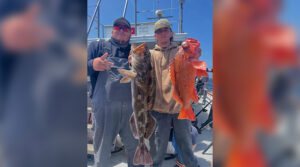
That distinction becomes apparent almost immediately when boats leave Santa Barbara Harbor. Unlike the warmer, more pelagic-focused fisheries of Orange County and San Diego, Santa Barbara sits at the crossroads of colder currents, deep reef structure, and island-adjacent waters that create a unique blend of species and fishing styles. Rockfish dominate the region’s catch profile, joined by lingcod, sheephead, whitefish, sole, halibut, and seasonal opportunities for white sea bass and coastal pelagics when conditions align. The result is a fishery that rewards patience, local knowledge, and time spent understanding bottom structure as much as chasing surface activity.
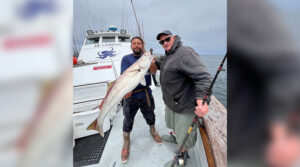 For anglers heading offshore, much of that experience begins at Santa Barbara Landing, a hub that quietly supports a wide range of on-the-water activity while remaining firmly rooted in the city’s maritime tradition. Positioned along West Cabrillo Boulevard just inside the harbor, the landing provides quick access to the Channel and serves as a base for sportfishing boats, charter operations, sightseeing cruises, and private vessels. Its layout reflects function over flash, offering fuel, ice, pump-out services, and dock access that make it equally useful for homeported boats and transient cruisers traveling the Central Coast.
From the landing, vessels can efficiently reach nearshore reefs, deeper rockfish zones, and island-facing waters depending on conditions. That flexibility matters in Santa Barbara, where weather and swell patterns can shift quickly and fishing success often depends on making smart decisions early in the day. The captains who run boats out of this harbor tend to know the Channel intimately, having learned to read subtle changes in wind direction, current flow, and water color that signal when it’s time to move or stay put.
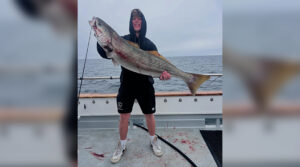
Among the most recognizable operations working from Santa Barbara Landing is Stardust Sportfishing, an operation that has become closely associated with both consistent fishing and a family-driven approach to running trips. Speaking about the business, owner Jaime Diamond describes Stardust Sportfishing as “operating out of the Santa Barbara Landing, Stardust Sportfishing is a premier family-owned operation that has become a staple for Central Coast anglers.” She adds that the operation is “known for their ‘Mom & Pop’ hospitality and professional crew,” positioning the business as both approachable and experienced.
Diamond explains that Stardust’s reputation is built around access to productive water and the experience itself, noting that the operation serves as “the gateway to the rich waters of the Santa Barbara Channel and the northern Channel Islands.” For many anglers, the appeal goes beyond the catch. “Better than any theme park, a full day of adventure on the open ocean, and you go home with local, wild, sustainably caught fresh fish!” she said.
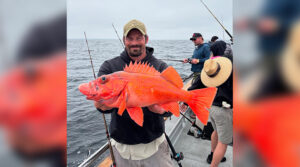
The Stardust Sportfishing fleet reflects that philosophy, with two primary vessels designed to serve different types of anglers while maintaining a focus on comfort and fishability. Diamond outlined the strengths of each boat, beginning with the Stardust, which she described as “a 65-foot vessel designed for comfort and stability.” The boat features “a custom sun deck, spacious seating, and a maximum load of 34 passengers to ensure everyone has plenty of ‘rail space.’”
The second vessel, the Coral Sea, offers a different experience. Diamond described it as “a 58-foot ‘limited load’ boat that carries a maximum of 25 passengers.” According to her, the Coral Sea “is often praised for its speed and its large bow, which provides an excellent platform for active iron-throwing or light tackle fishing.” Together, the two boats allow the operation to tailor trips to varying preferences without sacrificing safety or effectiveness.
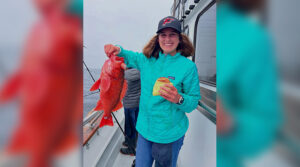
Trip options are equally diverse, with Stardust Sportfishing offering outings designed for both newcomers and seasoned anglers. Half-day coastal trips typically remain closer to the Santa Barbara coastline, maximizing fishing time with minimal travel and creating an accessible option for families and first-time anglers. Three-quarter-day island trips form the core of the operation’s schedule, frequently crossing the channel to Santa Cruz or Santa Rosa Islands and offering anglers extended time on productive island structure. Both vessels are also available for private charters, ranging from corporate team-building events to multi-day offshore adventures.
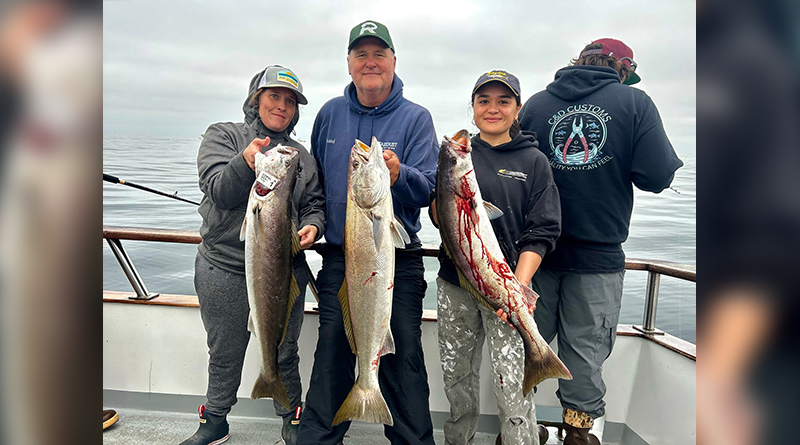
Target species vary by season, but Diamond noted that anglers can expect a consistent mix of Central Coast staples. From April through December, trips commonly produce quality rockfish, lingcod, ocean whitefish, and sheephead. Seasonal surface activity can bring calico bass, sand bass, barracuda, and bonito into play, while prized gamefish such as white sea bass, halibut, and yellowtail become targets when water temperatures and bait conditions allow.
Beyond the fishing itself, Stardust Sportfishing has become well known for its onboard experience. Diamond highlighted the vessel’s full-service galley, noting that “you haven’t truly experienced a trip on the Stardust without ordering their ‘award-winning’ cheeseburger or a breakfast burrito.” Professional fish cleaning services are offered on the ride back to the harbor, and rental rods and reels are available at the landing for anglers who arrive without gear. The crew is known for hands-on guidance, assisting with knot tying, baiting hooks, and helping anglers land their first fish.
Sharing the harbor with Stardust Sportfishing is Santa Barbara Sportfishing, also known as Santa Barbara Fishing Trips, another operation that draws from the port’s long-standing open-party fishing tradition. Operating from the same landing, Santa Barbara Sportfishing emphasizes accessibility and shared experience, welcoming both first-time anglers and seasoned fishermen aboard vessels purpose-built for offshore conditions. Wide decks, modern navigation electronics, and onboard galleys support longer days on the water while keeping trips comfortable.
The captains running these boats bring a deep understanding of the Channel’s rhythms, which differ notably from waters farther south. Santa Barbara’s proximity to the Channel Islands and deeper reef systems creates a fishery where productive spots may hold fish year-round rather than seasonally. This environment places a premium on local knowledge, particularly when targeting lingcod or managing rockfish depth regulations that require careful planning.
What both operations share is a commitment to preserving California’s open-party fishing culture, where anglers share rail space, stories, and the collective excitement of a good bite. These are trips where newcomers learn alongside regulars, and where the day’s success is measured not only by sack weight but by the experience itself.
Beyond fishing, Santa Barbara Landing supports a broader range of marine experiences that reflect the city’s relationship with the ocean, from whale-watching excursions to sightseeing cruises and sailing charters. Together, these offerings reinforce the landing’s role as a working waterfront that supports fishing, tourism, and recreation while remaining closely tied to the rhythms of the sea.
In a state where coastal experiences can vary dramatically from port to port, Santa Barbara stands apart as a place where fishing remains deeply connected to the landscape beneath the hull — and where operations like Stardust Sportfishing continue to anchor the harbor’s identity as both a gateway to adventure and a reflection of generations spent on the water.