Largest Channel Islands Fire in a Century Sparks Discussion About Habitat Restoration and Wildfire Resilience.
The largest wildfire recorded on California’s Channel Islands in more than a century is serving as a reminder of the unique environmental challenges facing the state’s offshore islands, including nearby Catalina Island.
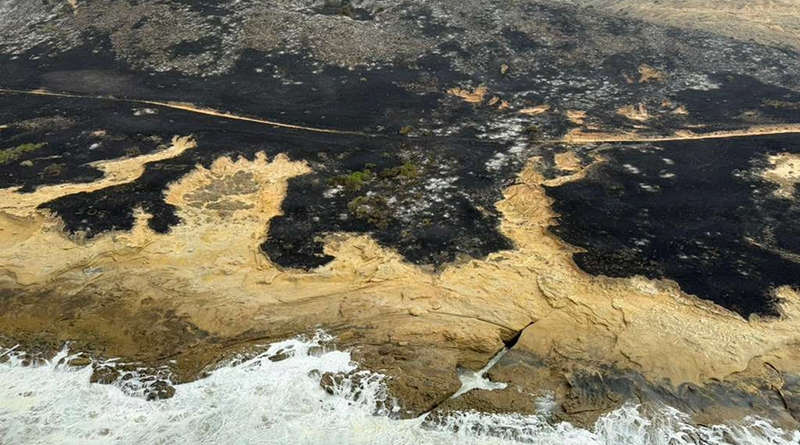
The Santa Rosa Island Fire, which ignited on May 15, burned 18,379 acres before reaching 97% containment by May 27. Managed by the National Park Service, Santa Rosa Island is one of the eight Channel Islands located off the Southern California coast. While lightning-caused wildfires are uncommon on the islands, the fire has renewed attention on how decades of environmental change can affect an island’s ability to recover from major disturbances.
According to land managers and conservation organizations, many of California’s islands continue to deal with the long-term effects of invasive species introduced during the ranching and hunting eras of the late 19th and early 20th centuries. On Santa Rosa Island, non-native sheep, cattle, pigs, elk and deer dramatically altered the landscape over more than a century, stripping away native vegetation and contributing to erosion across large portions of the island.
Scientists estimate that more than three-quarters of Santa Rosa Island’s native vegetation was impacted by grazing and browsing animals. The loss of native plant communities allowed invasive grasses to spread across the island, creating conditions that can increase wildfire intensity and complicate recovery efforts.
Historically, Santa Rosa supported a diverse mix of chaparral, oak woodlands, native grasslands and rare island plant communities found nowhere else in the world. Although invasive animals have been removed from the island, restoration work continues decades later as native habitats slowly recover.
For Southern California boaters and cruisers who regularly visit Catalina Island, the situation on Santa Rosa carries particular significance because of similarities between the two islands’ histories.
Like Santa Rosa, Catalina experienced the introduction of non-native animals that altered natural vegetation patterns and ecological processes. Conservationists say those changes can have long-term consequences for wildfire resilience, particularly in Mediterranean climates where extended dry seasons and strong winds are common.
The Santa Rosa fire has prompted renewed discussion about habitat restoration efforts on Catalina Island, where the Catalina Island Conservancy is continuing work aimed at reducing ecological pressures from non-native mule deer.
According to the Conservancy, mule deer are currently the last remaining large invasive herbivore on Catalina. Conservation managers say deer browsing can suppress the regrowth of native shrubs and young plants that are critical to maintaining healthy chaparral ecosystems. Without sufficient native vegetation, invasive annual grasses can become more dominant, increasing fuel loads and wildfire risk.
“We are watching Santa Rosa Island closely, and what we see only strengthens the urgency of removing invasive mule deer on Catalina,” said David Solomon, interim president and CEO of the Catalina Island Conservancy. “Catalina is the last Channel Island to take this step, and the stakes here are different. People live here, work here and have built their livelihoods here. Everyone deserves an island that can better protect itself.”
The Conservancy’s long-term initiative, known as Operation Protect Catalina Island, combines invasive species management with habitat restoration efforts designed to strengthen the island’s ecological resilience.
While Santa Rosa Island remains largely uninhabited, Catalina presents additional challenges because it supports a year-round residential community, tourism industry and extensive recreational boating activity. More than one million visitors travel to Catalina annually, with thousands of recreational boaters making the crossing each year to Avalon, Two Harbors and other popular anchorages.
For boaters familiar with California’s island destinations, the Santa Rosa fire serves as a reminder that the Channel Islands are more than recreational playgrounds. They are fragile ecosystems that support unique plants and wildlife found nowhere else on Earth.
As restoration efforts continue across the Channel Islands, land managers hope lessons learned from Santa Rosa’s recovery can help guide future conservation work and improve wildfire resilience throughout California’s island chain.