Maritime institutions continue building public engagement beyond Maritime Month through exhibitions, speaker series events, and hands-on cultural experiences.
By Katherine Clements
While Maritime Month may officially conclude at the end of May, many of Southern California’s maritime institutions continue carrying that momentum throughout the summer with exhibitions, educational programming, community events, and experiences designed to keep the public connected to the ocean and its history.
At the Santa Barbara Maritime Museum, that seasonal transition reflects a broader mission of making maritime culture feel active, accessible, and continuously relevant rather than confined to a single commemorative month.
Located in the heart of Santa Barbara Harbor, the museum has long served as a bridge between maritime history, coastal identity, art, and ocean stewardship. This summer, the museum is expanding that connection through a lineup of exhibitions and public programming that blends maritime heritage with environmental awareness and community engagement.
According to Heather Behrens, Marketing and Communications Manager for the Santa Barbara Maritime Museum, the organization is especially focused on creating experiences that encourage visitors to engage with maritime culture from multiple perspectives throughout the season.
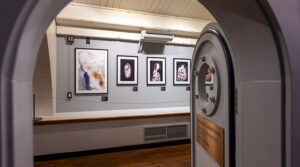
“We’re especially excited about the breadth of what SBMM offers this summer,” Behrens said. “Our major spring and summer exhibition, Aquean: Photographs, Paintings, and Prints, remains on view through July 26, 2026, giving visitors a chance to experience the powerful work of David Ellis and Larry Vigon.”
The exhibition centers on the California coastline and marine environment through a combination of photography, paintings, prints, and multimedia elements that explore themes of time, tides, and transformation. For the museum, exhibitions like Aquean represent more than visual art displays. They serve as another entry point into conversations about the relationship between people and the ocean.
That broader philosophy plays a major role in how the museum shapes its seasonal programming calendar.
According to SBMM Executive Director Dean Noble, the organization intentionally seeks programming that reflects both maritime heritage and the evolving relationship coastal communities continue to have with the sea.
“At SBMM, we’re always looking for programs and exhibitions that reflect the richness of our connection to the Santa Barbara Channel,” Noble said. “We want a balance of maritime history, ocean science, art, and contemporary issues that matter to our community.”
He explained that the museum’s goal is to create programming that feels both educational and personally relevant to visitors rather than simply presenting history as something disconnected from modern life.
“Our goal is to create a calendar that feels engaging, relevant, and rooted in our mission — one that invites people to explore the many ways the sea has shaped our region and continues to shape our lives,” Noble added.
In addition to the exhibition itself, SBMM’s summer calendar includes a variety of public events tied directly to maritime and environmental themes.
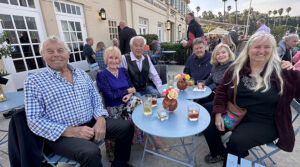
“We’re also looking forward to our Curated Cocktails Summer Celebration on June 11, our June 18 Maritime Distinguished Speaker Series talk with Jill Zachary on Santa Barbara’s coastal parks, and our July 16 speaker event with Jennifer Sachs of Island Conservation,” Behrens said. “Together, these programs reflect SBMM’s commitment to art, history, place, and ocean stewardship.”
That combination of cultural programming and maritime education has become central to how the museum approaches community engagement.
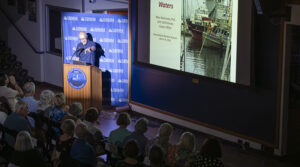
Among the museum’s most recognizable recurring programs is its Maritime Distinguished Speaker Series, which continues drawing scientists, historians, conservationists, artists, and regional experts into conversations with the public.
“Our Maritime Distinguished Speaker Series is one of SBMM’s most meaningful and recognizable recurring programs,” Behrens explained. “It brings scientists, historians, artists, and community leaders into conversation with the public, helping us connect maritime history with contemporary issues and local identity.”
Noble said the speaker series has become one of the clearest examples of how the museum works to connect multiple aspects of maritime culture into a single public conversation.
“The Maritime Distinguished Speaker Series is one of the best examples of how SBMM brings different worlds together,” Noble said. “It creates a space where science, history, art, and lived experience can all meet around a shared interest in the ocean.”
According to Noble, those conversations help make complex or academic subjects feel more approachable to a wider audience.
“These programs make important ideas accessible and personal,” he said. “They allow people to hear directly from researchers, artists, explorers, and community leaders, and that helps build a stronger connection between the public and the wider maritime world.”
The museum also places strong emphasis on creating social and community-centered experiences that encourage visitors to interact with maritime culture in a less formal setting.
“We also value member gatherings like Curated Cocktails, which create a more social, informal way for our community to engage with the museum, exhibitions, and special guests,” Behrens added.
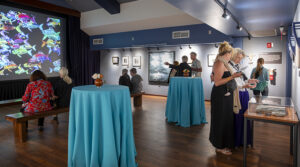
That balance between education and accessibility reflects a larger trend among maritime institutions across the California coastline. Rather than treating maritime history as something static or purely historical, museums increasingly are finding ways to connect the past with current environmental and cultural conversations.
At SBMM, those connections are intentionally woven into exhibitions and programming.
“SBMM works hard to make those connections visible and accessible,” Behrens said. “Our exhibitions and public programs invite visitors to explore the maritime history of the Santa Barbara Channel while also engaging with current topics such as ocean science, coastal resilience, and conservation.”
Noble emphasized that maritime history itself remains deeply connected to modern environmental and social issues.
“It’s incredibly important,” Noble said of linking history with present-day topics. “Maritime history is not something frozen in the past — it’s directly connected to the issues we’re facing today.”

He pointed to the continuing evolution of the coastline, harbor activity, fisheries, and marine environments as examples of how maritime history remains an active and ongoing story.
“The stories of our coastline, our harbor, our fisheries, our working waterfront, and our marine environment all continue to evolve,” he explained. “By connecting history with conservation, coastal resilience, and community engagement, we help people understand that our relationship with the sea is ongoing and that we all have a role in shaping its future.”
This season’s programming lineup reflects that approach directly.
“This season is a great example,” Behrens continued. “Aquean uses art to explore time, tides, and transformation along California’s coastline, while programs like the Dr. Marley Dewey lecture on coral restoration and the Jennifer Sachs talk on island conservation connect visitors to contemporary environmental research and stewardship.”
The museum’s summer calendar also includes upcoming exhibitions and programming designed to further expand those themes.
“One highlight is Aquean, on view through July 26, which brings together the distinct but complementary visions of David Ellis and Larry Vigon in a multimedia exhibition centered on the sea and shoreline,” Behrens said.
Looking ahead to late summer, SBMM will also introduce another exhibition that approaches maritime identity through visual interpretation and sculpture.
“SBMM will also open Play: Bronze Sculptures and Other Stuff by Susan (Susie) Read Cronin on August 13, 2026,” Behrens noted. “On the programming side, this season’s speaker series includes fresh perspectives on coral restoration, Santa Barbara’s coastal parks, and global island conservation, giving visitors several new ways to connect with maritime and environmental themes.”
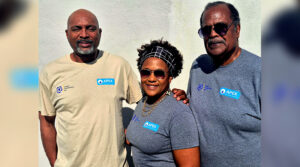
Evan Hastings, Apex Maritime Program Director, Michelle and Lawrence Edmond, Jamko Foundation Directors)
Further down the coast in San Pedro, the Lane Victory Maritime Center is also continuing its mission of preserving maritime history through immersive commemorative events, educational programs, and restoration initiatives aboard the historic SS Lane Victory.
According to Liliana Herrera, President of the Lane Victory Maritime Center, one of the organization’s most anticipated events this year remains Spirit of ’45, a commemorative program honoring the end of World War II and the service of those who helped secure victory.
“Spirit of ’45 has become one of our most meaningful and anticipated commemorative events,” Herrera said. “It honors the end of World War II and pays tribute to the men and women, especially those of the U.S. Merchant Marine, whose service and sacrifice were instrumental in securing victory.”
Herrera explained that hosting the event aboard the SS Lane Victory itself adds a level of emotional and historical authenticity that visitors immediately feel upon stepping aboard.
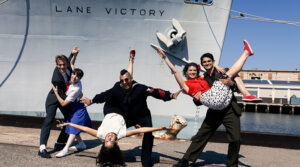
“Hosting this event aboard the SS Lane Victory, a National Historic Landmark launched in 1945, adds a profound level of authenticity and significance,” she said. “It is not simply a celebration, it is a living tribute. Surrounded by the very ship that served during that era, guests are immersed in an atmosphere where history is not only remembered, but felt.”
The organization is also preparing for another major commemorative event later this year in partnership with the US Korean Alliance Association.
“In that same spirit of remembrance and international partnership, we are also honored to host the US Korean Alliance Association’s annual commemorative event on September 26, 2026, recognizing the liberation of Seoul from North Korean forces by United Nations troops during the Korean War,” Herrera explained.
She noted that the event highlights both the sacrifices of the Korean War and the enduring alliance between the United States and South Korea.
“This event highlights the resilience and remarkable transformation of the Republic of Korea, from the devastation of war to becoming one of the world’s strongest economies, and underscores the enduring alliance between the United States and Korea,” Herrera said.
According to Herrera, those commemorative programs ultimately reflect the broader mission of the SS Lane Victory itself.

“Together, these commemorations reflect the broader mission of the SS Lane Victory: to honor service, preserve history, and foster a deeper understanding of the sacrifices and alliances that continue to shape our world,” she said.
Much of the Lane Victory Maritime Center’s programming also focuses on creating hands-on and immersive visitor experiences that allow guests to physically connect with maritime history.
Herrera explained that those sensory and interactive experiences often leave the strongest impressions on visitors of all ages.
“Experiences that are immersive, interactive, and authentic resonate most strongly across all audiences,” Herrera said. “For families and younger visitors, the ability to explore the ship firsthand, climbing ladders, walking the decks, and stepping into real working spaces, transforms history into something tangible and memorable.”
For students, she said the vessel becomes more than a museum exhibit.
“For students, the ship becomes a living classroom,” Herrera explained. “Hands-on exploration, combined with storytelling and guided interpretation, creates a deeper understanding of the U.S. Merchant Marine’s role in wartime and global history. It’s experiential learning at its best, where lessons are not just taught, but felt.”
Herrera added that the ship’s engine room in particular often creates a deeply emotional response among veterans and visitors with maritime backgrounds.
“Nowhere is this more evident than in the engine room,” she said. “The distinct atmosphere, rich with the scent of oil, steel, and machinery, has a powerful, almost transformative effect.”

According to Herrera, the experience often reconnects veterans with memories and emotions tied to their own service.
“For some, it is like a sip from the fountain of youth,” she continued. “The moment they step inside and take in that familiar air, there is a visible shift: backs straighten, shoulders roll back, chests lift. With renewed energy and pride, they find themselves climbing ladders and moving through the space with a strength that feels rediscovered rather than remembered.”
The Lane Victory Maritime Center is also expanding its educational role this season through new partnerships and workforce development programs tied directly to maritime careers and historical education.
“This season marks a significant step forward in expanding both the educational reach and long-term impact of the Lane Victory Maritime Center through strategic partnerships and innovative programming,” Herrera said.
One of those partnerships includes a collaboration with the JAMKO Foundation Inc. and APEX Maritime Training.
“In partnership with the JAMKO Foundation Inc., the SS Lane Victory will serve as a work-based training vessel for APEX Maritime Training, creating meaningful pathways for young adults to enter careers in the maritime industry,” Herrera explained.
Led by Maritime Instructor Evan Hastings (Ret.), the program places students directly into real-world shipboard environments.
“This hands-on program immerses participants in real-world shipboard operations, reinforcing both technical skills and maritime heritage,” Herrera said. “It represents a powerful investment in workforce development while helping cultivate the next generation of mariners.”
The organization is also collaborating with the US Korean Alliance Association to develop a new Korean War exhibit aboard the vessel.
“At the same time, we are proud to be collaborating with the US Korean Alliance Association on the development of a new, immersive Korean War exhibit aboard the SS Lane Victory,” Herrera said.
She noted that the ship itself occupies a uniquely important place in American maritime history.
“As the only remaining U.S.-based vessel to have served in World War II, the Korean War, and the Vietnam War, the ship holds a uniquely important place in history, most notably for its role in the Hungnam Evacuation, where it rescued approximately 7,000 refugees,” Herrera explained.
Rather than functioning as a traditional static exhibit, Herrera said the project is being designed as an interactive educational experience involving students directly in the historical interpretation process.
“This exhibit will go far beyond a traditional display,” she said. “It is being designed as a student-led, interactive educational platform, where high school students actively research, curate, and present historical materials.”
She added that the program is intended to create stronger educational and cultural connections for younger generations.
“Through digital archives, hands-on exhibits, and curriculum-connected programming, students will not only learn history, they will interpret and share it, becoming ambassadors of its meaning and relevance,” Herrera said.
As maritime institutions throughout Southern California continue evolving into year-round educational and cultural destinations, organizations like the Lane Victory Maritime Center, Santa Barbara Maritime Museum, and Ocean Institute increasingly are expanding beyond traditional museum models to create active public engagement rooted in maritime heritage, environmental awareness, preservation, and hands-on participation.
Herrera emphasized that public involvement remains critical to preserving the SS Lane Victory itself.
“There are many meaningful ways for the public to engage with and support the SS Lane Victory beyond simply visiting,” Herrera said. “As a nonprofit organization, the Lane Victory Maritime Center relies on a strong community of supporters to keep this historic vessel operational and thriving.”
She noted that the organization welcomes volunteers, donations, educational participation, and even private events aboard the vessel as part of its broader preservation mission.
“Ultimately, every visit, every volunteer hour, every event hosted, and every donation contributes to preserving not just a ship, but a legacy,” Herrera said.
Further down the coast in Dana Point, the Ocean Institute is also expanding its summer programming with immersive educational experiences designed to place visitors directly into the marine environment rather than simply teaching about it from shore.
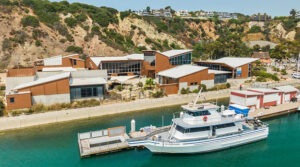
Located along Dana Point Harbor, the Ocean Institute continues building on its longstanding reputation for hands-on maritime and ocean education through a combination of camps, cruises, sailing programs, marine science experiences, and public events.
According to Isabela Farinella, Marketing Manager for the Ocean Institute, summer programming remains one of the organization’s busiest and most interactive seasons.
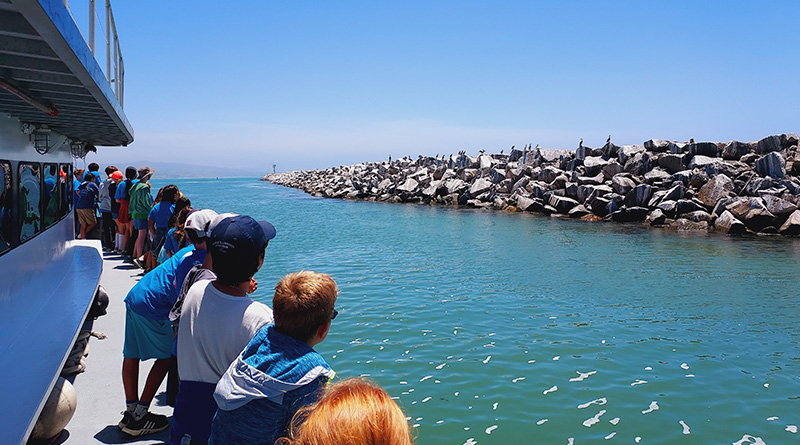
“We’re especially excited for our 2026 Summer Camp season, running June 15 through August 14 for ages 5 through 17,” Farinella said. “Campers experience the ocean as their classroom through activities like whale watching, sailing aboard the historic schooner Spirit of Dana Point, shark and ray encounters, tidepool exploration, squid dissections, and hands-on marine science labs.”
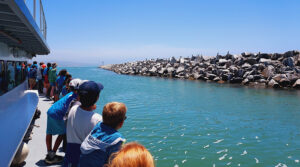
She explained that the goal is to fully immerse students in ocean-focused STEM learning while creating memorable experiences on and around the water.
“Each week is designed to immerse students in STEM learning while creating unforgettable summer memories on and around the water,” she added.
In addition to its summer camps, the Ocean Institute is also continuing several public-facing adventure programs that have become increasingly popular among families and waterfront visitors.
“We’re also excited for the return of our Bioluminescence Night Cruises aboard the R/V Sea Explorer,” Farinella said. “These evening cruises allow guests to witness glowing plankton and marine life firsthand while learning about the science behind bioluminescence from our onboard educators and naturalists.”
The organization is also continuing to expand its after-hours and adventure-based programming throughout the summer season.
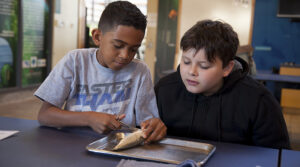
“Alongside these popular nighttime experiences, we’re continuing to expand our after hours and adventure programming with Sharks After Dark, Guided Kayak Tours through Dana Point Harbor, and Guided Snorkel Tours that give guests the opportunity to explore Southern California’s marine ecosystems in immersive and unforgettable ways,” Farinella explained.
The Ocean Institute’s educational philosophy centers heavily on participation and direct interaction with the marine environment.
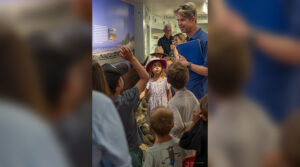
“Hands-on learning is at the heart of everything we do,” Farinella said. “Visitors can raise sails and steer the Spirit of Dana Point, participate in whale watching expeditions aboard the R/V Sea Explorer, interact with marine animals in our touch tanks, explore our Maritime Village, and take part in guided educational activities throughout campus.”
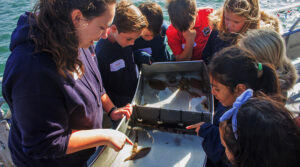
According to Farinella, those programs are intentionally designed to make maritime history and ocean science feel accessible to visitors of all ages.
“Our public programs are designed to make ocean science and maritime history accessible and engaging for all ages through direct participation,” she said.
One of the organization’s most recognizable annual traditions remains its Maritime Festival, which returns September 11 through 13.
“One of our most beloved annual traditions is the Maritime Festival,” Farinella said. “The festival celebrates Southern California’s maritime heritage through tall ships, cannon battles, live music, pirate encampments, mermaids, ship tours, and hands-on family activities.”
She noted that the event continues drawing families and maritime enthusiasts alike by blending education with entertainment and living history experiences.
“It’s a community favorite that blends entertainment with educational storytelling and maritime history,” she added.
The Spirit of Dana Point also remains a centerpiece of many of the Institute’s summer programs and traditions.
“Summer aboard the Spirit of Dana Point is also a long-standing tradition for many local families,” Farinella explained. “From Adventure Sails to Sunset Sails, these experiences give guests the opportunity to step aboard a traditionally built tall ship and experience life at sea in an interactive way.”
This season also includes new partnerships tied to the organization’s environmental mission.
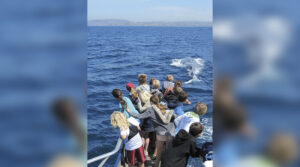
“This summer, we’re excited to partner with Mad Hippie, who generously donated sunscreen for our Summer Camp programs,” Farinella said. “Their commitment to protecting both people and the planet aligns naturally with our mission of inspiring ocean stewardship through hands-on education.”
According to Farinella, younger audiences continue responding most strongly to programs that allow them to actively participate in marine exploration rather than simply observe it.
“Families especially love experiences that allow children to actively participate and explore,” she said. “Whale watching tours, touch tanks, tall ship sails, shark encounters, sea creature feedings, and interactive science activities consistently resonate with younger audiences because they create real world connections to the ocean.”
She added that many parents also appreciate the balance between entertainment and educational value.
“Many families also appreciate experiences that combine fun with meaningful educational value, allowing kids to build confidence, curiosity, and a deeper understanding of marine ecosystems while making lasting summer memories together,” Farinella said.
As maritime institutions across California continue evolving into year-round cultural and educational hubs, organizations like the Ocean Institute and Santa Barbara Maritime Museum increasingly are expanding beyond traditional exhibits and seasonal observances to create ongoing engagement opportunities rooted in coastal culture, stewardship, and public participation.
Farinella said that mission remains central to everything the Ocean Institute offers throughout the summer season.
“The Ocean Institute offers opportunities for guests to connect with the ocean at every age,” she said. “Whether through Summer Camp, public cruises, sailing experiences, educational programs, or special events, our mission is rooted in inspiring curiosity and environmental understanding through hands-on experiences, and summer is one of the most exciting times of year to experience everything we have to offer.”