When you spend long hours on the water trolling offshore for tuna, jigging deep for rockfish, or just relaxing at anchor off Two Harbors, it doesn’t take long to realize that a few creature comforts can make the day far more enjoyable. Being able to charge a laptop, run an electric drill, or blend a batch of margaritas in the cockpit is no longer a luxury reserved for large yachts with built-in generators. More and more boaters are finding that an inverter can be the simplest way to bring the comforts of home aboard without firing up a noisy genset.
An inverter’s main job is to take the DC power stored in your boat’s batteries and convert it into AC power, the same type you use at home. This allows you to operate small appliances, electronics, and tools when you’re untied from shorepower. If you’ve ever wished you could power a microwave while waiting out a tide swing in the kelp or keep a TV running for the kids while you clean fish on deck, an inverter is what makes that possible.
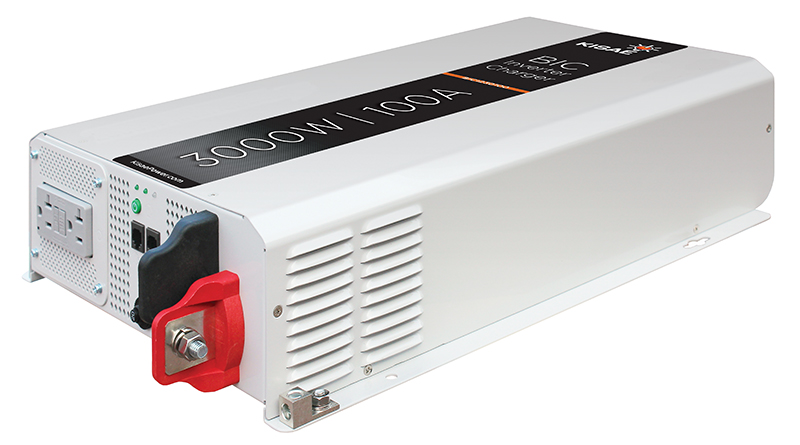
For boaters who prefer an all-in-one option, inverter/chargers combine the inverter with a powerful battery charger. These systems not only supply AC power, but also recharge your batteries when you hook up to shorepower or run a generator, seamlessly switching between functions without any extra effort from the operator.
The natural question many boaters ask is why not simply run a generator instead. Both provide AC power, but they do it in very different ways. Generators are better suited for large, continuous loads such as running air conditioning or refrigeration systems all day. They can handle heavy demand but come with trade-offs in noise, vibration, and maintenance. Inverters, by contrast, excel at handling variable and modest loads up to about 3,000 watts. They’re silent, virtually maintenance-free, and well suited for electronics, small galley appliances, or charging multiple devices. For most Southern California anglers and cruisers, the sweet spot lies in using both strategically: running a genset during meal prep or high-demand times, then letting an inverter quietly carry the smaller loads when things settle down.
Once you’ve decided to invest in an inverter, the next step is sizing it correctly. Inverters come in a wide range, from tiny 100-watt portable models that plug into a DC socket and can run a laptop, all the way up to heavy-duty 4,000-watt units capable of powering full galleys. The key is to calculate what appliances you’ll realistically be using at the same time. A television drawing 200 watts, a microwave drawing 800, and a laptop drawing 100 will together require over 1,000 watts of continuous power, and that’s before you account for the surge each device demands when it first starts. The practical advice is to oversize your inverter slightly to avoid tripping it when multiple devices are running. Nobody wants the blender shutting down just because someone popped popcorn in the microwave.
How the inverter produces power also matters. Affordable modified sine wave inverters are widely used and work well with common appliances, but they can cause problems with sensitive electronics, chargers, or sound systems, often resulting in interference or noise. Pure sine wave inverters, while more expensive, create power that matches or even exceeds the quality of the grid, making them the better option for anything delicate, such as stereos, computers, or plasma screens. For anglers, this can mean cleaner operation when running electric reels or charging lithium tool batteries without worry. Many Southern California boaters who rely on electronics for navigation, sonar, and entertainment find the extra cost of a pure sine wave unit worthwhile.
Regardless of the inverter style you choose, its performance is limited by your battery bank. A useful rule of thumb is that your amp-hour capacity should be about 20 percent of the inverter’s wattage. A 1,000-watt inverter, for example, should be supported by at least 200 amp-hours of battery storage. At full load, such an inverter could draw about 100 amp-hours in a single hour, which would drain a 200Ah bank by 50 percent. That’s why many boaters upgrading to an inverter also need to expand their battery banks and improve wiring. In fact, for many vessels under forty feet, the inverter quickly becomes the largest single DC load aboard.
Installation deserves special attention, as improper wiring can lead to overheating, voltage drop, or even fire. A fixed-mount inverter should be installed within ten feet of the battery bank to minimize loss, in a cool and well-ventilated location away from any risk of explosive gases. Inverters are not ignition-protected, so they cannot be installed in gasoline engine compartments, though diesel spaces are acceptable if ventilation is adequate.
Given the amperage these systems draw, professional installation is strongly recommended, especially for larger inverter/chargers that integrate with a boat’s AC wiring. These systems often include transfer switches and remote control panels, making them easier to use but more complex to wire safely.
In the end, choosing an inverter comes down to the type of boating you do. For many Southern California anglers who spend long days offshore but return to the slip each night, a modest portable or small permanent-mount inverter may be enough to keep electronics charged and galley gear humming. For cruisers who spend nights at anchor around Catalina or along the coast, a larger inverter/charger paired with an expanded battery bank can provide silent, reliable power without relying on a generator for every task. For those who truly want to replace a generator, larger inverter/chargers matched with propane cooking and DC refrigeration are becoming more popular among trawler owners and liveaboards who want to simplify their systems.
The takeaway is that inverters open the door to a quieter, more flexible onboard lifestyle. They won’t replace a generator if you plan to run air conditioning or refrigeration continuously, but for everything else — from powering tools during a boat project to keeping the blender running after a long day fishing — they’re hard to beat. With the right inverter properly installed and supported by a strong battery bank, you can enjoy many of the comforts of home even while swinging at anchor or chasing fish offshore.