Bay boats, skiffs, hybrid center consoles, and RIBs may look similar at first glance but understanding how each is designed to perform can help Southern California anglers choose the right platform for their style of fishing.
Walk the docks at any Southern California marina and you’ll hear plenty of conversations about center consoles, bay boats, skiffs, and hybrid fishing boats. While many of these vessels share a similar appearance, particularly in the 24-foot-and-under category, they’re designed with very different priorities in mind. Understanding those differences can help boaters make a more informed decision before investing in their next fishing platform.
The good news is that anglers don’t need a 30-foot offshore battlewagon to enjoy productive days on the water. Boats between 20 and 24 feet continue to grow in popularity because they’re easier to trailer, require less maintenance and can comfortably fish many of Southern California’s most productive waters, from Newport Harbor and Mission Bay to the kelp forests off La Jolla and, on favorable weather days, even Catalina Island.
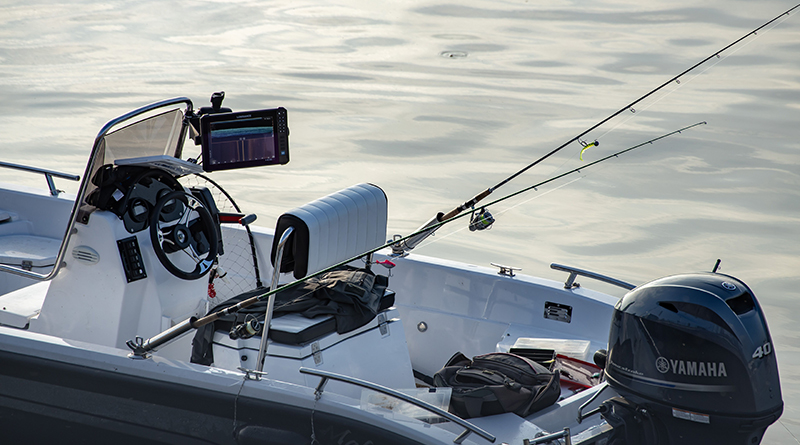
The first point of confusion for many first-time buyers is the term “center console.” Contrary to popular belief, a center console is not a type of boat. Rather, it describes the boat’s layout. The helm is positioned in the middle of the deck, allowing anglers to walk completely around the console. That 360-degree access makes it easier to cast from any angle, follow a fish around the boat and board from the bow, stern or either side. Because of its versatility, the center-console layout has become the standard for many fishing boats, regardless of hull design.
Hull design, not console placement, determines how a boat performs on the water.
One of the most versatile categories is the hybrid bay boat, a design that blends the shallow-water capability of a traditional bay boat with the offshore confidence of a deeper-V hull. Hybrid boats have become increasingly popular among Southern California anglers because they reflect how many local boaters actually fish. A single weekend may include drifting for halibut outside Dana Point Harbor, casting swimbaits through kelp forests off Laguna Beach, chasing bonito outside the breakwall, or cruising with the family through Newport Harbor.
A strong example of this category is the Grady-White 231 Coastal Explorer. Measuring 22 feet, 7 inches, the 231 CE is built on the company’s renowned SeaV² hull, a continuously variable deep-V design that has earned a reputation for delivering a comfortable ride in rough water. With a 16-degree transom deadrise, an 8-foot, 6-inch beam and a 16-inch draft, the boat strikes a balance between offshore capability and shallow-water access. Rated for up to 300 horsepower, it has enough performance to comfortably fish local coastal waters while remaining manageable for families and trailer boaters. Its generous seating, high freeboard and ample storage also make it well suited for recreational cruising when the rods stay home.
Another hybrid worth considering is the Caymas 24 HB, which expands on the same philosophy. At 23 feet, 6 inches long with a maximum horsepower rating of 350, the 24 HB gives anglers the flexibility to spend the morning fishing inside protected bays before venturing outside to nearby reefs or kelp paddies when conditions allow. The boat’s 15.5-degree transom deadrise provides a smoother ride than a traditional flats skiff while maintaining a relatively shallow 16-inch draft. Features such as a 35-gallon livewell, expansive casting decks and abundant rod storage reflect its focus on serious anglers who still want the flexibility to cruise or entertain family members.
Traditional bay boats place greater emphasis on shallow-water performance. Designed primarily for protected bays, estuaries and inland waterways, these boats typically feature broad casting decks, modest deadrise angles and shallower drafts than offshore boats.
The Pathfinder 2200 TRS exemplifies this category. Measuring 22 feet, 5 inches in length with an 8-foot, 6-inch beam and drawing only 13 inches of water, the Pathfinder is built for anglers who frequently fish shallow harbors, back bays and shoreline structure. Its expansive forward and aft casting platforms provide plenty of room for multiple anglers, while a 35-gallon livewell supports a full day of fishing. Although the boat is certainly capable of running outside the harbor on calm days, its strengths lie in protected waters where its shallow draft and stability allow anglers to quietly work docks, eelgrass beds and rocky shorelines.
The Contender 24 Bay takes the bay boat concept in a slightly more aggressive direction. Stretching 23 feet, 10 inches with an 8-foot, 4-inch beam, the boat combines expansive casting decks with a heavy-duty jack plate, transom bustle and a 350-horsepower rating. Drafting just 12 inches, it can access skinny water while still providing the speed and confidence needed for longer coastal runs. For anglers targeting calico bass along rocky structure one day and halibut on shallow sand flats the next, the Contender offers exceptional versatility without fully committing to an offshore hull.
At the opposite end of the spectrum is the technical skiff, which is purpose-built for extremely shallow water. These boats generally feature flatter bottoms, minimal draft and lightweight construction that allow them to float in only a few inches of water. Many can even be pushed silently with a push pole rather than relying on the outboard, making them popular for sight-fishing species in calm conditions.
While Southern California lacks the extensive flats fisheries found in Florida or Texas, skiffs still have a place here. They excel in protected waters such as Mission Bay, Newport Harbor, Huntington Harbour and portions of San Diego Bay, where anglers can quietly target spotted bay bass, halibut and other inshore species.
The Carolina Skiff 21 LS illustrates the category’s strengths. Measuring 21 feet, 1 inch, the boat’s Tri-V hull drafts only about 7 inches while providing remarkable stability at rest. Large casting decks maximize fishing space, and owners can expect excellent fuel economy, with nearly 5.8 miles per gallon when powered by a Suzuki 150. The tradeoff is that flatter hulls generally produce a rougher ride once afternoon wind chop builds, making skiffs less comfortable for offshore runs than hybrid or deep-V designs.
Another option gaining popularity among recreational anglers is the Rigid Inflatable Boat, better known as a RIB. Although many people associate inflatables with small yacht tenders, modern RIBs are sophisticated offshore platforms. They combine a rigid fiberglass or aluminum deep-V hull with inflatable tubes, known as collars, that surround the boat.
Those collars provide tremendous buoyancy, stability and impact protection. When several anglers move to one side while fighting a fish, a RIB remains remarkably level. The tubes also soften impacts when crossing boat wakes and act as built-in fenders while docking. These characteristics explain why RIBs have become the vessel of choice for Coast Guard units, harbor patrols, rescue organizations and dive operators around the world.
Manufacturers such as Tiger Marine, distributed in North America through TWI Marine, have expanded the category by producing recreational RIBs equipped with center consoles, T-tops, leaning posts, livewells and comfortable seating. In many respects, they perform much like conventional fiberglass center consoles. They can fish inshore and offshore, carry dive gear, pull watersports enthusiasts and comfortably cruise to beaches or islands. Their primary compromise is interior space, as the inflatable collars occupy room that would otherwise be available for storage or cockpit space in a traditional fiberglass boat.
Ultimately, no single boat is ideal for every angler. Instead, buyers should evaluate where they spend the majority of their time on the water.
For boaters who rarely leave protected bays, a traditional bay boat or technical skiff may provide all the capability they need while maximizing shallow-water access and fuel efficiency. Those who routinely split their time between harbors, kelp forests, nearshore reefs and occasional Catalina crossings will likely appreciate the versatility of a hybrid center console. Divers, spearfishermen and families looking for exceptional stability may find that a modern RIB offers an appealing alternative.
Southern California presents one of the most diverse boating environments in the country. On any given weekend, anglers may fish calm back bays at sunrise, drift coastal reefs by midday and cruise the harbor at sunset. Choosing a boat that matches those ambitions, rather than simply following the latest trend, will ultimately provide more enjoyable days on the water and greater confidence wherever the next trip leads.