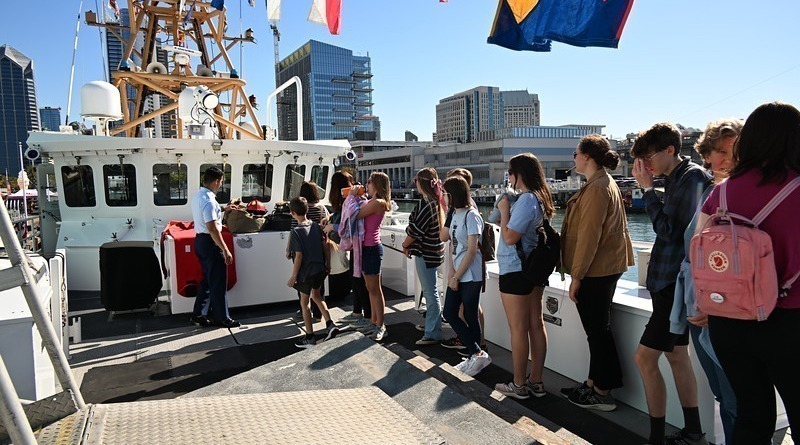
Preparation, patience, and boat handling experience can help sailors navigate crowded marinas and challenging conditions with confidence.
For many sailors, the most challenging part of a day on the water doesn’t happen offshore. It happens at the very end of the trip when it’s time to return to the marina.
Docking a sailboat may appear straightforward from the dock, but experienced mariners know that every approach presents a unique set of challenges. Wind, current, vessel size, marina layout, and crew experience can all influence how smoothly a boat enters a slip. Even seasoned sailors occasionally find themselves making a second attempt when conditions don’t cooperate.
As Southern California marinas continue to grow busier and boats continue to increase in size, strong boat handling skills have become more important than ever. A successful docking maneuver depends less on quick reactions and more on preparation and understanding how a vessel behaves at slow speeds.
One of the most common mistakes sailors make is approaching a dock too quickly. While speed may seem like a way to maintain control, it often has the opposite effect. Faster approaches leave less time to react to changing conditions and can make even small mistakes difficult to correct. Most docking instructors recommend slowing the vessel well before reaching the slip and making gradual adjustments as conditions develop.
Before entering a marina, sailors should take time to evaluate the surrounding environment. Wind direction and current strength can significantly influence a boat’s movement, particularly at low speeds. A vessel approaching a dock with the wind pushing it toward the pier will behave differently than one being pushed away or sideways by a crosswind. Understanding those forces before beginning an approach can help eliminate surprises during the final stages of docking.
Preparation aboard the vessel is equally important. Dock lines should be ready, fenders should be positioned properly, and any crew members assisting with docking should understand their responsibilities before the boat enters the fairway. Attempting to organize equipment at the last moment can create unnecessary stress and confusion during a critical maneuver.
Many sailors find that docking becomes more challenging when operating short-handed or alone. Without additional crew available to handle lines or fend off nearby structures, single-handed sailors often rely on careful planning and simplified procedures. In many cases, securing one key line first and using the engine to maintain control can provide enough stability to complete the docking process safely.
Practice also plays a significant role in building confidence. While many boaters spend considerable time learning navigation, sail trim, and weather forecasting, fewer dedicate time specifically to slow-speed boat handling. Practicing turns, reverse maneuvers, stopping distances, and docking approaches in a variety of conditions can help sailors better understand how their vessel responds when precise movements are required.
Modern marinas can add another level of complexity. Narrow fairways, closely spaced slips, strong tidal currents, and increasing vessel traffic often leave little margin for error. In these situations, small corrections made early in the approach are generally more effective than aggressive maneuvers made at the last second.
Perhaps the most overlooked docking skill is knowing when to start over. Professional captains routinely abandon approaches that aren’t developing as planned, choosing instead to circle around and make another attempt. Recreational sailors can benefit from adopting the same mindset. Backing out and resetting the approach is often safer and less stressful than trying to force a maneuver that is no longer under control.
As boating activity continues to increase throughout Southern California’s harbors and marinas, docking remains one of the most valuable skills a sailor can develop. While experience certainly helps, successful docking is rarely about perfection. More often, it comes down to preparation, patience, and understanding how to work with the wind, current, and vessel rather than fighting against them.
For sailors looking to improve their confidence around the dock, every arrival presents an opportunity to learn. Over time, those lessons can transform one of boating’s most stressful moments into one of its most satisfying.