The Spring 2026 boating season is now in full swing, but before we join all those other boats cruising to the Channel Islands and beyond, we want to make sure we have the safety gear we need for safe journeys on the water.
Communication
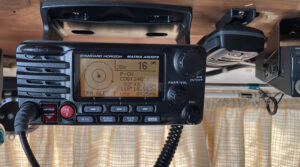
Although the USCG does not require a VHF radio on boats under 65.5 feet, it is unthinkable to head off into coastal waters on any craft without this vital piece of equipment. If your vessel is in distress and you do not know your exact location, one easy way for emergency services to find you is by radio direction finder (RDF). Your cell phone communicates via digital signals with land-based cell towers, but they are virtually impossible to sort out via RDF.
With VHF radio and an AIS transceiver, other vessels can identify your vessel name on their chartplotters and head directly to your location while staying in contact with you on the radio. A leader in this new technology is the ICOM M94D Handheld VHF DSC AIS Transceiver, which features a lithium-ion battery with 10 hours of battery life and a dot matrix grayscale LCD display. With 6W of transmit power, it’s just a bit more powerful than the typical 5W handheld radios we have become accustomed to over the last couple of decades.
As with base-mount, AIS-capable, VHF radios, the M94D presents a digital display of surrounding vessels, each one identified by name and MMSI (Maritime Mobile Service Identity) code, which is issued to the vessel by the FCC.
Standard Horizon also makes its version of handheld VHF/AIS/DSC technology available through its HX890NB Floating 6W Class H DSC Handheld VHF/GPS Radio. With the GPS function, you can enter waypoints as you would with any other non-charting GPS unit, such as the venerable Garmin 128, which I used on my circumnavigation over 20 years ago aboard the 1966 Cal 30 Saltaire. I would have loved to have that kind of GPS function combined with a VHF radio and AIS capability.
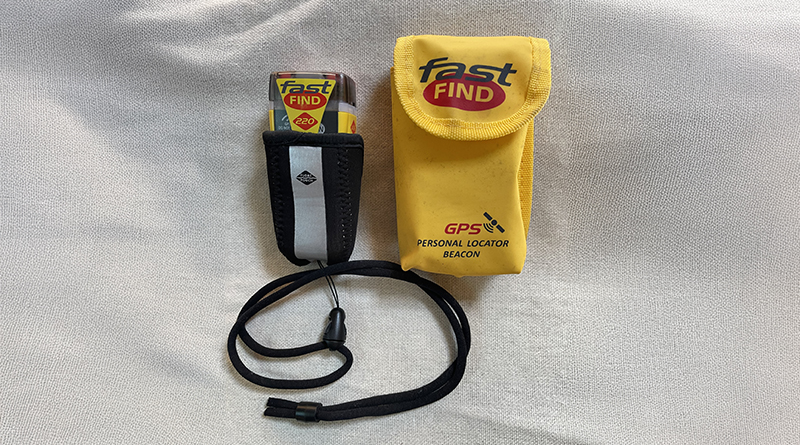
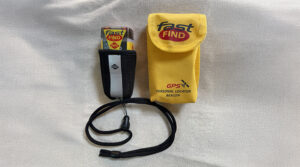
For emergencies while underway, you should also have an EPIRB for the boat and a personal locator beacon (PLB) attached to each personal flotation device (PFD) being worn outside the cabin. While sailing offshore, I carry a McMurdo GPS/PLB on my auto-inflate PFD whenever I step out to the cockpit.
Auto-Inflate PFDs
In order to ensure the safety of crew and passengers, we also need to equip our boats with PFDs. You can get away with a stack of Type II orange PFDs for day sailing in and around your local harbor, but if you venture any farther, you need to invest in a set of inflatable PFDs, preferably auto-inflatable, offering the greatest chance of survival for all passengers and crew for several hours.
Mustang Survival USA, one of the most revered names in nautical safety, offers an array of PFDs, wet weather apparel and dry suits for both professional and cruising sailors. The Mustang MD3188 Inflatable Work Vest incorporates Hammar Hydrostatic Inflator Technology (HIT), which triggers a CO2 cartridge to fill the internal bladder, or inflation cell, automatically when the HIT system senses four inches of water depth.
The Arcus 40 PFD provides 40 pounds of buoyancy, roughly twice the buoyancy of an adult-size, throwable, foam PFD. This PFD can fit a chest size of 30 to 56 inches, which should cover all crew members. Although the manufacturer describes the Arcus 40 as a “Type 2” device, its features more closely resemble those of a Type 5 device, which includes auto-inflatable PFD vests. According to U.S. Coast Guard regulations, a true Type 5 vest includes a stainless steel buckle, while vests Type 1-3 usually feature a durable plastic buckle.
West Marine carries its own line of house-brand PFDs, and of all their models, the one most suited to offshore conditions is the A/M All Clear Offshore Inflatable Life Jacket. The cover is composed of a durable synthetic canvas available in red, blue or gray, all of them including iridescent yellow green stripes, which enhance their visibility from a great distance.
Of all the PFD models you are likely to see, the A/M All Clear from West Marine certainly must have the widest size range, fitting torsos measuring 30 to 65 inches. A wide neoprene neck ensures a comfortable fit while wearing the PFD for long stretches of time.
Auto-Inflate Life Raft
Many coastal and ocean cruisers prefer the convenience and compact design of a dedicated life raft packed in a sturdy container mounted just forward of the mainmast, ready to be deployed at a moment’s notice.
The Viking RescYou Pro life raft can fit up to six crew members and is constructed of a lightweight, natural rubber fabric, which ensures a waterproof vessel that is easy to pack and deploy. The automatically deployed inflation system fills two separate flotation chambers, each of which is capable of maintaining crew above water.
The Viking RescYou Pro stays upright with a ballast system comprised of four bags, each of which can hold 16 gallons of sea water. Two storage pockets are built into the interior for storing food, drinking water, medical supplies and other necessities you may wish to have on hand in the event of main vessel loss.
The Revere Offshore Commander 4.0 features a self-erecting, polyurethane-coated polyester structure and canopy with a weatherproof, double-zippered door and rainwater collector, all mounted on buoyancy tubes measuring nine inches in diameter. To ensure safety, the Revere Offshore also offers interior and exterior grab lines, four ballast bags with quick-deploying weights and a sea anchor with 100 feet of tow line.
The Plastimo line of cruiser life rafts offers four-person and six-person models for offshore yachts in addition to its line of professional, inflatable, life-saving craft. Both the four-person and six-person models feature a roof canopy, three 8-gallon ballast pockets, an automatic inflation tube, highly visible yellow bouyancy bags, a fluorescent orange canopy and a rope boarding ladder to ensure everyone in the water has a chance of climbing aboard.
If you are a budget-conscious, singlehanded sailor, consider the ISPLR One Man Raft from The Raft Store. This safety provider offers much larger and more elaborate life rafts, but the One Man Raft is much smaller and easier to stow, making it a good choice for a lone sailor on a small boat.
The One Man Raft consists of a U-shaped flotation device, which makes it easy to slide into after deploying the unit. A plastic roof over the raft can be opened and closed by a zipper on either side of the tiny vessel, but there is still a small opening to permit fresh air into the small space.
There are certainly many other measures you can take to ensure safe coastal boating journeys. But if you have PFDs, along with emergency communication and a dependable life raft aboard, you can expect to return home safely from your ocean cruises.