Harbor Breeze Cruises launches next-generation passenger vessel designed to reduce emissions and advance cleaner harbor operations.
A new hybrid passenger vessel is now operating in San Pedro Bay, marking another step in the ongoing effort to reduce emissions from harbor craft serving the Ports of Los Angeles and Long Beach.
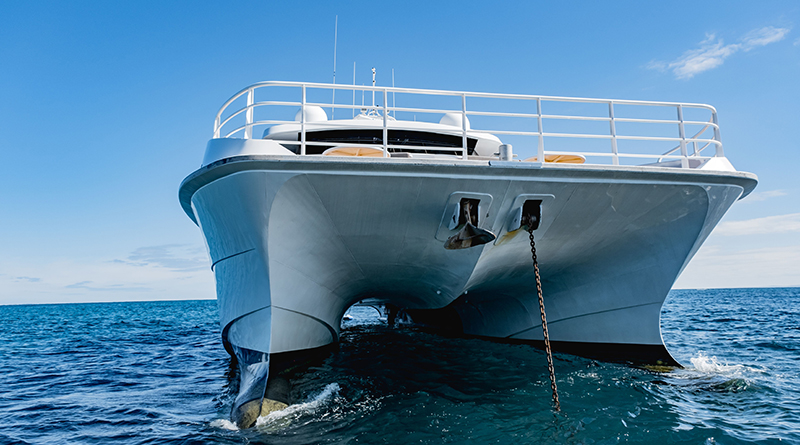
Operated by Harbor Breeze Cruises, the 350-passenger vessel El Escudo completed its maiden voyage through the Port of Los Angeles Main Channel on May 25 and is now based in San Pedro. The vessel will provide excursion and harbor cruise services throughout the San Pedro Bay port complex while showcasing emerging technologies designed to reduce emissions from commercial passenger vessels.
The project was developed through a partnership involving Harbor Breeze Cruises, the Port of Los Angeles, the Port of Long Beach, and the California Air Resources Board (CARB).
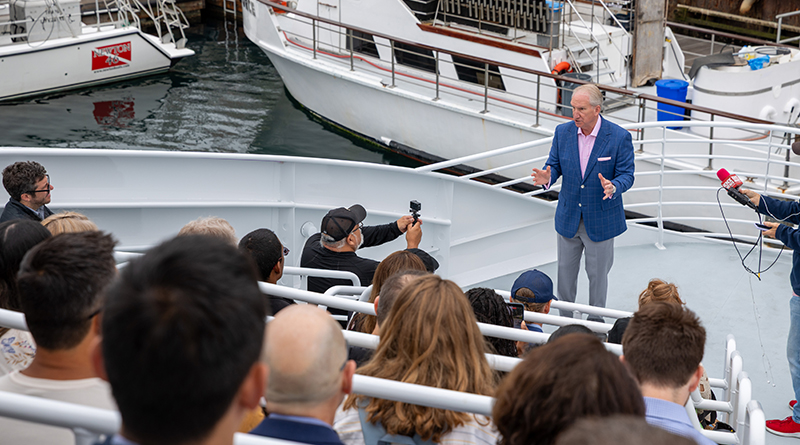
According to Harbor Breeze Cruises founder and owner Capt. Dan Salas, the vessel represents the beginning of a broader effort to reduce emissions from passenger operations in the harbor.
“Harbor Breeze Cruises is committed to helping create a cleaner, healthier and more sustainable harbor for everyone,” Salas said. “This new hybrid passenger vessel is just the beginning of our efforts to help reduce our operational emissions in the San Pedro Bay.”
The vessel utilizes a parallel hybrid propulsion system that allows it to operate in fully electric, diesel, or hybrid modes depending on operational requirements. According to project partners, El Escudo can operate for up to two hours on battery power alone without producing emissions and is expected to operate in zero-emission mode at least 30% of the time. Some trips may be completed entirely on battery power depending on route length and operating conditions.
The vessel exceeds current U.S. Environmental Protection Agency Tier 4 and California Commercial Harbor Craft emissions standards.
Port of Los Angeles Executive Director Gene Seroka said the project demonstrates how emerging technologies are beginning to move from concept to real-world application.
“With its capacity to operate for up to two hours on battery power alone with zero emissions, El Escudo is proof that the future of clean transport isn’t just possible, it’s already happening,” Seroka said.
Development of the vessel was conducted under the Los Angeles Marine Emission Reduction (LA MER) Project, a large-scale demonstration program evaluating technologies capable of reducing emissions from commercial harbor vessels.
The initiative received a $31 million grant from CARB through its Sustainable Heavy-Duty Initiatives for Future Technology (SHIFT) program, along with approximately $30 million in matching contributions from project partners.
In addition to the Harbor Breeze vessel, the program includes the development and testing of other advanced harbor craft technologies, including high-speed ferry operations powered by renewable diesel and Tier 4 engines. Project officials estimate the combined technologies could reduce more than 60 tons of emissions annually.
CARB officials view the project as an important demonstration of how cleaner maritime technologies can be deployed in working ports throughout California.
“This project highlights how strategic partnerships can accelerate the adoption of cleaner maritime technologies,” said Peter Christensen, Air Resources Supervisor at CARB. “Deploying vessels like El Escudo helps improve air quality and public health through reduced emissions while advancing solutions that can be replicated statewide.”
Harbor Breeze Cruises invested approximately $7.5 million toward development of El Escudo and is already moving forward with additional low- and zero-emission vessels. A second hybrid vessel is currently under development through the LA MER project, while a third vessel is being developed through a separate funding effort.
The Ports of Los Angeles and Long Beach also continue to invest in infrastructure needed to support the next generation of harbor craft. Together, the ports have committed funding toward charging infrastructure, technology evaluation studies, and demonstration projects aimed at accelerating the adoption of cleaner vessel technologies throughout San Pedro Bay.
For recreational boaters, harbor users, and visitors who regularly explore the waterfront through harbor tours and whale-watching excursions, the arrival of El Escudo provides an early look at how hybrid and electric propulsion systems may become increasingly common in Southern California’s commercial maritime fleet in the years ahead.