How Southern California boaters can match inflatable tenders to vessel size, lifestyle, and on-the-water needs.
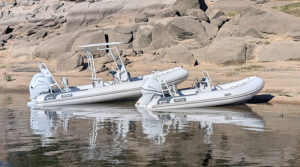
Tide Craft Boats image
For many Southern California boaters, the focus tends to stay on the primary vessel, its size, performance, and capabilities offshore or in the harbor. Yet for those who spend extended time on the water, whether anchored off Catalina Island, moored in Newport Harbor, or tied up in a slip along the coast, a secondary vessel often becomes just as essential. The tender, particularly in the form of an inflatable, has evolved from a simple accessory into a practical extension of the boating experience.
At its core, a tender serves one primary purpose: transportation. It bridges the gap between a larger vessel and shore, allowing boaters to move people, gear, and supplies without needing to relocate the main boat. In a region like Southern California, where anchoring out is part of the lifestyle and dock space can be limited or costly, that function quickly becomes indispensable. Whether it’s running from an anchorage in Avalon to grab dinner, ferrying guests to shore from a mooring, or accessing beaches and coves that larger vessels cannot reach, a tender adds a level of flexibility that many boaters find hard to go without once having experienced it.
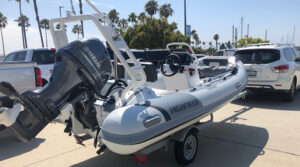
That flexibility is one of the primary reasons inflatable tenders have become so widely adopted across a range of vessel types. Amanda Larson, CEO of Tide Craft Boats, emphasized that their versatility is what makes them such a common addition for boaters at every level.
“Inflatable tenders are incredibly versatile, which is why they’re used across a wide range of vessels — from small recreational boats to large yachts,” Larson said. “They’re most commonly paired with cruisers, sailboats, and motor yachts where getting to shore or moving people and gear is part of the routine.”
At the same time, Larson noted that tenders are no longer limited to larger vessels alone.
“That said, you don’t need a 50-foot yacht to justify a tender,” she said. “Even owners of smaller boats are increasingly using them to expand how and where they spend time on the water. The key advantage is flexibility—having a secondary vessel that’s easy to deploy, maneuver, and store.”
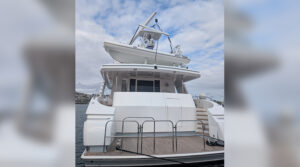
That same concept is reinforced from a more practical standpoint by Ed Thomas of Trade Wind Inflatables, who points out that regardless of vessel type, the first step is understanding what your boat can realistically accommodate. “In general, boat owners should be looking at what will fit based on how much room they’ve for tender storage, whether they’re lifting it aboard, and how much weight their davit system can handle,” Thomas explained.
Beyond convenience, tenders also offer a degree of independence. For anglers, they can be used to scout shallow areas or access spots that are otherwise unreachable. For families, they create opportunities for exploration, from beach landings to short harbor cruises. In emergency situations, they can also serve as a backup means of transport. Taken together, these uses position the tender as more than just an accessory; it becomes part of the overall boating system.
Larson underscored that point, explaining how tenders often become central to the boating lifestyle.
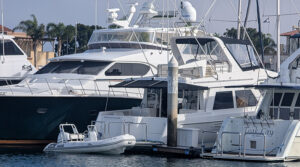
“At its core, a tender is your connection to everything beyond your boat,” she said. “Whether it’s getting to shore, accessing restaurants and marinas, exploring coves, or transporting people and gear, it becomes an essential part of the boating experience. In real-world use, it’s often the most frequently used vessel once you’re anchored.”
For many boaters, that utility quickly turns into something more routine.
“For many owners, the tender quickly becomes more than just a utility — it becomes your everyday transportation,” Larson added. “We personally use ours like a car….”
In Southern California, where harbor life blends seamlessly with shoreside amenities, that type of use is increasingly common. Thomas echoed that real-world application, noting that tenders often evolve beyond their original purpose. “Primarily, an inflatable tender is a shore boat,” he said, “but it can also serve as a safety vessel, and in many cases, families are fishing out of it or using it for everyday activities on the water.”
Inflatable tenders, in particular, have become the preferred option for many boaters due to their balance of portability and performance. However, not all inflatables are built the same, and understanding the differences can help boaters choose the right fit.
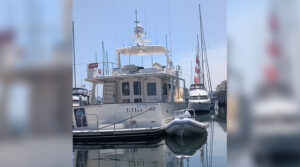
“It’s also important to understand that not all tenders are the same — there are a few primary types, and each serves a different purpose depending on your boat and how you plan to use it,” Larson said.
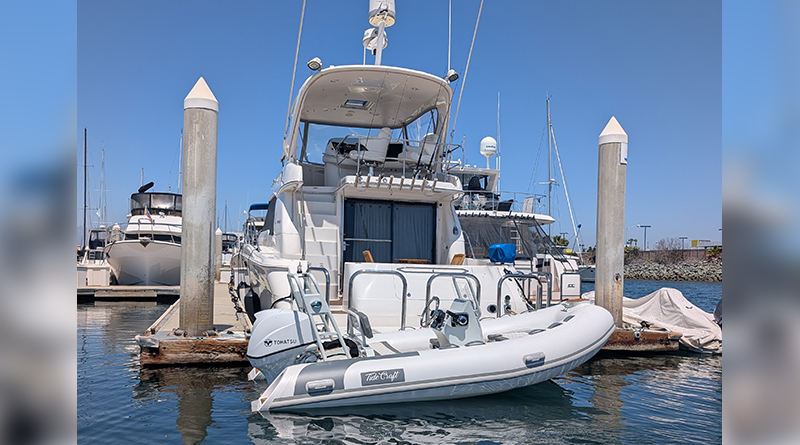
She explained that soft-bottom inflatables offer maximum portability and storage efficiency.
“Inflatable tenders with a soft bottom are typically the most compact and storage-friendly option,” Larson said. “These can be fully deflated and packed down, making them ideal for boaters with limited space or carrying capacity.”
For those seeking more performance, rigid inflatable boats, or RIBs, provide a different experience.
“Rigid Inflatable Boats (RIBs) are the most popular option for boaters looking for performance and ease of use,” she said.
Choosing between these options often comes down to how the tender will be used, as well as the limitations of the primary vessel. Not every boat is equally equipped to carry a tender, and factors such as space, weight, and storage systems must be taken into account.
“Not every boat is set up the same, so there are definitely a few key considerations — primarily space and weight,” Larson said.
Thomas further clarified that limitation does not necessarily mean exclusion. “If a vessel cannot carry the tender onboard, or the owner chooses not to, it’s important to understand how to properly tow it,” he said. “That includes using the right towing lines, tow bridles, and hardware to ensure the tender tracks properly and safely behind the boat.”
Determining the right size tender is another critical step in the selection process, and Larson emphasized that intended use should guide that decision above all else.
“It comes down to how you plan to use it,” she said.
Thomas, however, pointed to a more hands-on starting point that many boaters can immediately apply. “Start with a tape measure and figure out how much space the vessel has for storage and where that space is, whether it’s on the bow, on chocks, on the swim step, or on stern davits,” he said.
She added that many boaters benefit from thinking slightly beyond their immediate needs.
“Most boaters benefit from going slightly bigger than they think they need, as long as their primary vessel can support it,” Larson said. “It gives you more capability without limiting how you use it.”
At the same time, practical considerations such as storage and deployment remain central to how often a tender will actually be used. Ease of access, boarding, and day-to-day functionality can have a significant impact on the overall experience.
“Ease of use and accessibility are often overlooked but critical,” Larson said.
Maintenance is another factor that often influences the decision to go with an inflatable tender. While no vessel is entirely maintenance-free, inflatables are generally considered more manageable than larger boats.
“Compared to traditional boats, inflatable tenders are generally considered low-maintenance, especially when built with quality materials and components,” Larson said.
Thomas supported that perspective, particularly when higher-quality materials are involved. “For the most part, a good quality Hypalon inflatable requires very little maintenance,” he said. “The boat is better served with a cover to protect it, and routine upkeep is minimal.”
He added that engine maintenance is straightforward and predictable. “The motor has a 25-hour initial service, followed by 100-hour service intervals after that,” Thomas noted, pointing to the simplicity of long-term ownership when properly maintained.
Ultimately, the right inflatable tender should feel like a natural extension of the primary vessel, enhancing both capability and enjoyment on the water. In Southern California, where boating often blends recreation, exploration, and social activity, that added flexibility can make a meaningful difference.
From navigating busy harbors to exploring quiet coves, a well-matched tender supports a wide range of on-the-water experiences. By considering vessel size, storage options, performance needs, and intended use, boaters can select a tender that integrates seamlessly into their routine.
As more boaters look to maximize both convenience and versatility, inflatable tenders continue to prove their value. When chosen thoughtfully, they extend the reach of the boat, simplify logistics, and open up new possibilities, making them one of the most valuable tools a boater can have on board.
For more information, visit Trade Wind Inflatables at twimarine.com/. For more information on Tide Craft Boats, please visit https://www.tidecraftboats.com/.