The advocacy group is asking whether a California State Lands Commission benchmark could provide an alternative method for determining the value of Newport Harbor moorings.
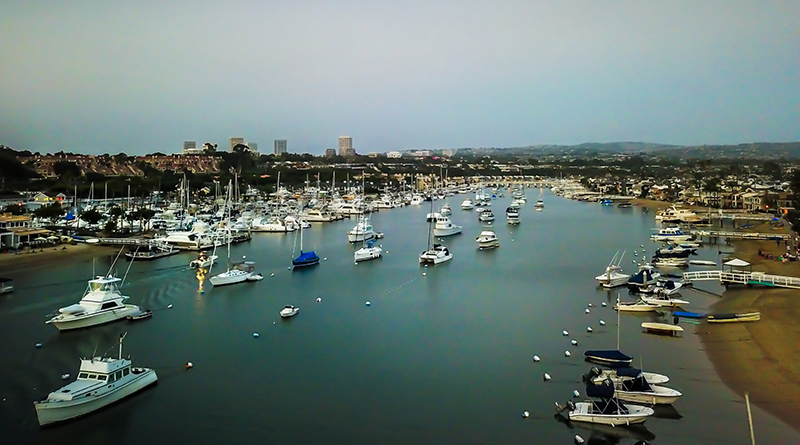
NEWPORT BEACH — As discussions continue over the cost of keeping a boat on a Newport Harbor mooring, Fair Harbor Access is asking officials and permit holders to look beyond the proposed rates and consider another question: How are those rates being calculated in the first place?
Fair Harbor Access, a group that describes itself as advocating for fair and equitable coastal access, has circulated a memorandum questioning the valuation methods being considered for Newport Harbor moorings. The group argues that an alternative method used by the California State Lands Commission deserves consideration as decisions are made about future rates.
The issue centers on “fair market value,” a term that has become important in discussions surrounding the use of Newport Beach’s public tidelands. Fair Harbor Access is questioning whether there is more than one reasonable way to determine that value and how the choice of methodology could affect what boaters ultimately pay.
According to Fair Harbor Access, one alternative worth examining is the California State Lands Commission’s Southern California Category 1 Benchmark Rate.
In basic terms, the State Lands Commission uses benchmark rates as one method of establishing compensation for certain uses of state lands. Category 1 applies to qualifying water-dependent recreational uses.
Fair Harbor Access argues that applying this methodology to Newport Harbor moorings could produce significantly different rates from other valuation methods currently under discussion.
To illustrate its argument, the group uses the example of a 40-foot offshore mooring with an estimated 1,200-square-foot area. According to Fair Harbor Access, applying a Category 1 benchmark of 45 cents per square foot would result in an annual cost of approximately $540.
The group compares that figure with approximately $9,691 per year under a city-owned mooring license rate cited in its memorandum. Fair Harbor Access further argues that, depending on the formula used for future annual adjustments, that amount could eventually exceed $15,000 per year within five years.
Those figures are calculations presented by Fair Harbor Access. They are not final rates adopted by Newport Beach, nor has the California State Lands Commission determined that its Category 1 benchmark should be applied to Newport Harbor moorings.
That distinction is central to the debate.
Newport Beach manages certain tidelands as a trustee for the State of California, meaning the city has responsibilities associated with the management and use of public trust lands. Fair Harbor Access argues that those responsibilities should include consideration of recreational boating and public coastal access when determining how harbor uses are valued.
The group also questions whether obtaining “fair market value” necessarily requires the city to seek the highest possible rate or whether other legally permissible valuation methods could provide appropriate compensation while maintaining recreational access.
These are positions being advanced by Fair Harbor Access and should not be interpreted as legal conclusions about what Newport Beach is required or permitted to charge.
The organization also is raising concerns about how mooring rates could increase in future years.
According to Fair Harbor Access, one issue involves the potential use of a Marina Slip Index to calculate future adjustments rather than a more traditional measure such as the Consumer Price Index. The group argues that the method selected for annual increases could substantially affect what permit holders pay over time.
For boaters, the complicated discussion about benchmarks, indexes and valuation methodologies ultimately comes down to affordability.
Moorings have long provided another option for keeping a vessel in Newport Harbor without securing a traditional marina slip. Fair Harbor Access argues that substantial increases could affect which boaters can afford to continue using the harbor.
At the same time, the city is responsible for managing valuable public tidelands and determining appropriate compensation for their use. The question is how those financial responsibilities should be balanced with recreational access and the city’s obligations as a tidelands trustee.
That is also why the debate cannot necessarily be reduced to a choice between a $540 annual mooring and one costing thousands of dollars.
Before those figures can be directly compared, officials would need to determine whether the valuation methods apply to the same type of use, whether the Category 1 benchmark is appropriate for Newport Harbor and whether either methodology satisfies the city’s legal obligations.
Fair Harbor Access’ position is that the Category 1 methodology should at least be examined as part of that process.
The organization is encouraging Newport Harbor stakeholders to review the different methods used to calculate potential rates and to understand not only the amount they could ultimately be charged, but also how officials arrived at that number.
For permit holders, much of the debate may sound highly technical. Terms such as fair market value, benchmark rates, tidelands trusts and valuation methodologies are not necessarily part of the average boater’s vocabulary.
The potential consequences, however, are much easier to understand.
The method used to value Newport Harbor’s public tidelands could have a significant effect on the future cost of maintaining a mooring. Fair Harbor Access argues that before those costs are established, stakeholders should understand which methods were considered and why one was ultimately selected over another.
Whether the State Lands Commission’s Category 1 benchmark is appropriate or legally applicable to Newport Harbor remains a question for the appropriate city and state officials to determine. Fair Harbor Access, however, is asking that the alternative be part of the conversation as Newport Beach continues considering the future of its harbor mooring rates.