Featuring professional advice on bait health and live bait systems from Damon Melcho, owner of X-Treme Bait Tanks.
For any angler worth their salt, the success of a day on the water often hinges on one critical, overlooked factor: the health of their live bait. While rods, reels, and electronics often dominate the conversation, the live bait tank serves as the unsung life-support system that can make or break a trip.
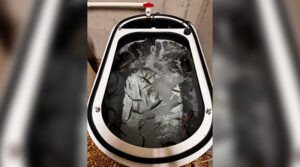
According to Damon Melcho, a longtime bait tank manufacturer and owner of X-Treme Bait Tanks, understanding the biological needs of live bait and the environmental conditions inside a livewell can dramatically improve bait survival and performance.
“What started as a project to keep me busy quickly turned into a passion for solving a problem that anglers, guides, commercial fishermen and bait dealers have struggled with for years: how to keep live bait not only alive, but healthy,” Melcho said.
After entering the bait tank industry in 2018, Melcho began studying the challenges anglers face when transporting and maintaining live bait. Through years of research and conversations with fishermen, charter captains, guides and commercial bait operators, he found that many bait losses stem from environmental conditions inside the tank rather than the bait itself.
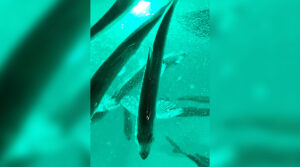
One of the most important lessons, according to Melcho, is that successful bait care begins with understanding the species being used.
“Not all bait is created equal,” Melcho said. “Even the same species can behave differently depending on water conditions, temperature, salinity and geography.”
Different bait species have different oxygen requirements, swimming behaviors and tolerances for temperature and water movement. As a result, a system that performs well for one species may not be ideal for another.
Through years of observing bait performance in different environments, Melcho identified four primary factors that influence bait care: the species being kept, the size of the bait, the quantity of bait being carried and the environmental conditions where the bait is collected and used.
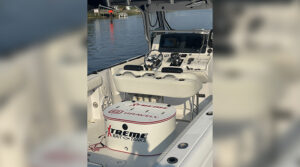
“I believe that if it swims, there has to be a way to catch it and keep it in a bait tank,” Melcho said. “So I started asking a simple question: ‘What does this particular bait need to thrive?'”
Those observations led him to focus on several key factors that influence bait health, including oxygen levels, water circulation, filtration and temperature management.
One of the most critical components of any livewell system is dissolved oxygen, which refers to the amount of oxygen gas available in the water for fish to breathe. Just as humans require oxygen from the air, baitfish rely on dissolved oxygen in the water to survive. Fish consume oxygen continuously, and demand increases as bait density rises. When dissolved oxygen levels fall too low, baitfish can become stressed, lethargic and less likely to survive for extended periods.
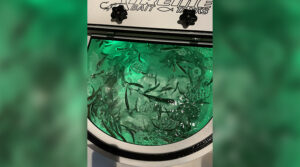
According to Melcho, proper circulation helps distribute oxygen throughout the tank while allowing baitfish to swim naturally.
“Some species perform best with stronger circulation, while others thrive in a gentler flow,” he said. “The goal is to create an environment that allows the bait to swim naturally without constantly fighting the current.”
While oxygenation is important, Melcho believes water quality and temperature are often the most overlooked aspects of bait management.
“If I could give Southern California anglers just one piece of advice, it would be this: focus on water quality and water temperature before anything else,” Melcho said.
As baitfish consume oxygen and produce waste, water conditions begin to change. Rising temperatures can further increase stress while reducing available dissolved oxygen.
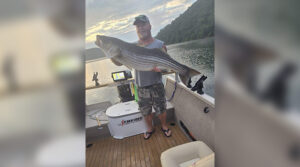
“Most bait problems are not caused by a lack of water movement or a lack of equipment,” Melcho said. “They are caused by deteriorating water conditions. As baitfish consume oxygen and produce waste, water quality begins to decline. If temperature rises, oxygen levels drop and stress increases.”
According to Melcho, long-term bait health is typically the result of balancing water quality, oxygenation, filtration and circulation rather than focusing on one solution alone.
“The anglers who consistently keep bait healthy for long periods of time are the ones who manage the entire environment,” he said. “They maintain proper water temperature, provide adequate dissolved oxygen, remove waste through filtration and create circulation patterns that keep water moving throughout the tank.”
Oxygenation technology can also play an important role in maintaining bait health. One system commonly used in bait tank applications is the DANNCO Venturi Aerator.
As part of maintaining adequate dissolved oxygen, Melcho pointed to venturi aeration systems as one technology commonly used to improve water conditions inside bait tanks.
“A DANNCO Venturi Aerator is a device that uses moving water to pull fresh air into the bait tank and create millions of tiny micro-bubbles throughout the water column,” he explained.
Unlike traditional aeration systems that produce larger bubbles, micro-bubbles remain suspended in the water longer, increasing contact time and potentially improving oxygen transfer.
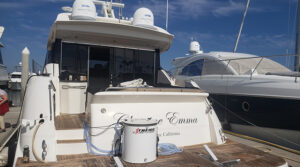
“Most anglers are familiar with traditional aeration systems that produce larger bubbles,” Melcho said. “The challenge is that larger bubbles rise quickly and have limited contact time with the water.”
Because the venturi uses water flow already generated by the system, it can increase oxygen transfer without adding significant complexity.
Many anglers rely on factory-installed livewells, but Melcho notes that those systems are often designed as general-purpose compartments rather than specialized bait-holding environments.
Tank shape can also play a significant role in bait health, particularly in livewells designed with sharp corners and limited water flow.
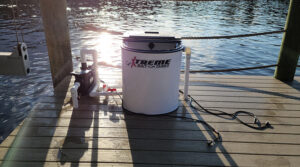
“The majority of livewells have square corners,” Melcho said. “Anglers who have used this type of livewell have witnessed that baitfish often get trapped in those corners, become stressed, develop ‘red noses,’ and that’s an immediate recipe for disaster.”
Another challenge is that many factory systems draw surface water, which can be warmer and may contain contaminants floating near the surface. In addition, most factory livewells lack dedicated filtration systems.
To improve bait survival, Melcho recommends increasing oxygenation, improving water circulation, maintaining continuous water exchange and monitoring temperature closely.
“In my opinion, water temperature is one of the most overlooked factors in bait care, even among experienced anglers,” he said.
He recommends keeping tank water within approximately two degrees of the water where the bait was originally collected whenever possible.
For anglers fishing offshore or during warmer months, cooler water drawn from deeper depths may also improve bait survival.
“The combination of proper circulation, oxygenation, water exchange and temperature control will often outperform simply adding a larger pump or increasing water flow,” Melcho said. “Healthy bait is the result of creating the right environment, not just moving more water.”
Another common mistake, according to Melcho, is overcrowding.
While anglers often want to maximize the amount of bait they carry, every system has practical limits based on tank volume, oxygenation and circulation capacity.
“When bait become overcrowded, stress levels increase and bait losses often follow,” Melcho said.
As fish compete for oxygen and swimming space, stress can rise quickly, weakening the bait and reducing its effectiveness once it is deployed. In many cases, overcrowding can lead to unnecessary bait loss before anglers even reach the fishing grounds, turning bait that was intended for fishing into little more than bird food or strip bait.
According to Melcho, many anglers have become accustomed to accepting some bait loss as unavoidable.
“For many anglers, ‘keeping bait alive’ means accepting that there will be some loss before they reach their destination or finish their trip,” he said.
In some cases, anglers purchase additional bait expecting losses during transport, while overstocking can further compound the problem.
Water quality remains another important consideration. Anglers who load bait in harbors, marinas and bays often begin with water containing elevated levels of organic material that can contribute to foaming and declining water quality.
As a result, many experienced anglers replace that water once they reach offshore fishing grounds.
“Many experienced anglers will immediately flush their entire systems with cleaner offshore ‘blue water’ once they reach open water,” Melcho said.
According to him, that simple exchange can often improve bait health by removing excess proteins and introducing cleaner, more stable water.
Throughout his career, Melcho has relied heavily on feedback from anglers, guides, charter operators and commercial bait professionals to better understand how different systems perform under real-world conditions. Those conversations have helped shape recommendations used by anglers throughout the United States and abroad.
Ultimately, Melcho believes there is an important distinction between simply keeping bait alive and maintaining bait in a healthy condition.
“Keeping bait healthy and active is an entirely different level of bait management,” he said.
When bait is maintained with proper circulation, filtration, oxygenation and temperature control, it not only survives longer but often remains more energetic and behaves more naturally.
Healthy baitfish recover more quickly after handling, swim more aggressively and create a more natural presentation in the water.
“A lively baitfish catches far more fish than a stressed or weakened baitfish,” Melcho said. “Healthy bait creates better movement, better presentation and ultimately more opportunities to get bit.”
For anglers looking to improve bait survival and performance, Melcho recommends focusing on the fundamentals: understanding the species being carried, avoiding overcrowding, maintaining adequate oxygen levels, monitoring water quality and paying close attention to temperature.
Whether using a portable bait tank, a factory-installed livewell or a custom offshore system, the principles remain largely the same.
“At the end of the day, our expertise comes from one simple philosophy: understand what the bait needs to thrive, then build a system to accomplish that objective,” Melcho said.
For anglers, that philosophy serves as a reminder that a bait tank is far more than a place to store bait. It is a carefully managed life-support system, and understanding how it works may be one of the most valuable investments a fisherman can make in a successful day on the water.
For anglers looking to dive deeper into bait health, water quality management and livewell design, additional information from Melcho and X-Treme Bait Tanks is available at www.xtremebaittanks.com.