From hands-on education in Dana Point to storytelling along the Central Coast, local organizations bring maritime culture into focus each May.
Maritime Month arrives each May as more than a recognition of the ocean’s role in commerce and recreation. It serves as a reminder of the coastal heritage, working waterfronts, and maritime traditions that continue to shape communities throughout Southern California. Across the region, museums, maritime institutes, and waterfront organizations use the month as an opportunity to connect the public with that legacy through education, events, and hands-on experiences.
For boaters, anglers, and coastal residents, the significance of Maritime Month often extends beyond a single designation. It’s reflected in the places that actively preserve, interpret, and share the maritime story year-round, while using May as a moment to expand their reach.
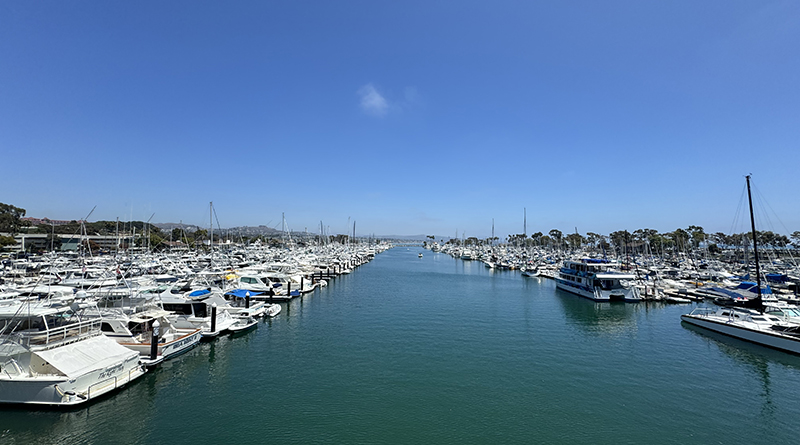
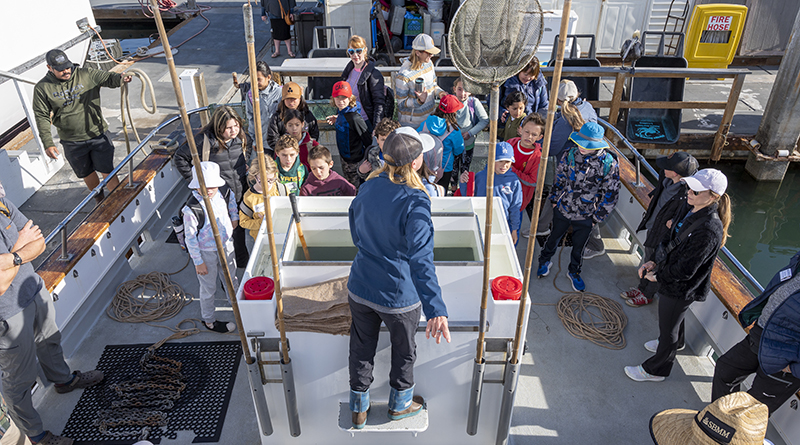
In Dana Point, the Ocean Institute stands as one of the most immersive examples of how maritime culture is being carried forward. Founded in 1977, the nonprofit education center serves more than 100,000 students and visitors each year by turning the ocean itself into a classroom. Rather than relying on static displays, the Institute offers hands-on programs that place participants directly in the environment they’re learning about.
Visitors might study marine life in tidepools and labs, sail aboard tall ships, take part in historical reenactments, or head offshore on research and whale-watching vessels. The goal is not only to educate, but to create a lasting connection to the ocean through real-world experience.
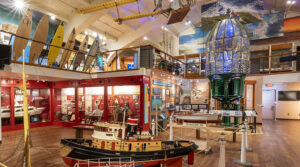
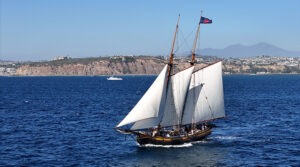
That approach makes the Ocean Institute particularly relevant during Maritime Month, as it reflects the broader effort to keep maritime heritage active rather than archival. As Director of Education Robyn Takeshita explained, the month provides a focused opportunity to highlight that mission. “Maritime Month is a great way for us to highlight Orange County’s rich maritime history,” Takeshita said. “We’re fortunate to have our Maritime History Center museum along with our tall ship, Spirit of Dana Point, which we use to educate school groups and the public year round about local maritime history, the lives of sailors, including our city’s namesake, Richard Henry Dana Jr., as well as how sailing has evolved over time.” She added that the month allows the Institute to emphasize how those traditions continue to influence modern life.
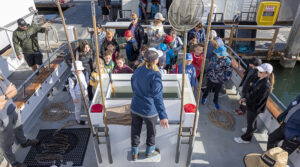
Programs that recreate life at sea in the 1800s, combined with vessels like the Spirit of Dana Point, allow participants to understand navigation, trade, and seafaring traditions in a way that goes beyond observation. The immersive nature of these experiences plays a key role in how visitors connect with the material. “Our hands-on programming, especially using Spirit of Dana Point, is such a fantastic way to get students and the public excited about maritime history and ocean education,” Takeshita said. “We find that once folks are able to experience something for themselves, such as raising a sail or touching a sea star, they become more invested in protecting or caring for the ocean.”
At the same time, the Institute plays a critical role in developing the next generation of maritime professionals and informed ocean users. Its curriculum introduces students to marine biology, oceanography, and maritime careers, using inquiry-based learning that encourages participation rather than passive instruction. In doing so, it helps shape future scientists, environmental stewards, and boaters who understand the ocean beyond its recreational value.
Takeshita noted that this impact extends well beyond a single visit. “During the school year, we host field trips with students from throughout the Western region, using hands-on programming to bring their curriculum to life,” she said. “While not every student will become a marine biologist or historian, we hope their experience sparks curiosity and inspires them to continue learning and become advocates for the ocean.” She added that the Institute continues that engagement through summer camps designed to introduce younger audiences to marine science and maritime history in an interactive setting.
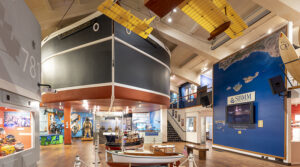
Equally important is the Institute’s ability to make the ocean accessible. Not every visitor arrives with boating experience, and for many, the Ocean Institute provides a first meaningful interaction with the marine environment. Public programs, sailing opportunities, and tidepool exploration create entry points that strengthen the broader maritime community by building awareness and engagement.
That accessibility is especially important for underserved communities. Takeshita pointed to the Institute’s long-running outreach efforts as a key part of its mission. “Ocean Institute is very fortunate to have donors that support our Adopt-a-Class program, which has brought Title-1 schools and underserved communities to our facility for over 25 years,” she said. “We’re able to create that hands-on, in-person connection to the ocean with thousands of students every year.”
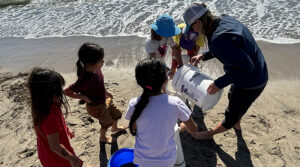
That connection is reinforced through a strong emphasis on conservation. By highlighting the impact of pollution, habitat disruption, and human activity, the Institute encourages visitors to view the ocean not only as a resource, but as something that requires ongoing stewardship.
In that sense, organizations like the Ocean Institute play a broader role in shaping how the public understands the marine environment. “Ocean Institute and other ocean education centers are vital to connecting the larger community with the marine environment,” Takeshita said. “We’re able to bring maritime history and science to life in an accessible setting for the community through programming and exhibits.”
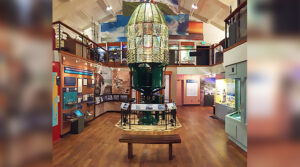
As a result, it serves as both an educational center and a community hub, hosting events, workshops, and programs that bring together boaters, families, educators, and scientists. In a harbor like Dana Point, it acts as a bridge between modern recreational use and the historical and environmental context that supports it.
Further up the coast, the Santa Barbara Maritime Museum offers a complementary perspective, one that focuses on interpretation and storytelling while maintaining a strong connection to the present-day maritime landscape.
The museum plays a key role in translating maritime history into something accessible and relevant for today’s audiences. Through exhibits that explore commercial fishing, Channel Islands exploration, maritime trade, and naval history, it provides context for the coastal lifestyle that many Southern California boaters experience firsthand.
Rather than presenting history as something static, the museum integrates it into ongoing conversations about ocean conservation, coastal economies, and maritime industries. This approach aligns closely with the intent of Maritime Month, which is not only to recognize the past, but to understand how it informs current and future use of the ocean.
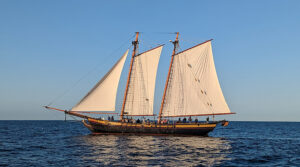
Community engagement is central to that mission. The Santa Barbara Maritime Museum regularly hosts lectures, film screenings, rotating exhibits, and youth education programs designed to bring the public into the maritime space. These offerings create opportunities for both residents and visitors to connect with the region’s coastal identity in a meaningful way.
At the same time, Maritime Month also extends into the working waterfront of Los Angeles, where history is preserved not just through exhibits, but through a vessel that continues to operate as a living piece of the past. At the Lane Victory Maritime Center in San Pedro, the SS Lane Victory stands as one of the last remaining Victory ships in the United States, offering visitors a rare opportunity to step aboard an authentic World War II-era cargo ship.

Board members Taron Lamkin and Liliana Herrera explained that Maritime Month carries a particularly meaningful significance for the organization. “For us, Maritime Month is about honoring the legacy of the U.S. Merchant Marine and bringing awareness to a part of history that is often overlooked,” they said. “It’s an opportunity to invite the public aboard, share these stories, and ensure that the role of these mariners is remembered and appreciated.”
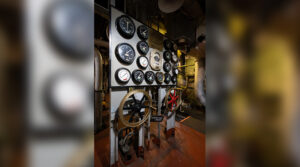
Unlike traditional museum settings, the Lane Victory offers an immersive experience rooted in authenticity. As Lamkin and Herrera noted, the ship itself is the exhibit. “When visitors come aboard, they’re not looking at a recreation, they’re walking through the real spaces where history happened,” they said. “From the engine room to the bridge, it gives people a tangible connection to what life was like at sea during wartime.”
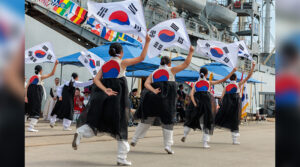
That connection is especially powerful when paired with the ship’s historical significance, including its role in the Korean War’s Hungnam Evacuation. According to Lamkin and Herrera, sharing these stories is central to the organization’s mission. “These moments in history are not just facts in a book, they represent real people, real risks, and real impact,” they said. “Being able to tell those stories in the place where they happened makes them resonate in a completely different way.”
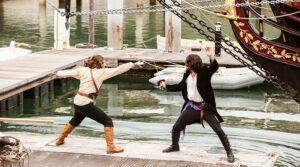
Like many maritime institutions, the Lane Victory Maritime Center relies heavily on community involvement to sustain its efforts. “Everything we do is powered by volunteers,” Lamkin and Herrera explained. “From maintaining the ship to leading tours, it takes a dedicated group of people who care about preserving this history and passing it on.”
That mission extends beyond preservation into education and workforce development. Through partnerships with maritime training organizations, the center is helping introduce younger generations to career pathways on the water. “We want people to see that maritime isn’t just history, it’s still very much a living industry with opportunities,” they said.
At the same time, its location within the Port of Los Angeles underscores the connection between past and present. Surrounded by one of the busiest commercial harbors in the country, the Lane Victory serves as a reminder that maritime history continues to shape modern industry and daily life along the coast.
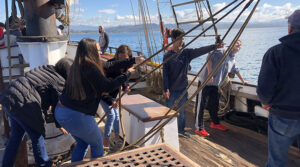
Together, institutions like the Ocean Institute, the Santa Barbara Maritime Museum, and the Lane Victory Maritime Center illustrate how Maritime Month is brought to life across the region. Each approaches the maritime story from a different angle, one through direct experience, another through interpretation and art, and another through living history, but all contribute to a broader understanding of the ocean’s role in coastal communities.
For readers of The Log, the value of these organizations lies in their ability to connect recreation with context. Boating, fishing, and coastal exploration do not exist in isolation. They’re part of a larger system shaped by history, industry, and environmental responsibility.
Maritime Month provides a timely opportunity to recognize that connection, but the work itself continues year-round. Through education, outreach, and community engagement, these institutions ensure that maritime culture remains not only preserved, but actively experienced.
In doing so, they reinforce a simple but important idea: the ocean is not just something to enjoy, it’s something to understand.