NEWPORT BEACH — Orange County’s beaches are eroding faster than local agencies can replace the sand — and with that loss comes a growing economic concern that’s stretching from city hall to Sacramento.
During a public forum hosted by the Orange County Business Council on Oct. 22, 2025, at the Marina Park Community and Sailing Center in Newport Beach, civic leaders, coastal engineers, and tourism officials gathered to discuss the widening gap between shoreline loss and funding needed to protect it. According to the Business Council, the event, titled “Addressing the Economic Impacts of Beach Erosion,” underscored that the problem extends far beyond the environment and how it affects jobs, tourism, infrastructure, and the regional tax base.
Moderated by local and regional officials including Assemblymember Diane Dixon and Supervisor Katrina Foley, the panels explored how billions of dollars in coastal revenue could be jeopardized if Orange County’s beaches continue to disappear. According to the Orange County Register, Foley told attendees that nearly one-third of the county’s economy is tied to the coast, a figure that highlights the urgent need for sand replenishment and shoreline protection.
Speakers outlined how development, harbor structures, and man-made barriers have disrupted natural sand flow, leaving many beaches in South Orange County increasingly narrow and vulnerable. Brett Sanders, a civil and environmental engineering professor at UC Irvine, reportedly explained that some stretches of coastline are now losing sand faster than agencies can replace it. Inland sources of sand are also dwindling, and according to Dave Dzwilewski of Gail Materials Inc., much of Southern California’s sand must now be imported from Baja California or British Columbia at a steep cost
The economics of sand are striking: construction-grade sand costs about $22 per ton, while finer sand suitable for beaches can run more than double that. Dzwilewski told the Register that while inland sites such as Prado Dam contain large deposits, permitting obstacles have slowed access to them. New sand facilities in the desert may help, but coastal projects still face logistical and regulatory challenges.
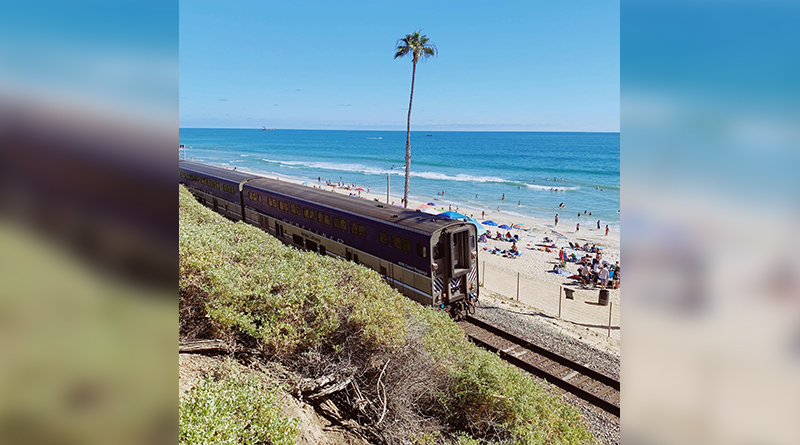
Officials also discussed the broader ripple effects of beach loss. According to Foley, erosion threatens not only tourism and property values but also key infrastructure such as the rail corridor in South Orange County, where ocean waves are now encroaching dangerously close to the tracks. She said local agencies are working with federal partners to expedite sand projects next fall and are also moving forward with a South County Beach Coalition and a newly appointed coastal resiliency manager to develop long-term solutions.
Other projects, such as an $11 million breakwater repair at Dana Point Harbor, are already underway and expected to deliver tens of thousands of cubic yards of sand to nearby Doheny State Beach.
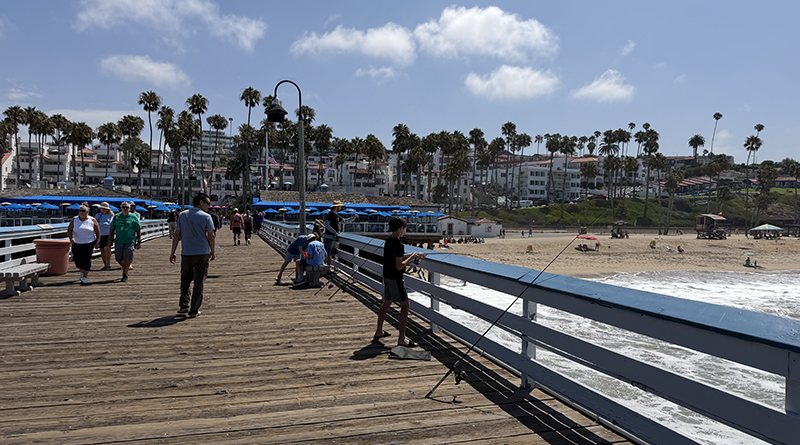
Assemblymember Diane Dixon emphasized that what happens along Orange County’s coast affects the entire state’s economy, noting that the property taxes, tourism dollars, and business revenues generated by beach communities support California at large. She pointed out that while Newport Beach has just under 90,000 residents, it draws roughly 10 million visitors annually, with similar figures reflected in other coastal towns such as Huntington Beach and Dana Point.
From the tourism perspective, Heather Johnston of Visit Dana Point noted that local beaches are not just part of the region’s identity but also serve as its economic engine. Hotels, restaurants, and retail shops depend on the draw of sandy shores, and every inch lost translates into reduced overnight stays and decreased visitor spending.
According to the Business Council, protecting the coastline isn’t only about preserving scenic beauty; it’s a direct investment in Orange County’s economic stability. As one presenter summarized during the discussion, the cost of replenishing sand may be steep, but the cost of doing nothing could be far greater.