Cruising and anchoring along Southern California’s coast is much more pleasant when we see clean water free of garbage and oil slicks. And the best way we can help to promote a clean marine environment is to adhere to sanitation laws both on and off our vessels.
Gray Water
It’s easy to assume small amounts of gray water from washing dishes and rinsing off dirty decks will cause little harm to our inland and coastal waters. Bird droppings and marina grime fall to the water with every rain, causing negligible if any harm. But small bits of food, along with dish soap in the galley sink, do harm water, especially if it’s dumped in an anchorage.
Within the confines of a small harbor, a high concentration of organic waste can cause eutrophication, a process by which bacteria and algae deplete the water of dissolved oxygen as they multiply and break down waste. As a result, fish and crustaceans die through paralysis and asphyxiation, particularly at greater depths.
The destruction wrought by eutrophication in portions of Long Island Sound and Los Angeles Harbor, to say nothing of our lakes and rivers, was front-page news in the 1960s and 1970s. Lake Erie, once referred to as the “Dead Sea of North America,” saw the spread of Aphanizomenon flosaquae algae, which resembles green paint floating on the water. Now, with greater controls of urban water run-off and a ban on phosphorous-based dish soaps in more than a dozen states, the health of Lake Erie, along with U.S. ports and coastal waters, has gradually been improving.
All of us boaters use the galley sink, so we need to filter out as much solid waste as possible before allowing the water to drain into an anchorage. Also, avoid the use of phosphorous-based soaps, at least while your vessel is in an anchorage or harbor. On many larger yachts, sinks, showers and washing machines are connected to a large holding tank, which can be pumped out offshore or at a dockside pump facility in the same manner as a toilet holding tank.
Marine Sanitation Devices
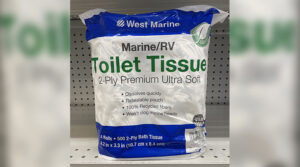
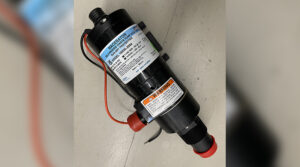
Late-generation boats with marine toilets also have built-in holding tanks that are emptied at designated pump-out facilities. If your boat was built without a holding tank, then you must close the outlet seacock, remove the handle and stow it away from the head. If you are aboard an older boat without a holding tank within three miles of the coast, close the toilet discharge seacock and store the handle in a drawer.
Whether you choose to adhere to the letter and spirit of the law regarding human solid waste is a matter of conscience. If you have second thoughts, think of your own health and that of your passengers. You certainly wouldn’t want them swimming near a boat with a toilet discharging directly into the water. As for urine, it’s probably harmless in limited amounts, even in a small harbor.
Solid waste, though, is quite a different matter. Human feces, unlike bird or fish effluent, contains highly infectious coliform bacteria. Far offshore, macerated waste discharged into the water is exposed to intense UV light and is then broken down by microorganisms. However, common sense tells us not to dump fecal sewage into coastal waters. To be clear, U.S. Coast Guard regulations forbid discharging toilets within three nautical miles of the coast. Use your holding tank as designed, and empty it in accordance with the law.
A composting toilet is a great alternative for dealing with toilet waste. The toilet bowl on this device has separate portals for urine and feces in the bowl, requiring men and women alike to sit in order to urinate. Liquid waste is collected in a separate tank for disposal, while fecal waste is allowed to dry and decompose in its own tank. A cup of peat moss may be added to provide extra biological material to aid in the decomposition process. After a few weeks of collecting and composting, the solid waste may be deposited at a pump-out facility.
The Air Head, manufactured by EOS Design in Westbrook, Massachusetts, is a completely self-contained apparatus with its own holding tank and a ventilation system to dry out waste. A bit smaller than a standard land toilet, the Air Head can be used regularly by two people for a whole month, before necessitating disposal.
Other manufacturers of similar systems include Biolet of Fresno, Ohio; Nature’s Head of Van Buren, Ohio; and Sun-Mar of Tonawanda, New York. Composting may not work for everyone, but it seems better than sailing with 20 gallons of sloshing sludge and risking a disconnected hose or ruptured tank beneath the v-berth.
Bilge Water
Pumping out the bilge puts us in a rather difficult position. We know dumping oil overboard is illegal, but we may not always know if there is oil in the bilge. On some boats, the bilge may be difficult if not impossible to inspect. If you do suspect oil in the bilge, do not pump it out. Furthermore, dispersants only break up oil into tiny droplets, so soap and water will not solve the problem either.
And while it’s true diesel and gasoline eventually evaporate, they can still cause extensive harm to aquatic life while they are floating on the water’s surface. Heavier petroleum distillates, such as motor oil, also gradually evaporate, but in saltwater, they first emulsify to form a thick sludge that gunks up beaches, reefs and boat hulls. Evaporation after that point can take many years.
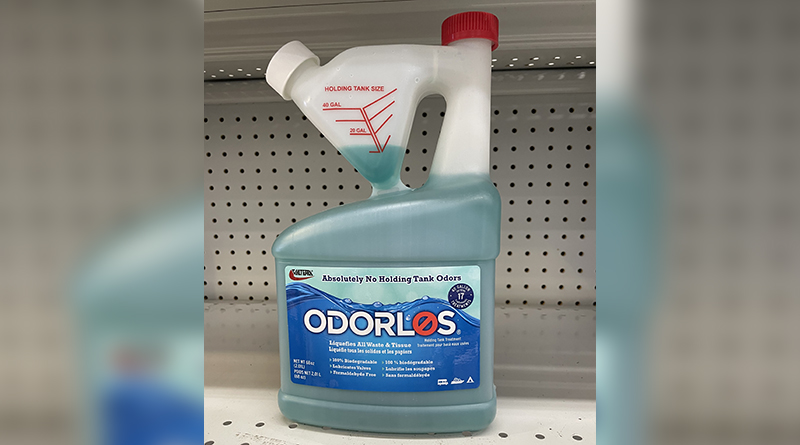
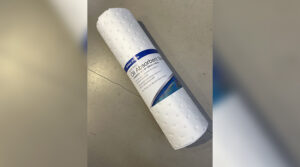
If your bilge contains oil or fuel, place oil-absorbing mats in the bilge to soak up the residue. The white mats have an affinity for oil, allowing you to pump the remaining water safely out of the bilge once all the oil has been removed. Even more effective is a BioSok Oil and Fuel Absorber from Johnson Pump, which biodegrades petroleum residue in the bilge, allowing you to pump the bilge into open water after the oil or fuel sheen has disappeared. To keep bilge odor under control, use a tank deodorizer, such as West Marine Exterminodor, available in one-gallon plastic jugs. Four ounces of this additive treats a 20-gallon tank.
Preventing the illegal dumping of illegal waste in our coastal waters comes down to a series of decisions we all make as mariners. Together, we can help to ensure a cleaner, safer environment for coastal and marine flora and fauna, and for ourselves as well.