From routine bottom work and fiberglass repairs to hauling large commercial vessels, Ventura Harbor Boatyard provides a look at the maintenance and repair work that keeps Ventura’s recreational and working waterfront moving.
VENTURA — Boaters spend plenty of time thinking about what happens while their boats are in the water. Eventually, however, nearly every vessel needs to come out of it.
A haul-out can begin with something routine, such as bottom paint or scheduled maintenance, but once the hull is exposed, it can also reveal problems that are difficult to see from the dock. Running gear, through-hulls, corrosion, fiberglass damage, and other components below the waterline can all receive a closer inspection when a vessel is on land.
At Ventura Harbor Boatyard, that process happens on a scale ranging from recreational sailboats and powerboats to considerably larger commercial vessels.
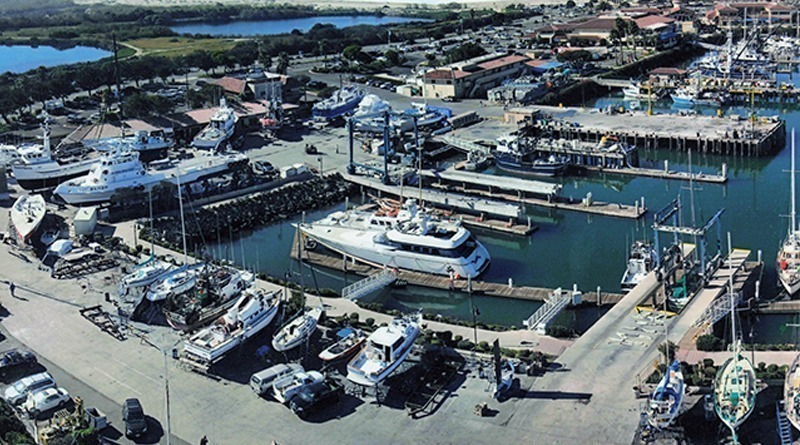
Located at 1415 Spinnaker Drive, Ventura Harbor Boatyard is a full-service repair and maintenance facility serving both recreational and commercial vessels. Its services include hull and fiberglass repair, painting, mechanical work, electrical systems, welding and fabrication, along with crane and off-loading services.
For boat owners, a trip to the yard generally begins before the vessel ever reaches the haul-out slip. Scheduling requires information about the boat, including its length, beam and draft, as well as the type of work being requested. Once the vessel arrives, lifting it safely from the water requires equipment capable of supporting its weight while allowing crews access to areas that normally remain submerged.
At Ventura Harbor Boatyard, one of the largest pieces of that equipment is a 200-metric-ton Marine Travelift. The lift replaced an older 150-metric-ton unit and substantially increased the yard’s ability to accommodate large vessels. When it became operational, the Ventura Port District reported that the equipment allowed the yard to service boats as large as approximately 120 feet and 220 tons.
While seeing a large vessel suspended in a Travelift can be one of the more dramatic parts of a haul-out, the work that follows is generally more practical.
Once a boat is ashore, crews have access to the hull and underwater equipment that cannot easily be examined while the vessel is sitting in its slip. Depending on why the boat was hauled, work may involve cleaning the hull, repairing fiberglass or gelcoat, repainting, servicing engines, addressing electrical problems or completing other maintenance before the boat returns to the water.
The haul-out also creates an opportunity for owners to pay attention to problems that may otherwise remain hidden.
Fiberglass damage, for example, can range from relatively minor cosmetic repairs to more significant hull work. Similarly, underwater hardware and other components can show signs of wear that may be easier to identify once the boat is blocked on land. What begins as scheduled maintenance can therefore become an important opportunity to understand the overall condition of a vessel.
That makes planning an important part of any yard visit. Boat owners can benefit from keeping track of maintenance history, documenting concerns before arriving and discussing the intended scope of work with the yard. Photographs of a problem can also help communicate what needs attention before a haul-out is scheduled.
Not every job requires handing the entire project over to a professional. Ventura Harbor Boatyard also operates a public chandlery carrying items such as zincs, fittings, electrical wire, packing, fasteners and painting supplies, and the yard sells parts to boaters performing their own maintenance.
Knowing where DIY work ends and professional repair begins, however, is part of responsible boat ownership. Projects involving structural damage, major mechanical systems, electrical troubleshooting or other safety-critical components can require specialized tools and experience. A repair that appears straightforward at the dock may look considerably different once the vessel is out of the water and the affected area is fully accessible.
Ventura Harbor Boatyard’s ability to work on both recreational and commercial vessels also reflects the broader character of Ventura Harbor.
The harbor is not solely a recreational destination. It supports marinas, visiting boaters, commercial fishing vessels, passenger operations and businesses dependent on a functioning working waterfront. The Ventura Port District describes Ventura Harbor Boatyard as a facility capable of servicing commercial and pleasure vessels up to 200 tons, with on-site services supplemented by a network of additional marine repair providers.
That commercial capability is particularly relevant in Ventura. The harbor has historically supported a substantial commercial fishing fleet, and its infrastructure must accommodate vessels whose maintenance needs can differ considerably from those of a recreational sailboat or weekend fishing boat.
For recreational boaters, however, the basic lesson of the boatyard remains much more familiar: maintenance does not stop at the waterline.
A boat can look perfectly normal sitting in its slip while portions of the vessel that owners rarely see are continuously exposed to saltwater, marine growth and normal wear. Hauling the vessel provides an opportunity not only to complete the job that brought it into the yard, but also to take a closer look at what has been happening beneath the surface.
And while restaurants, marinas, sportfishing boats and visiting vessels may be the more visible parts of Ventura Harbor, facilities such as Ventura Harbor Boatyard are part of the infrastructure that keeps those vessels operating.
A working harbor, after all, depends on more than what happens on the water. Some of its most important work begins when a boat comes out of it.
Ventura Harbor Boatyard is located at 1415 Spinnaker Drive in Ventura. Information about haul-outs, repairs and other services is available through Ventura Harbor Boatyard. Go to vhby.com for more details.