Most boaters spend considerable time preparing for emergencies above the waterline. Life jackets, flares, first-aid kits and fire extinguishers are standard equipment aboard most vessels. Yet one of the most useful emergency tools on a boat often receives little attention: a compact dive bag.
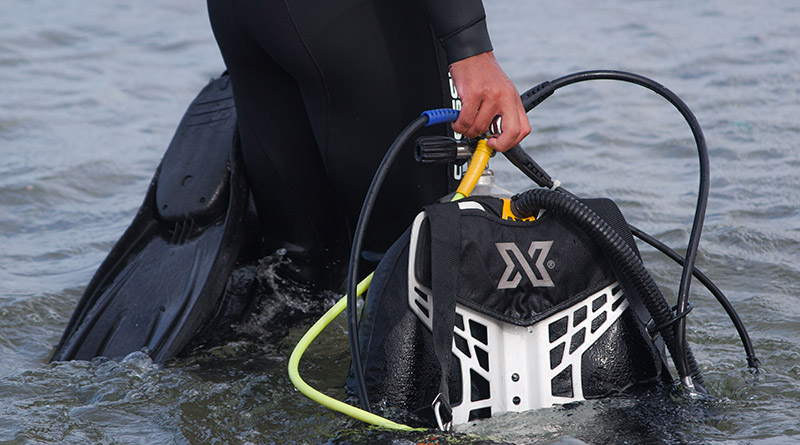
Consisting of a few basic items such as a mask, snorkel, fins and a sharp knife, a small dive kit can prove invaluable when unexpected problems occur below the waterline.
For many boaters, the first encounter with the need for a dive bag comes when a fishing line, dock line or piece of debris becomes wrapped around a propeller. While the problem may seem minor, a fouled prop can quickly bring a day on the water to an abrupt halt.
In some cases, a tangled line may reduce performance or create vibration. In more severe situations, it can prevent a vessel from operating safely altogether.
Without the ability to inspect the propeller underwater, boaters are often left guessing about the cause of the problem.
A simple dive mask allows operators to visually assess the situation, while fins can make maneuvering around the vessel easier and more efficient. A snorkel can extend the amount of time spent underwater without repeatedly surfacing, and a sharp knife can be used to carefully remove rope, fishing line, kelp or other debris.
Propeller fouling is far from the only reason to carry a compact dive bag.
Lines can become wrapped around rudders, shafts, stabilizers and trim tabs. Mooring lines occasionally fall overboard and become entangled. Floating debris can become lodged beneath a vessel. Even routine inspections can benefit from the ability to quickly get a look beneath the hull.
Many experienced boaters routinely inspect their running gear after grounding incidents, encounters with floating objects or unexplained changes in vessel performance.
A dive bag can also be useful when retrieving dropped items around a dock or mooring. Boat hooks, sunglasses, dock lines, tools and even cell phones have all found their way overboard at one point or another.
The key is keeping the kit simple, accessible and ready to use.
A compact waterproof bag or small storage container can easily hold a mask, snorkel, compact fins, gloves and a corrosion-resistant knife. Some boaters also include a small underwater flashlight for low-visibility conditions and a line cutter designed specifically for marine use.
Safety should always remain the top priority.
Boaters should never enter the water while a vessel’s engine is running and should exercise caution around currents, vessel traffic and poor visibility. If conditions are unsafe or the situation requires extensive underwater work, professional divers or towing services may be the better option.
Still, many common boating problems can be resolved quickly with a few basic tools and the ability to inspect what is happening below the surface.
While a compact dive bag may not receive as much attention as other safety equipment, it can become one of the most useful items aboard when an unexpected situation arises. For many boaters, the ability to quickly investigate and resolve an underwater issue can mean the difference between ending a trip early and getting back underway.
When space aboard a vessel is limited, every piece of gear should earn its place. A compact dive bag often does just that.