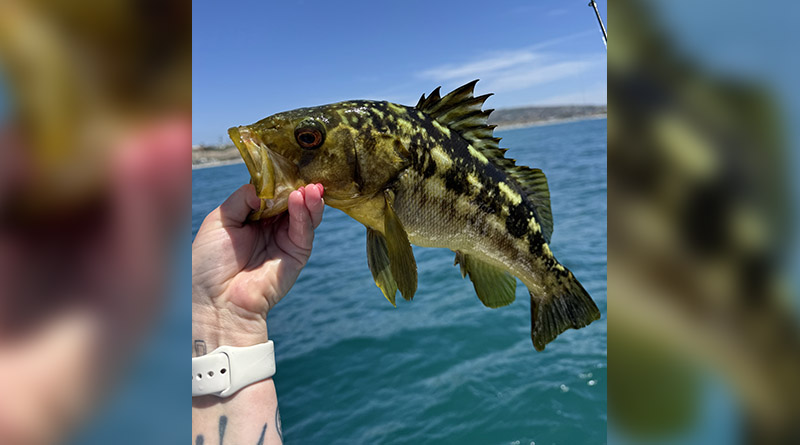
For many Southern California anglers, few summer fisheries are as accessible — or as addictive — as calico bass fishing in the kelp. As water temperatures climb and kelp forests reach their seasonal peak, calico bass become increasingly active, providing anglers with exciting opportunities to target one of the region’s most popular inshore gamefish.
Found throughout Southern California’s coastal waters and around the Channel Islands, kelp bass, commonly known as calico bass, are structure-oriented predators that spend much of their lives hunting among kelp stalks, rocky reefs and submerged hard bottom. Their willingness to strike artificial lures and their ability to pull hard for their size have made them a favorite target among private boaters, kayakers and sportfishing anglers alike.
Success often begins with understanding where calicos live.
Unlike species that roam open water, calico bass use kelp and structure for both protection and ambush points. Anglers targeting them should focus on the edges of kelp beds, pockets within the canopy, isolated stringers of kelp and rocky areas adjacent to the vegetation.
Many experienced anglers recommend covering water until active fish are located. Rather than repeatedly fishing a single area, working down a kelp line and making casts to multiple targets often produces more bites.
Artificial lures have become one of the most popular ways to target calico bass. Swimbaits rigged on leadheads continue to be a staple presentation, allowing anglers to imitate baitfish while covering large amounts of water.
The key is often placing casts as close to structure as possible.
Many of the largest calicos spend their lives buried deep within heavy cover, and anglers who consistently catch quality fish are often willing to risk losing a few lures by casting tight to kelp stalks and rocky edges.
Weedless presentations have also gained popularity in recent years.
Soft plastic swimbaits rigged on weighted weedless hooks allow anglers to fish directly through kelp and structure that would quickly snag traditional leadhead rigs. This approach enables fishermen to reach bass holding deep within the canopy where fishing pressure may be lower.
Topwater fishing can provide some of the most exciting action of the summer months.
During low-light conditions or periods of active feeding, calico bass will often explode on surface irons, walking baits and other topwater lures. These strikes are particularly common around healthy kelp beds where baitfish are abundant.
Light tackle has become another common approach among dedicated calico anglers.
Many fishermen favor rods in the 7- to 8-foot range paired with low-profile baitcasting reels or spinning outfits capable of making accurate casts while still providing enough power to pull fish away from heavy cover.
Braided line is commonly used because of its sensitivity and strength. A fluorocarbon leader is often added to reduce visibility while maintaining abrasion resistance around kelp and rocks.
Hooking a fish is only part of the battle.
Once hooked, calico bass frequently dive back toward structure in an attempt to wrap anglers around kelp stalks or rocks. Applying steady pressure and keeping fish moving away from cover can often mean the difference between landing a fish and breaking off.
While calicos can be found year-round, summer typically offers some of the best opportunities for anglers targeting larger fish. Warmer water temperatures often increase feeding activity, and healthy kelp growth creates ideal habitat for both bass and the baitfish they prey upon.
Catch-and-release practices have also become increasingly common within the fishery, particularly among anglers targeting larger breeding-size bass. Proper handling techniques, minimizing air exposure and releasing fish quickly can help ensure healthy populations for future generations.
Whether fishing from a private boat, kayak or sportfishing vessel, targeting calico bass in the kelp remains one of Southern California’s most exciting warm-weather fisheries. With thriving kelp beds, active fish and a variety of effective techniques available, July offers anglers an excellent opportunity to experience one of the region’s signature inshore species.